Automotive CNC Machining: From Prototype to Production
The automotive industry is undergoing its most significant transformation in a century. Internal combustion engines are being supplemented and replaced by electric powertrains. Hydrogen fuel cells are emerging as a viable zero-emission technology for commercial vehicles. Advanced driver assistance systems (ADAS) and autonomous driving platforms demand new categories of precision sensor housings and electronic enclosures. Through all of this change, one thing remains constant: every vehicle requires thousands of precision-machined metal components.
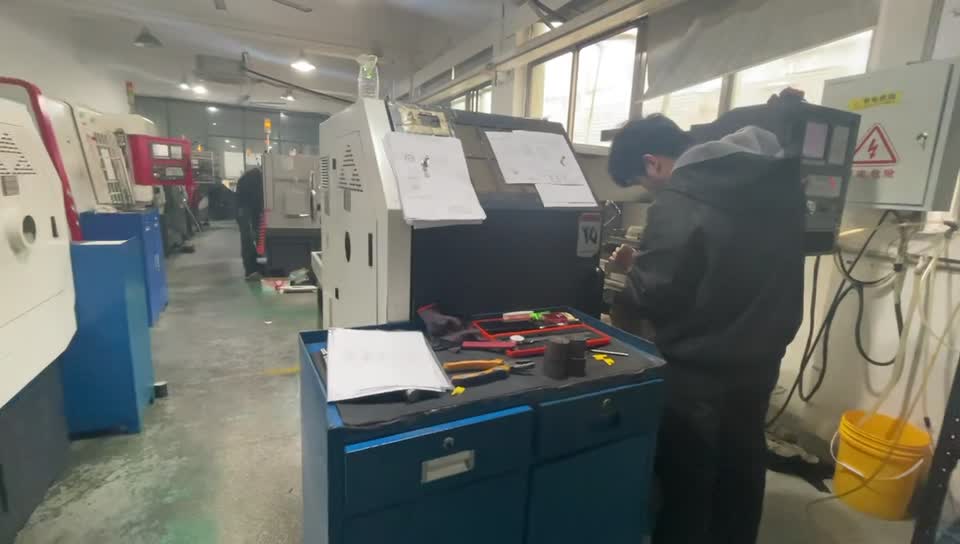
At Ningbo Saiguang 3D Technology (MouldNova), we provide automotive CNC machining services that span the entire vehicle — from traditional engine and transmission components to cutting-edge electric vehicle (EV) and fuel cell parts. Our Yuyao facility, located in China's automotive manufacturing heartland of Ningbo, is equipped with multi-axis CNC machining centers, CNC turning centers, EDM machines, and metal 3D printers that together provide a comprehensive manufacturing capability for automotive components.
This page covers our automotive machining capabilities, the materials we work with, our approach to automotive quality requirements, and the specific vehicle systems and components we serve. Whether you are an OEM developing next-generation EV components, a tier-1 supplier needing production quantities of powertrain parts, or a motorsport team requiring lightweight performance components, we have the capacity and expertise to support your program.

Automotive Materials We Machine
Automotive components span a wide range of materials, each selected for specific performance requirements. We machine all the metals and engineering plastics commonly used in vehicle manufacturing.
Aluminum Alloys — The Automotive Lightweight Champion
Aluminum is the dominant material in the automotive industry's lightweighting strategy. Every kilogram of weight reduction improves fuel efficiency in ICE vehicles and extends range in EVs. We machine all common automotive aluminum grades.
6061-T6 is the general-purpose automotive aluminum, offering good strength (290 MPa tensile), excellent machinability, and good corrosion resistance. It is used for structural brackets, housings, heat sinks, and chassis components. 7075-T6 provides near-steel strength (570 MPa tensile) at one-third the weight, making it the material of choice for high-performance suspension components, motorsport parts, and structural aerospace-automotive crossover applications. A356/A380 are cast aluminum alloys that we frequently receive as rough castings for CNC finish machining of critical interfaces — bearing bores, mating surfaces, and seal grooves.
Carbon and Alloy Steels
4140 is the workhorse automotive steel, a chromium-molybdenum alloy that provides excellent strength and fatigue resistance after heat treatment. We machine 4140 for shafts, gears, connecting rods, and structural drivetrain components. 4340 offers even higher strength and toughness, used for the most demanding applications like crankshafts, high-performance connecting rods, and racing components. 1045 is a medium-carbon steel with good machinability, used for pins, bushings, and moderate-duty shafts.
Stainless Steel
304 stainless steel is used for exhaust system components, decorative trim, and corrosion-resistant brackets. 316L provides superior corrosion resistance for fuel system components and exhaust applications in harsh environments. 17-4 PH offers high strength after precipitation hardening, used for turbocharger components, fuel injector bodies, and high-performance fasteners.
Specialty Automotive Materials
We also machine titanium (Grade 2, Grade 5) for motorsport and high-performance applications where weight reduction justifies the material premium, cast iron (gray and ductile) for brake components and engine blocks received for finish machining, brass and bronze for synchronizer rings, bushings, and wear components, and engineering plastics (PEEK, POM, nylon) for lightweight structural and wear components.
Quality Management for Automotive Manufacturing
IATF 16949 Alignment
IATF 16949 is the international quality management standard for the automotive industry, developed by the International Automotive Task Force. It builds on ISO 9001 and adds automotive-specific requirements for defect prevention, waste reduction, and continuous improvement throughout the supply chain.
We structure our automotive quality processes in alignment with IATF 16949 requirements. This includes advanced product quality planning (APQP) methodology for new product launches, production part approval process (PPAP) documentation at all submission levels, process failure mode and effects analysis (PFMEA) for critical manufacturing operations, statistical process control (SPC) for key characteristics during production runs, and measurement system analysis (MSA) to validate our inspection equipment and methods.
PPAP Documentation
For automotive production programs, we provide full PPAP packages at the submission level required by the customer. A typical Level 3 PPAP submission includes design records and engineering change documents, process flow diagram showing all manufacturing operations, control plan identifying critical characteristics and inspection methods, PFMEA documenting potential failure modes and mitigation, dimensional results for all specified characteristics, material test reports with certified mill test certificates, initial process study demonstrating Cpk capability on key characteristics, MSA studies (gauge R&R) for critical measurement methods, and part submission warrant (PSW) with authorized signature.
Statistical Process Control (SPC)
For production runs, we implement SPC monitoring on all critical characteristics identified in the control plan. X-bar and R charts track dimensional trends in real-time, allowing us to detect and correct process drift before it produces out-of-specification parts. Our target is Cpk ≥ 1.67 for critical characteristics, exceeding the minimum Cpk ≥ 1.33 that most OEMs require.
Engine and Powertrain Components
Traditional internal combustion engine (ICE) components remain a significant part of our automotive machining work, and will continue to be for the foreseeable future — even in hybrid vehicles that combine ICE with electric drive.
We machine engine and powertrain components including cylinder head valve seats and guides (precision bore machining after casting), intake and exhaust manifold flanges (flatness and bolt hole pattern critical), turbocharger compressor housings (aluminum, complex 5-axis geometry), throttle body bores (precise diameter and roundness for butterfly valve fit), oil pump housings and rotors, timing chain tensioner bodies, flywheel and flexplate machining (flatness and pilot bore critical), and transmission valve body passages (precision bore geometry for spool valve fit).
Electric Vehicle (EV) Components
The EV revolution is creating entirely new categories of precision CNC machined components. We are investing heavily in capabilities to serve this growing market.
Motor Housings
EV motor housings are typically machined from aluminum castings or billets and require precise bore geometry for motor bearing fits (typically H7 tolerance), integrated cooling channels or jacket machining, accurate alignment features for stator mounting, and seal grooves for ingress protection (often IP67 or IP69K). We machine motor housings up to 400mm diameter with bore roundness better than 0.01mm and concentricity between bearing bores better than 0.02mm.
Battery Module Enclosures
Battery enclosures protect the most expensive and safety-critical component in an EV. They require precision machining for sealed mating surfaces (to prevent moisture ingress that could cause thermal runaway), EMI shielding features, cooling plate interfaces (flatness critical for thermal compound contact), and structural mounting points with tight positional tolerances. We machine battery enclosure components from 6061-T6 and 5083 aluminum, with surface flatness to 0.05mm over spans of 500mm or more.
Thermal Management Components
EVs generate significant heat in the battery, motor, inverter, and charging systems. Effective thermal management is essential for performance, safety, and battery longevity. We machine cold plates (aluminum plates with precision-machined coolant channels), valve bodies for thermal management fluid circuits, manifolds distributing coolant to multiple battery modules, and heat sink fin arrays for power electronics (inverters, DC-DC converters).
Precision CNC Machining for Automotive Fuel Cells
Hydrogen fuel cell technology is emerging as a leading zero-emission solution for commercial vehicles, buses, and heavy-duty transport where battery weight and charging time are prohibitive. Fuel cells convert hydrogen and oxygen into electricity through an electrochemical reaction, producing only water as a byproduct. The core of a fuel cell stack consists of hundreds of bipolar plates — and these plates require some of the most demanding CNC machining in the entire automotive industry.
Bipolar Plate Machining
Bipolar plates are the most CNC-intensive component in a PEM (proton exchange membrane) fuel cell. Each plate contains flow field channels that distribute hydrogen and oxygen across the membrane electrode assembly (MEA). These channels are typically 0.5-1.0mm wide, 0.3-0.8mm deep, and follow complex serpentine or interdigitated patterns across the plate surface.
The machining challenges are extreme. Channel geometry must be precise (±0.02mm width and depth) to ensure uniform gas distribution. Surface flatness must be better than 0.02mm across the full plate to prevent gas leakage between cells in the stack. Burr-free machining is essential — any burrs can puncture the delicate MEA membrane, causing cell failure. Surface roughness inside channels must be controlled (Ra 0.8 µm or better) to minimize pressure drop.
We machine bipolar plates from stainless steel (316L), titanium (Grade 2), and graphite composite materials, using specialized high-speed machining strategies with micro-diameter end mills (down to 0.3mm diameter) and optimized coolant delivery to achieve the required precision and surface quality.
End Plates and Manifolds
Fuel cell end plates provide structural compression for the cell stack and house the hydrogen and coolant manifold passages. We machine these from aluminum billet with precision-bored manifold passages, O-ring grooves for seal interfaces, and bolt patterns for stack assembly with positional accuracy better than 0.03mm.
Case Study: Aluminum EV Motor Housing — Prototype to Production
A Chinese EV startup developing a compact urban electric vehicle needed a manufacturing partner for their rear drive motor housing. The motor housing was a critical structural component that also served as the motor cooling jacket.
The Challenge
The housing was designed as a two-piece assembly (main housing + end cap) machined from 6061-T6 aluminum billet. Key challenges included the main bore (180mm diameter, H7 tolerance, roundness ≤ 0.008mm) for the motor bearing fit, a spiral cooling channel machined into the outer surface (sealed by the end cap), twelve M8 bolt holes on the mounting flange (true position ≤ 0.03mm), and an IP67 seal groove requiring surface finish Ra 0.4 µm. The customer needed 5 prototype units in 15 days, followed by pilot production of 200 units, with the possibility of scaling to 5,000 units annually.
Our Approach
We programmed the main housing for our 5-axis CNC machining center, completing all exterior features, the cooling channel, and the main bore in a single setup. The end cap was machined on a 3-axis mill. For the prototype run, we used standard fixturing and completed all 5 sets (10 parts total) in 12 days — 3 days ahead of schedule.
For the pilot production run of 200 units, we invested in dedicated hydraulic clamping fixtures that reduced setup time and improved bore concentricity. We implemented SPC monitoring on the main bore diameter, roundness, and seal groove surface finish. Cycle time optimization reduced machining time from 85 minutes per housing (prototype) to 52 minutes (production), a 39% improvement.
Results
All 5 prototype housings passed the customer's motor assembly and leak testing on the first attempt. The 200-unit pilot run achieved Cpk 1.89 on the critical bore dimension with zero rejects. Per-unit cost was reduced by 35% from prototype to production through cycle time optimization and fixture investment. The customer has committed to annual production volumes and is developing their second-generation motor housing with us.
High-Volume Manufacturing Capability
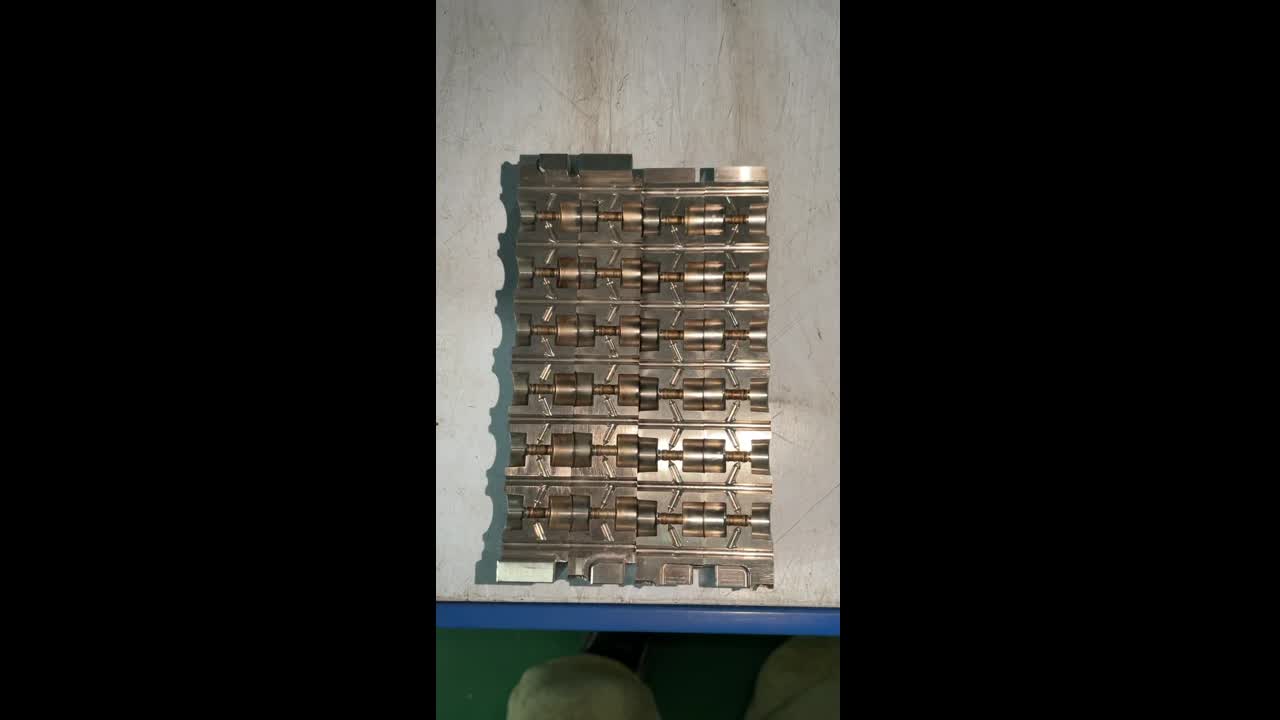
Automotive manufacturing demands consistent quality at scale. Our facility supports high-volume production through several key capabilities.
Dedicated fixturing: For production programs, we design and build dedicated hydraulic or pneumatic clamping fixtures that reduce setup time, improve repeatability, and minimize operator variability. Fixture investment is amortized across the production volume.
Multi-machine parallel production: For high-volume programs, we can run identical programs on multiple machines simultaneously, effectively multiplying our output capacity without increasing cycle time.
Automated bar feeding: For turned components, our Swiss-type CNC lathes equipped with bar feeders can run unattended for extended periods, producing completed parts directly from bar stock with cycle times as low as 15 seconds per part.
In-process SPC: Statistical process control on critical dimensions ensures that quality is maintained throughout the production run, not just verified at the end. We detect and correct process drift before it produces defective parts.
24-hour production: When volume demands require it, our facility can operate 24 hours with shift staffing, providing the throughput needed to meet aggressive automotive delivery schedules.
From Mold to Molded Part: Automotive Plastic Components
In addition to CNC metal parts, we provide complete injection mold manufacturing and plastic parts production for automotive applications. Our conformal cooling inserts are particularly valuable for automotive molds, where they reduce cycle time by 20-55% on complex plastic components like dashboard panels, door handles, sensor housings, and light covers. We design and build the mold, 3D print the conformal cooling inserts, CNC machine the complete tooling, and run production parts on our injection molding machines — all under one roof.
Related Services
Our automotive CNC machining capabilities integrate with our full manufacturing platform. Explore our complete CNC, EDM, and injection molding services for mold and part manufacturing. See our metal 3D printing service for rapid prototyping and complex automotive geometries. Learn how our conformal cooling technology reduces cycle time for automotive plastic parts. Contact us to discuss your automotive machining project.
Frequently Asked Questions About Automotive CNC Machining
What automotive materials do you CNC machine?
We machine aluminum alloys (6061-T6, 7075-T6, A380 cast aluminum), carbon steel (1045, 4140, 4340), stainless steel (304, 316L, 17-4 PH), cast iron (gray iron, ductile iron), titanium (Grade 2, Grade 5 for motorsport), brass and bronze (bushings and bearings), and engineering plastics (PEEK, POM, nylon).
Do you support IATF 16949 quality requirements?
We are familiar with IATF 16949 requirements and structure our automotive quality processes accordingly. We provide PPAP documentation packages, process flow diagrams, control plans, FMEA, MSA, and SPC data as required by automotive OEMs and tier suppliers.
Can you machine fuel cell components for hydrogen vehicles?
Yes. We machine precision components for PEM fuel cells including bipolar plates from graphite and metal (stainless steel, titanium), end plates from aluminum, manifold components, and hydrogen flow field channels. These require extremely tight flatness tolerances (often below 0.02mm) and burr-free channel machining.
What EV components do you manufacture?
We machine motor housings (aluminum, precision bore geometry for bearing fits), battery module enclosures (EMI shielding, sealed joints), inverter heat sinks (complex fin geometries), charging port housings, reduction gearbox cases, and thermal management system components (cold plates, valve bodies, manifolds).
What tolerances do you hold for automotive components?
Standard automotive tolerances of ±0.025mm are routine. For critical fits (bearing bores, shaft journals), we hold ±0.01mm. For fuel cell bipolar plates and precision valve components, we achieve ±0.005mm. All critical dimensions are verified on our CMM with SPC monitoring for production runs.
What production volumes can you handle?
We support single prototypes through production volumes of 100,000+ pieces annually. For high-volume parts, we design dedicated fixtures and optimized tooling strategies to minimize cycle time. Our facility supports 24-hour production runs when volume demands require it.
Do you provide PPAP documentation?
Yes. We provide full PPAP packages at all levels (Level 1 through Level 5). A typical Level 3 PPAP includes design records, process flow diagrams, control plans, PFMEA, dimensional results, material test reports, initial process study (Cpk data), MSA studies, and part submission warrant (PSW).
Can you machine both prototype and production automotive parts?
Yes. We start with prototype quantities (1-10 pieces) for development, scale to pilot production (50-500 pieces) for vehicle builds, and then full production volumes. Our integrated CNC and 3D printing capabilities make us effective for rapid prototyping of complex automotive components that would otherwise require expensive tooling.