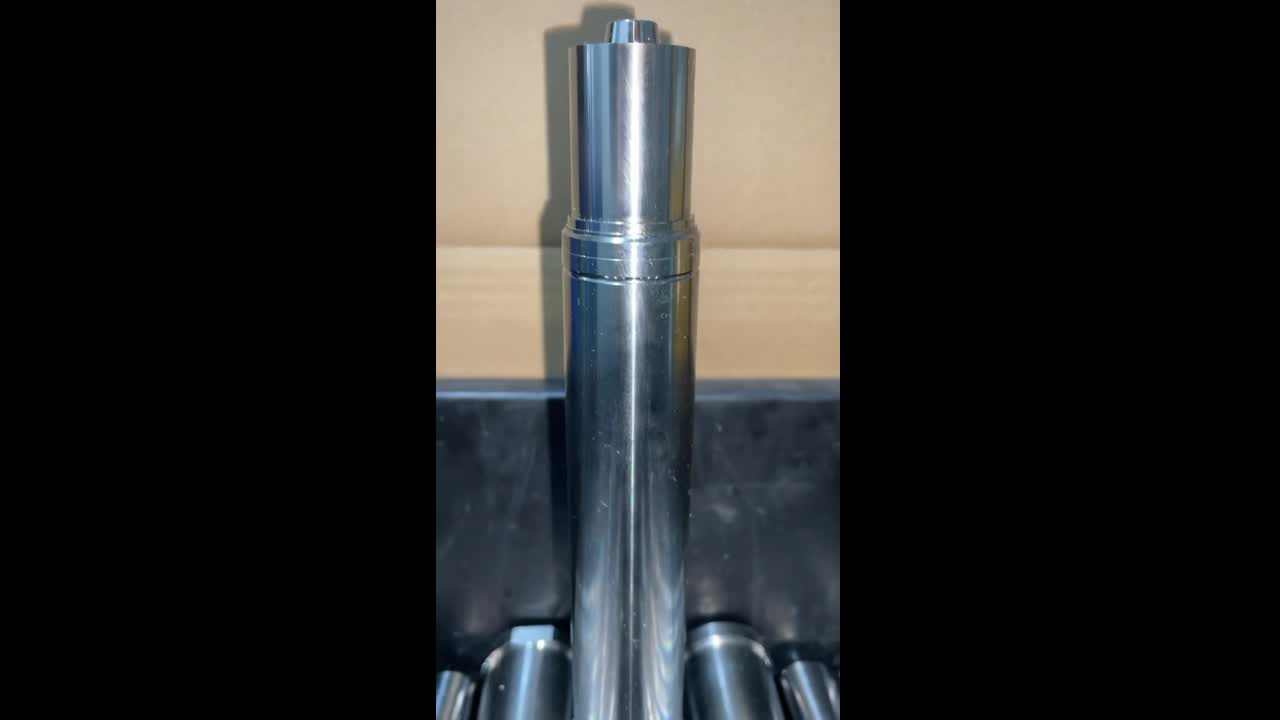
Stainless Steel CNC Machining Services

Precision CNC Machined Stainless Steel Parts — 304, 316, 17-4PH, 420, 440C — Prototype to Production

Get a Free Quote
5+
SS Grades Machined
±0.01
mm Tolerance
Ra 0.2
μm Surface Finish
5-7
Day Prototype Lead
100%
CMM Inspected
Material Expertise

Stainless Steel Grades We Machine

Selecting the right stainless steel grade is critical for part performance. We machine all major austenitic, martensitic, and precipitation-hardened grades, each optimized for specific applications in corrosion resistance, hardness, and mechanical strength.

Grade Type Hardness (HRC) Corrosion Resistance Key Applications
304 / 304L Austenitic Up to 25 Excellent Food equipment, chemical tanks, architectural fittings
316 / 316L Austenitic Up to 25 Superior (marine-grade) Medical implants, marine hardware, pharmaceutical equipment
17-4PH Precipitation Hardened 28–47 Good Aerospace structural parts, high-strength valve components
420 Martensitic 50–55 Moderate Surgical instruments, mold inserts, cutlery
440C Martensitic 58–60 Moderate Bearings, valve seats, high-wear components

Not sure which grade fits your application? Send us your requirements and our engineers will recommend the optimal stainless steel grade for your CNC machined parts.

CNC Stainless Steel Machining

Our Stainless Steel Machining Capabilities

From simple turned shafts to complex multi-axis milled housings, our stainless steel CNC machining services cover the full spectrum of precision part manufacturing.

CNC Milling

3-axis, 4-axis, and 5-axis CNC milling for complex stainless steel components. Housings, brackets, manifolds, and structural parts with tight tolerances and smooth surface finishes.

  • Up to 5-axis simultaneous machining
  • Max part size: 800 x 500 x 400mm
  • Surface finish to Ra 0.4μm as-machined
  • Complex 3D contours and pockets

CNC Turning

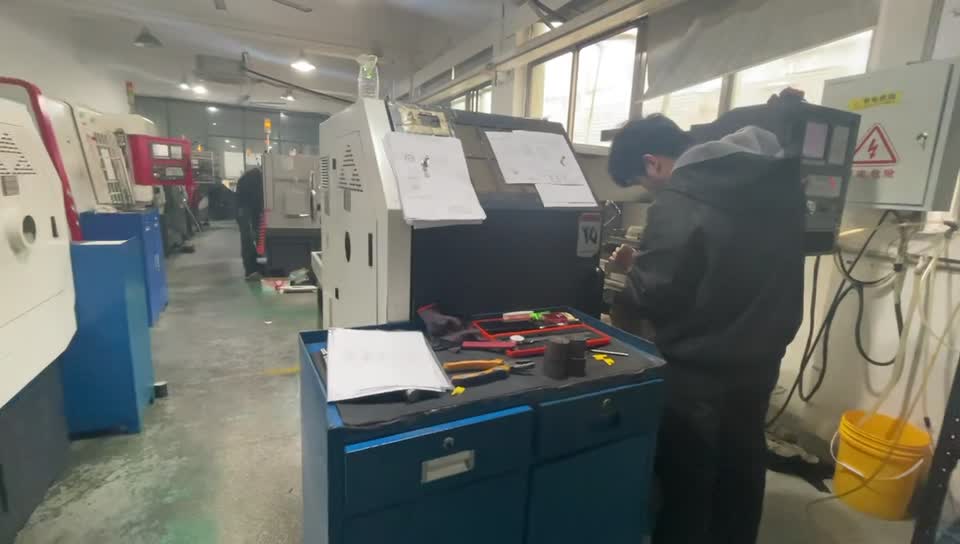
Precision CNC turning on TSUGAMI Swiss-type lathes for shafts, fittings, connectors, and cylindrical stainless steel components. Live tooling enables milling operations in a single setup.

  • Swiss-type and conventional CNC lathes
  • Bar diameter up to 65mm
  • Live tooling for cross-drilling and flats
  • Concentricity within 0.005mm

Wire EDM & Sinker EDM

For hardened stainless steel grades (420, 440C, 17-4PH) that resist conventional cutting, our Charmilles EDM machines achieve intricate geometries and mirror-level surface finishes.

  • Hardened stainless up to 60 HRC
  • Wire EDM for tight profiles and slots
  • Sinker EDM for cavities and complex shapes
  • Surface finish to Ra 0.1μm
TSUGAMI CNC lathes for stainless steel turning at MouldNova facility
CNC milling center machining stainless steel parts
Post-Processing

Surface Finishing for Stainless Steel Parts

The right surface finish does more than improve aesthetics — it enhances corrosion resistance, reduces bacterial adhesion, and meets industry-specific compliance requirements for your CNC machined stainless steel parts.

Passivation

A citric or nitric acid treatment that removes free iron from the surface and restores the protective chromium oxide layer. Essential for maximizing corrosion resistance on all CNC machined stainless steel parts.

Best for: All grades. Standard specification: ASTM A967 / AMS 2700.

Electropolishing

An electrochemical process that removes 20-40 microns of surface material, eliminating micro-burrs and embedded contaminants. Produces an ultra-smooth, bright finish with superior corrosion resistance — the gold standard for medical and food-contact parts.

Best for: 316L medical components, food processing equipment, pharmaceutical parts.

Mirror Polish

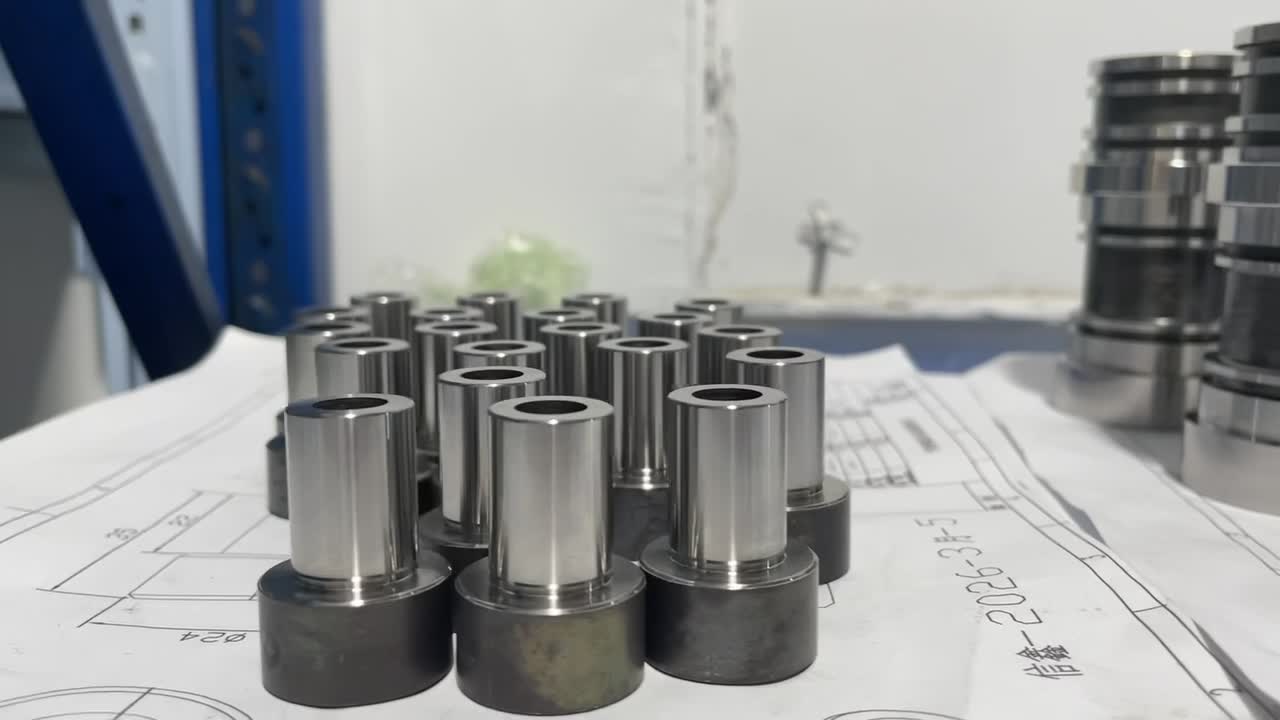
Mechanical polishing through progressively finer abrasives to achieve a mirror-like surface finish down to Ra 0.05μm. Used for optical components, decorative parts, and mold inserts where surface quality is paramount.

Best for: Mold inserts, optical housings, consumer products requiring SPI-A1 finish.
Mirror-polished stainless steel mold insert produced by CNC machining
Applications

Industries We Serve with Stainless Steel CNC Machining

Stainless steel's unique combination of strength, corrosion resistance, and biocompatibility makes it essential across demanding industries. Our CNC machining stainless steel expertise spans these critical sectors.

Medical & Surgical Devices

CNC machined stainless steel parts for surgical instruments, orthopedic implants, diagnostic equipment housings, and dental tools. We machine 316L and 17-4PH to meet the stringent dimensional and surface finish requirements of the medical industry. Electropolished surfaces minimize bacterial adhesion and meet biocompatibility standards.

Food Processing & Packaging

Conveyor components, mixing blades, filling nozzles, valve bodies, and custom fittings machined from 304 and 316 stainless steel. All parts meet food-contact surface requirements with passivated or electropolished finishes. Crevice-free designs prevent bacterial harboring in sanitary environments.

Marine & Offshore

316 stainless steel components for marine hardware, offshore platform fittings, desalination systems, and underwater instrumentation housings. Superior resistance to saltwater corrosion and pitting makes 316 the preferred grade for any component exposed to chloride-rich environments.

Chemical & Pharmaceutical

Reactor vessel components, pump housings, mixing shafts, and custom manifolds machined from 316L stainless steel. Chemical resistance to acids, alkalis, and solvents ensures long service life in aggressive processing environments. Full material traceability and documentation provided.

Engineering Insight

Why Stainless Steel Is Challenging to CNC Machine

Stainless steel is one of the most demanding materials in CNC machining. Understanding these challenges is what separates a quality stainless steel CNC machining service from a general-purpose machine shop. Here is why it requires specialized expertise:

Work Hardening: Austenitic grades (304, 316) harden rapidly during cutting. If the tool dwells or rubs instead of cutting cleanly, the surface becomes harder than the tool itself — causing premature tool failure and poor surface finish.

Accelerated Tool Wear: The abrasive nature of stainless steel combined with high cutting temperatures wears tooling 2-3x faster than carbon steel. We use premium carbide and ceramic inserts specifically rated for stainless steel machining.

Heat Management: Stainless steel has low thermal conductivity — heat concentrates at the cutting edge instead of dissipating into the workpiece. High-pressure coolant delivery and optimized cutting parameters are essential.

Chip Control: Long, stringy chips common in austenitic grades can wrap around the tool, damage the surface, or cause machine downtime. Proper chip-breaking geometry and feed rates are critical.

Dimensional Stability: Residual stresses from machining can cause stainless steel parts to warp after unclamping. Stress-relief strategies and balanced machining sequences prevent distortion in precision components.

CNC machined stainless steel precision components
Our Advantage

Equipment Built for Stainless Steel Precision

We have invested in machines specifically capable of handling the demands of stainless steel CNC machining — rigid spindles, high-pressure coolant systems, and precision feedback loops that maintain accuracy even during long production runs on tough materials.

Charmilles EDM Machines

Swiss-made Charmilles sinker EDM and wire EDM machines handle hardened stainless steel grades that conventional cutting tools cannot efficiently process. For 17-4PH, 420, and 440C parts requiring complex internal geometries, sharp corners, or ultra-fine surface finishes, EDM delivers results that milling and turning cannot match.

Wire EDM Accuracy ±0.003mm
Surface Finish Ra 0.1μm achievable
Hardness Range Up to 65 HRC

TSUGAMI CNC Lathes

Japanese-made TSUGAMI Swiss-type CNC lathes provide the rigidity and precision required for stainless steel turning. High-pressure through-spindle coolant delivery keeps cutting temperatures controlled, while live tooling enables complete parts in a single operation — reducing handling, improving concentricity, and cutting lead times.

Turning Accuracy ±0.005mm
Live Tooling Milling, drilling, tapping in-setup
Coolant System High-pressure through-spindle

We also offer full CNC, EDM, and injection molding services and metal 3D printing for integrated manufacturing solutions.

Case Study

316L Stainless Steel Components for Food Processing Equipment

Challenge: A European food processing equipment manufacturer needed 200 custom valve bodies and mixing components in 316L stainless steel. Parts required electropolished surfaces (Ra < 0.4μm) to meet EU food-contact hygiene standards, with dimensional tolerances of ±0.02mm across all critical features.

Solution: We CNC milled the valve bodies from solid 316L bar stock using high-pressure coolant to manage heat and prevent work hardening. Internal channels were finished using our Charmilles sinker EDM for smooth, crevice-free flow paths. All parts were electropolished in-house and passivated per ASTM A967.

200+
Parts delivered
Ra 0.3μm
Surface finish achieved
±0.015mm
Actual tolerance held
3 weeks
Total lead time
Project Summary
Material 316L Stainless Steel
Processes CNC Milling + Sinker EDM
Finishing Electropolish + Passivation
Standard ASTM A967, EU food-contact
Inspection 100% CMM + Material Certs
FAQ

Stainless Steel CNC Machining — Frequently Asked Questions

What stainless steel grades can you CNC machine?+

We machine all major stainless steel grades including 304, 316/316L, 17-4PH, 420, and 440C. Each grade is selected based on your application requirements for corrosion resistance, hardness, and mechanical properties. We also work with duplex stainless steels (2205, 2507) and specialty alloys on request.

What tolerances can you hold on stainless steel parts?+

We routinely hold tolerances of ±0.01mm on CNC machined stainless steel parts. For critical dimensions, we can achieve ±0.005mm with specialized fixturing and process controls. All parts are CMM-inspected with full dimensional reports available.

Why is stainless steel harder to CNC machine than regular steel?+

Stainless steel work-hardens rapidly during machining, meaning the material gets harder as it is cut. This causes accelerated tool wear, generates more heat, and requires slower cutting speeds, rigid setups, and specialized tooling. Austenitic grades (304, 316) are particularly prone to work hardening, while martensitic grades (420, 440C) present challenges due to their high hardness after heat treatment.

What surface finishes are available for stainless steel parts?+

We offer passivation, electropolishing, mirror polishing (Ra 0.05μm), bead blasting, brushed finish, and PVD coating. Passivation is recommended for all stainless steel parts to maximize corrosion resistance. Electropolishing is preferred for medical and food-contact applications where ultra-smooth, hygienic surfaces are required.

How much do CNC machined stainless steel parts cost?+

Pricing depends on grade, complexity, tolerances, quantity, and finishing requirements. Stainless steel parts typically cost 20-40% more than carbon steel equivalents due to higher material costs and slower machining speeds. We provide free, detailed quotes within 24 hours — send your drawings for an accurate estimate.

What is the typical lead time for stainless steel CNC machining?+

Prototypes are typically delivered in 5-7 business days. Production batches range from 2-4 weeks depending on quantity and complexity. We maintain stock of common grades (304, 316) for faster turnaround and can expedite urgent orders when needed.

Can you machine food-grade and medical-grade stainless steel?+

Yes. We regularly machine 316L for medical implants and surgical instruments, and 304/316 for food processing equipment. We provide material certificates (mill certs), comply with ASTM A967 for passivation, and can meet FDA and ISO 13485 documentation requirements for medical device components.

What industries do your stainless steel machining services serve?+

We serve medical devices, food processing, marine and offshore, chemical processing, pharmaceutical, aerospace, automotive, and oil and gas industries. Any application requiring corrosion-resistant, high-strength precision parts is within our capability.

Do you offer both CNC milling and CNC turning for stainless steel?+

Yes. We have TSUGAMI CNC lathes for precision turning of shafts, fittings, and cylindrical components, and multi-axis CNC milling centers for complex 3D geometries, housings, and structural parts. Both are optimized for stainless steel with high-pressure coolant systems and carbide tooling.

What is the difference between passivation and electropolishing?+

Passivation uses a citric or nitric acid bath to remove free iron and enhance the natural chromium oxide layer, improving corrosion resistance without changing the surface appearance. Electropolishing goes further — it electrochemically removes a thin surface layer (20-40μm), producing a smoother, brighter finish with even better corrosion resistance. Electropolishing is preferred for medical, pharmaceutical, and food-contact applications.
Ready to Get Your Stainless Steel Parts Made?

Send your drawings or 3D models. We will quote your stainless steel CNC machining project within 24 hours — material selection, machining, finishing, and inspection included. No minimum order quantity.

+86 182 6866 1068

WhatsApp · WeChat · Global Shipping

Chat on WhatsApp