1. The Direct Answer — Yes, You Can 3D Print Metal
Yes. Metal 3D printing is a mature, industrial manufacturing process used every day to produce aerospace components, surgical implants, injection mold tooling, automotive parts, and custom jewelry. The technology has been commercially available since the mid-1990s and today produces parts indistinguishable in strength from — and often geometrically impossible to make any other way than — conventionally machined metal.
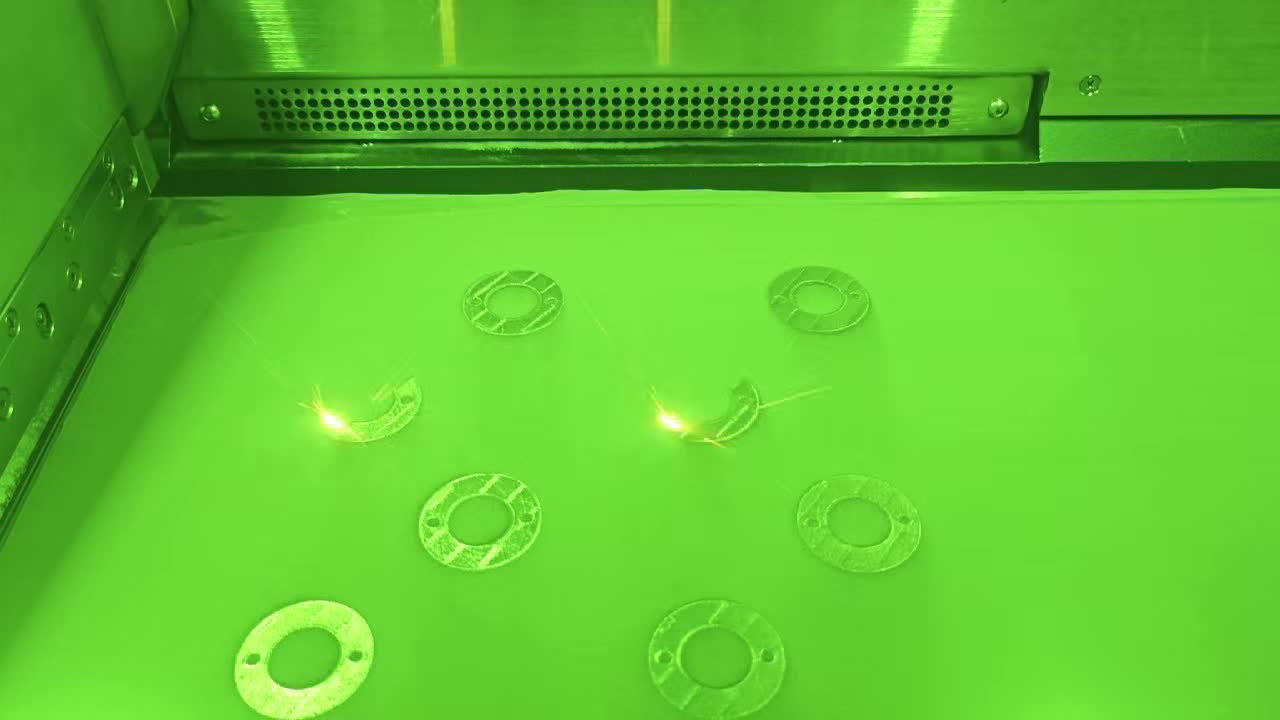
If you've been wondering whether 3D printers can actually print metal — as in real, fully solid, structural metal — the answer is an unambiguous yes. This is not a science fiction concept. It is a mainstream manufacturing process used by companies like Airbus, GE Aviation, Stryker Medical, and thousands of smaller manufacturers worldwide.
The confusion usually comes from familiarity with desktop plastic 3D printers, which use inexpensive filament or resin. Metal 3D printing is a different class of machine entirely — industrial equipment costing $300,000 to $2 million — but the output is solid metal parts that can be welded, machined, heat treated, and put into service under full structural load.
This guide explains exactly how it works, starting with the most widely used process.
2. How Metal 3D Printing Works: The LPBF / SLM Process Step by Step
The dominant metal 3D printing technology is called Laser Powder Bed Fusion (LPBF) — also known as Selective Laser Melting (SLM) or Direct Metal Laser Sintering (DMLS) depending on the equipment manufacturer. These names refer to essentially the same process. (For a detailed technical comparison of SLM vs. DMLS terminology, see our SLM vs. DMLS explainer.)
Here is exactly what happens inside an LPBF machine, layer by layer:
The machine is loaded with fine metal powder — particles typically 15 to 45 micrometers in diameter (about half the width of a human hair). Common materials include stainless steel, tool steel, titanium, aluminum, and Inconel. The powder is stored in a sealed hopper and the entire build chamber is purged with inert gas (argon or nitrogen) to prevent oxidation during melting.
A recoater blade or roller sweeps a thin, uniform layer of powder across the build platform. The layer is typically 20 to 60 micrometers thick — thinner layers produce finer surface finish and better detail, but take longer. A part 50 mm tall built at 40 µm layers requires 1,250 individual powder layers.
A high-power fiber laser — typically 200 W to 1,000 W — scans across the powder bed at speeds of 500 to 2,000 mm/s. The laser melts and fuses the powder particles together wherever the 3D model has solid material at that layer height. The laser beam is precisely controlled by a galvanometer mirror system, allowing it to trace complex geometries with very high accuracy. Areas outside the part's cross-section are left as loose, unfused powder.
Modern machines use two, four, or even more lasers simultaneously to increase build speed — a significant recent advance in the technology.
After the laser finishes scanning a layer, the build platform lowers by exactly one layer thickness (e.g., 40 µm). This positions the top surface of the solidified part ready to receive the next powder layer.
Steps 2 through 4 repeat hundreds or thousands of times. The unfused powder surrounding the part acts as support material — it holds overhanging features in place during the build and is recycled after the job. When the build finishes, the operator removes the build platform, brushes away the loose powder, and separates the finished parts.
Freshly printed metal parts almost always require some post-processing. This typically includes: stress relief heat treatment (to release residual stresses from the rapid heating and cooling during printing), removal of support structures (thin metal struts used beneath overhanging surfaces), CNC machining of critical surfaces that need tight tolerances, and surface finishing (bead blasting, polishing, or electropolishing) to improve surface roughness from the as-printed Ra 5–15 µm to whatever the application demands.
The entire process — from digital 3D file to finished metal part — typically takes 2 to 7 days depending on part size, complexity, and post-processing requirements. For urgent prototype work, some service bureaus offer 24-hour turnaround on small parts.
3. Other Metal 3D Printing Methods
LPBF/SLM is the most common metal 3D printing process for precision parts, but it is not the only one. Here is a plain-English overview of the other main methods:
EBM uses a high-powered electron beam instead of a laser to melt metal powder. It operates in a vacuum rather than an inert gas atmosphere. EBM produces parts with lower residual stress than laser-based methods (the entire powder bed is preheated to 700–1,000°C), making it especially good for titanium parts and other materials prone to cracking. It is widely used in aerospace and orthopedic implants. Downside: slower build speeds and rougher surface finish than LPBF. Learn more in our EOS and metal 3D printing technology overview.
Binder jetting does not melt the powder at all during printing. Instead, a liquid binder (glue) is jetted onto each powder layer to hold the particles together in the shape of the part. The resulting "green part" is then sintered in a furnace at high temperature, burning off the binder and fusing the metal powder particles. Binder jetting is much faster than LPBF — parts can be printed at rates 5 to 10 times faster — but the sintering step causes 15–20% shrinkage that must be accounted for in the design. Best for medium-to-high volume production of small, complex parts.
DED processes — including Wire Arc Additive Manufacturing (WAAM) — work like a CNC-controlled welding machine. Metal wire or powder is fed into a focused energy source (laser, plasma arc, or electron beam) and deposited onto a substrate layer by layer. DED excels at making very large parts (meters in scale), repairing damaged components, and adding features to existing metal parts. Surface finish is rougher than LPBF and subsequent machining is almost always required. WAAM in particular is gaining traction for large structural parts in aerospace and shipbuilding.
Metal FDM works exactly like a desktop plastic 3D printer, but the filament contains metal powder bound in a polymer matrix. After printing, the part goes through a debinding step (to remove the polymer) and sintering (to fuse the metal particles). Brands like Markforged Metal X and Desktop Metal Studio use this approach. It is the most accessible metal 3D printing method — machines cost $100,000 to $200,000 compared to $500,000+ for LPBF — but part density and mechanical properties are lower than LPBF, and wall thickness is limited. Good for prototypes and low-stress functional parts.
4. What Metals Can Be 3D Printed?
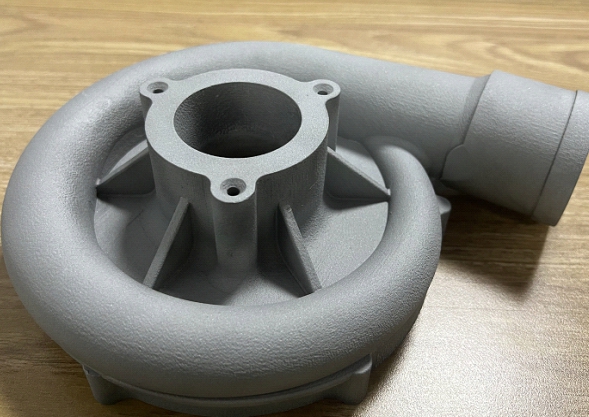
More than 50 metal alloys are commercially available for 3D printing. Here are the most commonly used, grouped by material family:
| Metal / Alloy | Common Grades | Best For |
|---|---|---|
| Stainless Steel | 316L, 17-4 PH, 304L | Corrosion-resistant parts, medical devices, food-contact components, general engineering |
| Tool Steel | H13, MS1 maraging steel, 1.2709 | Injection mold inserts, cutting tools, dies — especially conformal cooling channels |
| Titanium | Ti-6Al-4V (Grade 23), CP Ti Grade 2 | Aerospace structural parts, orthopedic implants, lightweight high-strength components |
| Aluminum | AlSi10Mg, AlSi7Mg, Scalmalloy | Lightweight automotive and aerospace brackets, heat exchangers, consumer electronics housings |
| Inconel (Nickel Superalloy) | Inconel 625, Inconel 718 | Jet engine components, rocket nozzles, turbine blades — anything requiring strength above 700°C |
| Cobalt Chrome | CoCrMo, CoCrW | Dental crowns and bridges, hip and knee implants, high-wear industrial components |
| Copper / Copper Alloys | Pure Cu, CuCrZr, CuNi2SiCr | Heat exchangers, electrical components, induction coils — high thermal and electrical conductivity |
A useful rule of thumb: if a metal can be welded, it can generally be 3D printed via LPBF. The laser melting process in LPBF is fundamentally similar to welding — rapid melting and re-solidification — so weldability is a good proxy for printability. Metals with poor weldability (some high-carbon steels, certain aluminum alloys) require careful parameter development but can often still be printed.
5. What Can You Make with Metal 3D Printing?
Metal 3D printing is most valuable when a part has one or more of the following characteristics: complex internal geometry (channels, lattices, undercuts), very low production volume (1 to 100 pieces), extreme performance requirements, or a lead time pressure that makes conventional tooling impractical. Here are the most important application areas:
Injection Mold Inserts with Conformal Cooling
This is the application closest to our core business at MouldNova, and one of the most commercially significant uses of metal 3D printing worldwide. Conventional mold inserts use straight-drilled cooling channels that cannot follow curved part surfaces. 3D-printed inserts can incorporate conformal cooling channels — channels that follow the exact contour of the mold cavity at a uniform distance — dramatically improving cooling uniformity. The result is 20 to 40% shorter cycle times, less warpage, and higher part quality. Learn more on our metal 3D printing service page.
Aerospace Structural Components
Metal 3D printing is used extensively in aerospace for brackets, ducting, fuel nozzles, and structural fittings. GE Aviation's LEAP engine fuel nozzle — now produced in hundreds of thousands of units — is perhaps the most famous example. The 3D-printed nozzle is 25% lighter and 5 times more durable than the 20-part assembly it replaced. Airbus uses metal 3D printing for titanium brackets and bleed air ducts on the A320neo and A350.
Medical Implants
Orthopedic implants — hip cups, knee implants, spinal cages, and custom cranial plates — are a major application. Metal 3D printing allows surgeons to design implants matched exactly to a patient's anatomy from CT scan data, and the porous lattice structures achievable only through 3D printing promote bone ingrowth better than smooth machined surfaces. Titanium (Ti-6Al-4V ELI) and cobalt chrome are the dominant materials.
Automotive Components
Motorsport teams use metal 3D printing for custom uprights, brackets, and cooling manifolds where weight is critical and volumes are too low for casting tooling to be economic. Production automotive applications include lightweight aluminum heat exchangers, optimized exhaust manifolds, and — increasingly — metal 3D printed mold inserts for high-volume plastic part production.
Custom Jewelry and Dental
Jewelry manufacturers use LPBF and lost-wax casting from 3D-printed masters to produce custom rings, pendants, and bracelets in gold, platinum, and silver. The dental industry prints cobalt chrome frameworks for partial dentures and full crowns in a single day — a workflow that previously took a dental lab two weeks.
Industrial Tooling and Fixtures
Grippers, jigs, fixtures, and end-of-arm tooling for robotic assembly lines can be produced faster and cheaper via metal 3D printing than machining when geometries are complex. Aluminum AlSi10Mg is the common choice for its combination of light weight and rigidity.
6. Quality and Strength — How Does It Compare to Machined Metal?
This is the question most newcomers ask, and the honest answer is: for most engineering applications, very well. Here is what the data actually shows:
LPBF-printed parts from qualified material suppliers and optimized process parameters routinely achieve 99.5 to 99.9% of theoretical density. This is verified by Archimedes density testing and cross-sectional metallographic analysis. At this density level, there are effectively no voids or pores that would compromise mechanical performance.
Printed 316L stainless steel typically achieves 600 to 680 MPa ultimate tensile strength — above the ASTM A276 minimum of 515 MPa for wrought 316L. Printed Ti-6Al-4V after heat treatment meets or exceeds AMS 4928 (the wrought specification), which is the standard required for aerospace structural use. MS1 maraging steel printed via LPBF and age-hardened reaches 1,900 to 2,050 MPa tensile strength — matching conventionally produced maraging steel.
This is the same hardness range as conventionally produced H13 and maraging steel tooling. For injection mold inserts, this means the insert can withstand the full mechanical loads of injection molding without deformation — the same as a conventionally machined insert.
As-printed parts have lower fatigue life than wrought equivalents due to surface roughness and residual stress. After stress relief heat treatment and surface finishing, fatigue performance approaches wrought levels. Hot Isostatic Pressing (HIP) — a post-processing step that applies high pressure and temperature — closes any residual microporosity and brings fatigue life to full wrought equivalence. HIP is standard practice for aerospace and medical parts.
7. Limitations and When CNC Machining Is Better
Metal 3D printing is a powerful technology, but it is not the right answer for every part. Here are the real limitations you should know about before deciding:
Size Constraints
Most LPBF machines have build volumes of 250 × 250 × 300 mm to 500 × 500 × 500 mm. Very large parts — say, a 1-meter structural frame — cannot be built in a single LPBF job. (DED/WAAM systems can handle much larger parts, but with lower resolution.) For large, simple shapes, machining from stock is usually faster and cheaper.
Surface Finish
As-printed LPBF parts have a surface roughness of Ra 5 to 15 micrometers — comparable to a rough-ground surface. This is fine for many applications but not for sealing surfaces, bearing journals, or precision fit features. These surfaces require post-machining, which adds cost and lead time. Design for metal 3D printing should specify which surfaces need finishing and which can be left as-printed.
Cost vs. CNC for Simple Shapes
For simple prismatic parts — a block with a few holes and flat faces — CNC machining from stock is almost always faster and cheaper than LPBF printing. Metal 3D printing delivers cost advantages over machining when a part has complex internal channels, thin walls, topology-optimized structures, or integrated features that would require many setups to machine. A useful heuristic: if a part can be machined in 2 setups or fewer, CNC is probably the better choice.
Material Selection is Narrower Than Machining
CNC machining can work with virtually any metal that can be cast or formed — including exotic alloys, free-machining grades, and highly work-hardened materials. LPBF is limited to alloys that have been characterized into powder form and for which optimized process parameters exist. This is still 50+ alloys, which covers the vast majority of engineering applications, but niche materials may not be available.
| Factor | Choose Metal 3D Printing | Choose CNC Machining |
|---|---|---|
| Internal channels or lattices | Yes — only practical option | Difficult or impossible |
| Part volume (quantity) | 1 to ~500 pieces | Any volume |
| Simple shape, tight tolerances | Possible, but post-machining needed | Best choice |
| Lead time for complex part | 2–7 days | 1–4 weeks (fixturing, multiple setups) |
| Part size over 500 mm | Requires sectioning or DED | Straightforward |
| As-printed surface finish | Ra 5–15 µm (rough) | Ra 0.4–3.2 µm (smooth) |
8. Cost Overview — What Does Metal 3D Printing Cost?
Metal 3D printing costs vary widely depending on material, part volume (geometry), machine time, and post-processing. Here is a realistic overview to set your expectations:
What Drives the Cost
- Material cost: Metal powder is expensive. Stainless steel powder (316L) runs approximately $40–$80/kg. Titanium is $200–$350/kg. Inconel is $100–$250/kg. A small stainless steel part using 200 g of powder has a material cost of $8–$16, but machine time typically dominates for larger parts.
- Machine time: LPBF machines cost $300,000–$1M+ and typically run at $100–$300/hr fully loaded (machine depreciation, operator, gas, facility). Build time depends on part height, not just volume — a tall part takes longer regardless of how much material it contains, because every layer takes time to spread and scan.
- Post-processing: Heat treatment, support removal, and machining of critical surfaces add $50–$500+ per part depending on complexity. Surface finishing (polishing, electropolishing) adds more.
Rough Price Guide by Part Size
| Part Size | Typical Volume | Stainless Steel Price Range | Titanium Price Range |
|---|---|---|---|
| Small (e.g., bracket, fitting) | Under 50 cm³ | $50–$300 | $150–$800 |
| Medium (e.g., housing, insert) | 50–500 cm³ | $200–$1,500 | $600–$4,000 |
| Large (e.g., mold core, manifold) | 500+ cm³ | $1,000–$10,000+ | $3,000–$25,000+ |
For a detailed breakdown of metal 3D printing pricing — including per-cm³ rates by material, post-processing cost tables, and a worked example — see our dedicated guide: How Much Does Metal 3D Printing Cost? (2026 Price Guide).
The key insight on cost: metal 3D printing is typically more expensive per kilogram than CNC machining for simple shapes, but significantly cheaper per finished part when that part has complex geometry that would require many machining setups, special tooling, or is simply impossible to machine. Always compare total cost to produce the finished part — not just material cost or per-hour rates.
9. How to Get Started — Send a File, Get a Quote
If you have a part you want to explore making in metal, here is exactly what to do:
The standard file format for metal 3D printing is STEP (.stp or .step). Most CAD software (SolidWorks, Fusion 360, Inventor, CATIA, NX) can export STEP files directly. If you only have a 2D drawing, a CAD service can convert it. STL files are also accepted but STEP is preferred because it preserves geometry exactly.
If you do not yet have a design and need help with design-for-additive-manufacturing (DfAM) optimization — adding lattice structures, conformal channels, or topology optimization — mention this when you contact us and we can assist.
When you submit your file, include: the material you need (or ask for a recommendation), quantity, any surface finish requirements (as-printed, bead blasted, machined, polished), tolerances on critical dimensions, and your deadline. If you have a specific hardness or tensile strength requirement, include that too.
We analyze your file and return a quotation with material, machine time, post-processing, and total cost — typically within 24 hours for standard parts. For complex conformal cooling inserts or parts requiring design review, allow 1 to 2 business days. The quote includes a buildability assessment noting any design changes recommended to improve quality or reduce cost.
Once you approve the quote, we schedule the build. Most parts ship within 5 to 10 business days. Rush service (2 to 3 days) is available for an additional fee. Every order includes material certificates, density test reports, and a dimensional inspection report. For mold tooling applications, we also provide Moldflow simulation data showing predicted thermal performance of conformal cooling channels.
Ready to start? Visit our metal 3D printing service page or contact us directly via WhatsApp or email using the buttons below.
10. FAQ — Common Questions About Metal 3D Printing
Yes, absolutely. Metal 3D printing has been a mainstream industrial manufacturing process since the early 2000s. The most common method, Laser Powder Bed Fusion (LPBF), uses a high-power laser to melt fine metal powder layer by layer, building up fully solid, dense metal parts. The resulting parts achieve densities above 99.5% and mechanical properties comparable to — and in some cases better than — conventionally machined parts.
The most widely used process, LPBF, works in five repeating steps: (1) a thin layer of metal powder (20–60 micrometers) is spread across the build platform; (2) a high-power laser melts and fuses the powder in the cross-sectional shape of that layer; (3) the platform lowers by one layer thickness; (4) a new powder layer is spread; (5) steps 2 through 4 repeat until the part is complete. The whole process happens inside an inert gas atmosphere to prevent oxidation of the hot metal. Post-processing (heat treatment, support removal, and often some machining) follows printing.
The most commonly 3D printed metals are stainless steel (316L, 17-4 PH), tool steel (H13, MS1 maraging steel), titanium (Ti-6Al-4V), aluminum alloys (AlSi10Mg), Inconel (625, 718) for high-temperature applications, cobalt chrome for medical and dental use, and copper for thermal and electrical applications. Over 50 metal alloys are commercially available as print-ready powder. A useful rule of thumb: if a metal can be welded, it can generally be 3D printed.
Yes, for most applications. LPBF-printed parts achieve densities above 99.5%, and their tensile strength, yield strength, and hardness are comparable to wrought equivalents. For example, printed 316L stainless steel typically achieves 600 to 680 MPa tensile strength — above the ASTM minimum of 515 MPa for wrought 316L. Tool steel printed from MS1 maraging steel reaches 50 to 52 HRC after heat treatment, matching conventionally produced tool steel. Post-processing steps like heat treatment and Hot Isostatic Pressing (HIP) can further optimize mechanical properties for demanding aerospace and medical applications.
Costs depend on part size, material, and complexity. As a rough guide: small parts (under 50 cm³) cost $50 to $300 in stainless steel; medium parts (50–500 cm³) run $200 to $1,500; large parts cost $1,000 to $10,000 or more. Titanium and Inconel cost 3 to 5 times more than stainless steel. For simple prismatic shapes, CNC machining is usually cheaper. Metal 3D printing delivers the best cost advantage on complex internal geometries — such as conformal cooling channels — that cannot be machined at all. See our full metal 3D printing cost guide for detailed pricing.
Related Pages
- Metal 3D Printing Service — Full Specifications, Materials & Lead Times
- How Much Does Metal 3D Printing Cost? (2026 Price Guide)
- SLM vs. DMLS — What Is the Difference and Does It Matter?
- What Is EOS Metal 3D Printing? Technology, Materials & Applications
- Conformal Cooling Inserts — How 3D-Printed Tool Steel Cuts Cycle Times 20–40%