Conformal cooling and additive manufacturing are not just complementary technologies — each is the enabling condition for the other's commercial viability. Without AM, conformal cooling channels cannot be manufactured. Without the dramatic productivity gains of conformal cooling, AM tooling has no compelling economic case in most injection molding operations. Understanding this relationship is the starting point for any mold manufacturer evaluating where to invest in AM technology.
1. Why Conventional Manufacturing Cannot Make Conformal Cooling
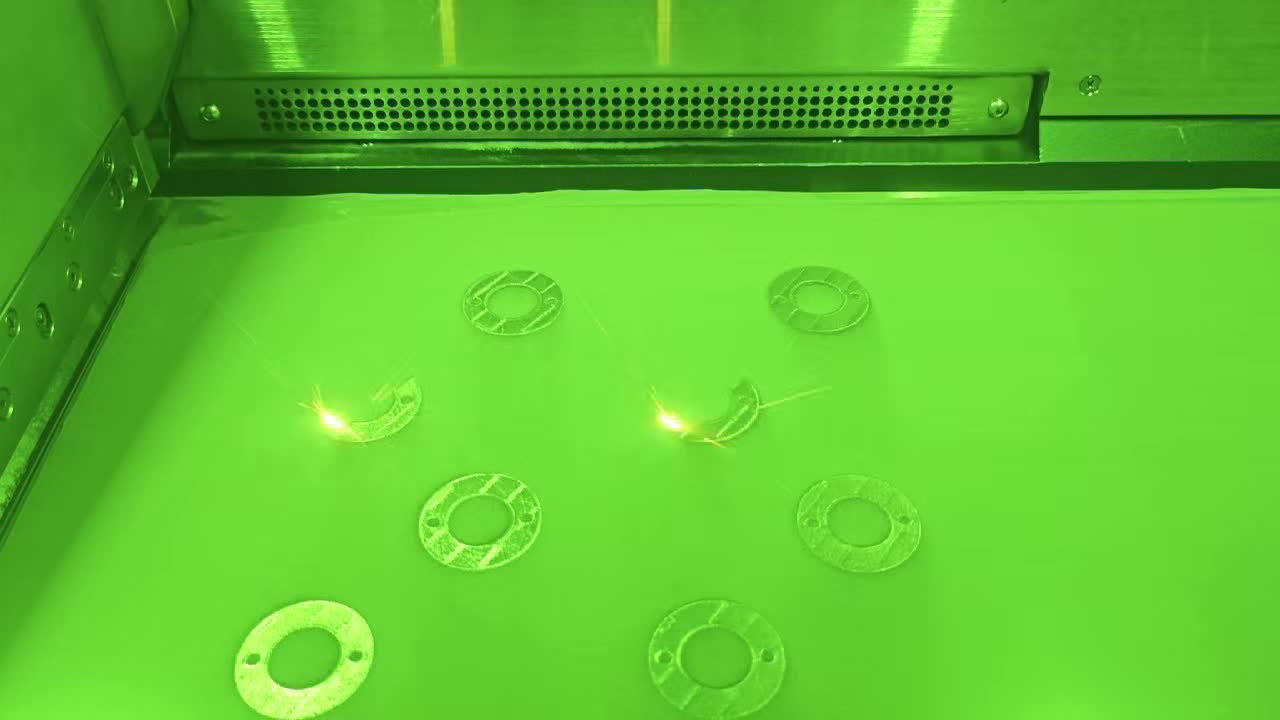
The defining characteristic of conformal cooling is that channels follow the 3D contour of a part cavity, maintaining a near-constant distance from the cavity surface as it curves and bends. This geometry is geometrically impossible to create with any conventional subtractive manufacturing process:
Conventional Manufacturing Constraints
- CNC drilling: Can only create straight through-holes. Intersecting hole patterns leave dead-end plugs, corners accumulate stagnant coolant, and drill clearance limits minimum wall thickness.
- EDM (Electrical Discharge Machining): Can create complex pockets but cannot create fully enclosed internal channels — requires open-sided construction and a cover plate brazed on top. Braze joints are frequent leak failure points.
- Lost-core casting: Sand or soluble salt cores can create curved channels, but dimensional accuracy is ±0.5–1.0 mm vs. ±0.05–0.1 mm for LPBF, insufficient for precision tooling.
- Vacuum brazing: Two half-channels machined into mating faces, then brazed together. Works for simple geometries but creates a bond line that is weaker than the base material, limiting pressure rating.
Additive Manufacturing Capabilities
- LPBF / SLM / DMLS: Builds any closed internal geometry layer by layer, from powdered metal. No joints, no bond lines, no geometric constraints. Channel complexity is essentially free — a spiral channel costs the same as a straight channel in print time.
- Full density: 99.5%+ relative density with optimized process parameters, equivalent to wrought material for most mechanical properties.
- Tool steel compatibility: 420 SS, 18Ni300, H13, and CuCrZr are all printable and post-processable to production hardness.
- Integrated design: Cooling channels, ejector pin holes, and cavity surfaces can all be printed in a single operation, eliminating assembly joints.
The key insight is that AM does not just make conformal cooling easier to manufacture — it makes certain channel geometries only possible via AM. A spiral channel winding around a deep cylindrical core simply has no manufacturing route other than LPBF. This is why conformal cooling is the primary commercial driver for metal AM in tooling: it creates a performance advantage that has no conventional alternative.
2. The Evolution: From Vacuum Brazing to LPBF
Conventional Drilling Only
All injection mold cooling via straight-drilled channels. Complex parts accepted hot spots and warpage as unavoidable. Cycle time optimization focused on injection speed and material formulation, not cooling geometry.
Vacuum Brazing and Split Inserts
Mold makers began machining half-channel profiles into mating steel faces and brazing them together. Limited to simple curved paths; braze joint failures were common above 150 bar. Represented the first commercial conformal cooling but with significant reliability trade-offs.
Early DMLS for Tooling Inserts
EOS and Concept Laser began offering DMLS in tool steels for mold inserts. First commercial conformal cooling inserts appeared in automotive and packaging. Costs were high ($5,000–20,000 per insert), quality variable. Proof-of-concept stage.
Process Maturation and Cost Reduction
Second-generation LPBF machines doubled build speed and reduced per-part costs 40–60%. 420 SS and 18Ni300 powders became standardized. Post-processing protocols (stress relief, HIP, age hardening) established. ROI cases became routine at volumes above 500,000 shots/year.
Mainstream Adoption and Process Integration
LPBF conformal cooling inserts are now standard practice in tier-1 automotive, medical device, and consumer electronics tooling. Chinese manufacturers (including Ningbo Saiguang) entered the market with 2–3× price advantage over European suppliers. Binder jetting emerging for large-format inserts. Global market for metal AM tooling components estimated at $1.2B in 2025.
3. AM Process Comparison for Conformal Cooling
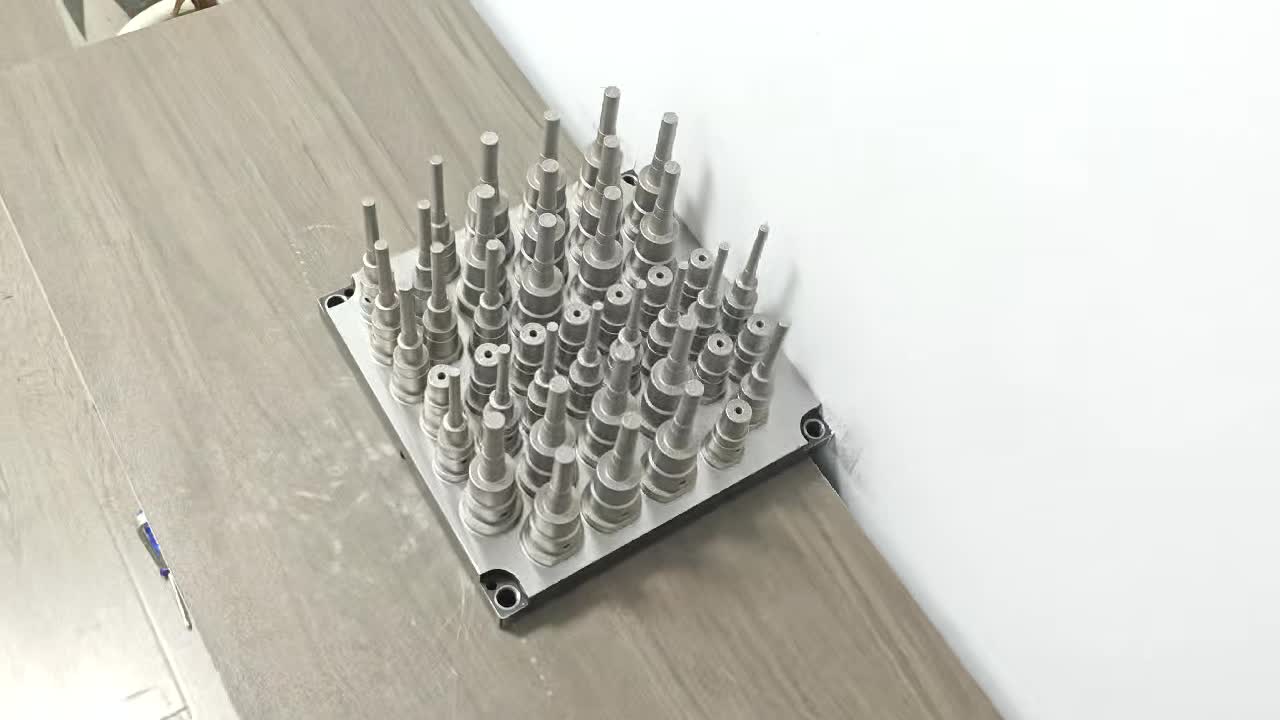
Five metal AM processes have been used for conformal cooling inserts. LPBF dominates due to its combination of accuracy, density, and material options:
| AM Process | Accuracy | Relative Density | Surface Finish (Ra) | Build Speed | Market Share (tooling) |
|---|---|---|---|---|---|
| LPBF / SLM / DMLS | ±0.05–0.1 mm | 99.5–99.9% | 5–15 μm (as-built) | 10–80 cm³/h | ~85% |
| Binder Jetting | ±0.2–0.5 mm | 97–99% | 3–8 μm (as-sintered) | 200–1000 cm³/h | ~8% |
| DED (Directed Energy Deposition) | ±0.25–0.5 mm | 99.0–99.5% | 20–50 μm | 100–500 cm³/h | ~5% (repair only) |
| EBM (Electron Beam Melting) | ±0.1–0.2 mm | 99.5–99.9% | 20–40 μm | 20–100 cm³/h | <2% |
| Metal FDM (Extrusion) | ±0.3–0.5 mm | 96–98% | 10–30 μm | 5–15 cm³/h | <1% |
Why Binder Jetting Is Emerging as a Secondary Option
Binder jetting prints metal powder using a polymer binder, then sinters the part in a furnace. For conformal cooling inserts, it offers two advantages over LPBF: faster build speed (5–10× higher throughput) and lower capital equipment cost. The disadvantage is lower final density (97–99% vs. 99.5%+ for LPBF) and higher dimensional shrinkage during sintering (18–20%), which requires compensated design files.
Binder jetting becomes competitive for inserts above 150 mm in any dimension, where LPBF build time becomes prohibitive. For small and medium inserts (the majority of the market), LPBF remains the default. As binder jetting process control improves and sintering-induced dimensional predictability increases, it is expected to capture 15–20% of the conformal cooling insert market by 2028.
4. Design Freedom: What AM Unlocks
The most significant impact of AM on conformal cooling is not incremental improvement — it is the removal of geometric constraints that have defined mold cooling design for 70 years. Three categories of previously impossible designs are now routine:
True 3D Conformal Paths
Cooling channels that follow complex part geometry in three dimensions: spiraling around a dome, branching to reach undercut areas, climbing helically through a deep core. Previously impossible with any manufacturing method. Now printed as a single-body insert with no assembly.
TPMS Lattice Geometry
Triply Periodic Minimal Surface structures (gyroid, Schwartz Diamond) provide maximum coolant-to-metal contact area in a given volume — 3–5× more surface area than circular channels of equivalent cross-section. Requires CT scan validation post-print. Used for extreme hot spots and weld line suppression.
Integrated Multi-Function Inserts
Cooling channels, structural lightweighting lattice, ejector sleeve guides, and sensor pockets all printed in a single body. Eliminates four separate manufacturing operations, reduces mold assembly complexity, and creates inserts with no internal joining surfaces.
Zone-Specific Cooling Intensity
Variable channel diameter and pitch within a single insert, placing maximum cooling density at highest heat flux zones (gate area, thick sections) and relaxing pitch in thin walls where overcooling would cause premature freezing. Simulation-validated topology optimization.
Design Optimization Workflow with AM
AM changes not just what can be manufactured, but when in the design process optimization occurs. The conventional workflow was: design part → design mold → accept cooling as constrained by conventional manufacturing. The AM workflow reverses this:
- Thermal simulation first: Identify ideal channel routing based on heat flux distribution — with no manufacturing constraints. This is the "AM-native" design.
- Structural validation: Check that channel geometry satisfies minimum wall thickness (≥2 mm), bend radius (≥1.5×D), and print overhang rules. Adjust only as needed for printability.
- Manufacture: Print the optimized design. The geometry has not been compromised by manufacturing limitations — you get what you simulated.
The result is that AM-designed conformal cooling inserts routinely achieve 90–95% of the theoretically optimal cooling performance, versus 40–60% for conventionally manufactured channels that are constrained by drill access and braze joint positions.
5. AM Tooling Economics: Build vs. Buy vs. China
The economics of AM conformal cooling inserts depend heavily on supply chain strategy. Three models are in common use among injection molders:
| Supply Model | Capital Required | Unit Cost (Medium Insert) | Lead Time | Best For |
|---|---|---|---|---|
| In-house LPBF | $300K–1.5M machine + $100K/yr ops | $800–1,500 (variable cost only) | 3–7 days | High-volume moldmakers (>50 inserts/year) |
| Local AM service bureau (US/EU) |
None | $3,000–8,000 | 7–14 days | Medium-volume, quality-critical |
| China AM supplier (e.g., MouldNova) |
None | $1,200–3,500 | 10–16 days (DHL) | Cost-sensitive, high-volume procurement |
| Conventional (machined) | None | $400–1,500 | 5–10 days | Straight-channel cases only |
"The 2.5× price gap between Chinese and European AM suppliers has compressed significantly since 2022. The real decision today is not cost alone — it's cycle time improvement capability, engineering support, and supply chain reliability. At production volumes above 300,000 shots/year, a $2,000 price difference on the insert is irrelevant against $150,000+ in annual cycle time savings."
— MouldNova Engineering TeamTotal Cost of Ownership Analysis
When evaluating AM conformal cooling vs. conventional cooling, the relevant comparison is not insert cost but total cost per production shot over the mold lifetime:
| Cost Element | Conventional Insert | AM Conformal Insert | Difference |
|---|---|---|---|
| Insert cost (medium, 420 SS) | $800 | $2,500 | +$1,700 |
| Cycle time (PA66, 500K shots/yr) | 28 sec | 17 sec | −39% |
| Annual machine cost @ $90/hr | $350,000 | $212,500 | −$137,500/yr |
| Scrap rate (warpage) | 2.8% | 0.6% | −2.2 ppts |
| Annual scrap cost @ $0.80/part | $11,200 | $2,400 | −$8,800/yr |
| Total annual savings with AM | — | — | $146,300/yr |
| Insert premium payback | — | — | 4.2 days |
6. AM Conformal Cooling Across Industries
Structural Components (PA66-GF, POM)
Highest ROI application. Cycle times 35–55 sec with conventional cooling; conformal inserts reduce to 18–28 sec. High annual volumes (800K–2M shots/year) give sub-30-day paybacks. AM inserts in 420 SS with spiral channels are standard practice at tier-1 suppliers.
Precision Housings (PC, PEEK)
Dimensional tolerance is the primary driver — not just cycle time. AM conformal inserts in 18Ni300 reduce warpage from ±0.15 mm to ±0.03 mm on tight-tolerance medical housings. Secondary driver: PEEK requires mold temperatures 160–200°C; precise conformal cooling enables uniform crystallization.
Thin-Wall Housings (ABS, PC/ABS)
Complex geometry with thin walls (0.8–1.5 mm) creates hot spots at every rib and boss. AM branched parallel channels with zone-specific density eliminate sink marks that reduce product pass rates 15–40% in conventional tooling. High-volume consumer products give fast payback on insert premium.
Caps, Closures, Containers (PP, HDPE)
Volume drives everything: cap manufacturers run 8–32 cavities at 5–8 second cycles, 24/7. Even a 1-second cycle time reduction per cavity generates $200,000+ annual savings per tool. LPBF spiral inserts for cap tooling have the fastest paybacks in any conformal cooling application — often under 10 days.
7. Quality Requirements and Qualification Standards
AM conformal cooling inserts for production tooling must meet higher quality requirements than prototyping applications. The following qualifications are expected by tier-1 customers:
| Quality Check | Standard | Acceptance Criterion |
|---|---|---|
| Relative density | Archimedes method or CT scan | ≥ 99.5% |
| Hardness (420 SS) | Rockwell HRC, 3-point test | 50–52 HRC post-heat treatment |
| Hardness (18Ni300) | Rockwell HRC, 3-point test | 52–54 HRC post-age hardening |
| Cavity surface roughness | Profilometer Ra measurement | Ra ≤ 0.8 μm (before polishing) |
| Dimensional accuracy (critical features) | CMM measurement | ±0.02 mm on cavity surfaces, ±0.05 mm on cooling ports |
| Pressure integrity | Hydraulic test | 200 bar for 30 min, zero leakage |
| Internal channel confirmation | CT scan (complex geometry) or borescope | No powder trapping, no channel deviation > 0.3 mm |
8. The Competitive Landscape in 2026
The AM tooling market for conformal cooling inserts has stratified into three competitive tiers:
Tier 1 — Western machine OEMs (EOS, Trumpf, Renishaw, SLM Solutions): Sell LPBF machines and process development services to tier-1 automotive and aerospace. Not direct insert suppliers. Premium pricing, best-in-class process documentation. Relevant for in-house AM programs at large moldmakers.
Tier 2 — Western service bureaus (Fathom, Materialise, 3D Systems, Protolabs): Offer LPBF printing as a service with engineering support. Lead times 7–14 days, costs $3,000–10,000 per medium insert. Strongest for US/EU customers requiring domestic supply chain or ITAR compliance.
Tier 3 — Chinese AM manufacturers (Saiguang 3D / MouldNova, competitors): Full vertical integration — in-house LPBF, post-processing, CNC, and inspection. Insert costs 2.2–2.8× lower than Western service bureaus. Lead time 10–16 days with DHL delivery. Quality gap vs. tier-1 has narrowed significantly since 2020 as Chinese manufacturers adopted Western process standards. Primary competitive risk: IP concerns and supply chain disruption; primary advantage: cost and capacity.
9. Frequently Asked Questions
Why does conformal cooling require additive manufacturing?
Conformal cooling channels follow the 3D contour of a part cavity, which means they curve, spiral, and branch through solid metal — geometry that cannot be created by any conventional drilling, CNC, or casting process without assembly joints that leak. LPBF builds internal channel geometry layer by layer, enabling any closed 3D channel path as a single monolithic body.
Which AM process is best for conformal cooling inserts?
Laser Powder Bed Fusion (LPBF/SLM/DMLS) is used in over 85% of conformal cooling applications due to its ±0.05–0.1 mm accuracy, 99.5%+ relative density, and compatibility with all tool steel grades. Binder jetting is emerging for large inserts (>150 mm) where LPBF build time becomes prohibitive.
What is DMLS vs. SLM for conformal cooling?
DMLS (Direct Metal Laser Sintering) and SLM (Selective Laser Melting) are marketing terms for the same Laser Powder Bed Fusion process. Both fully melt metal powder layer by layer. All conformal cooling inserts are manufactured by LPBF regardless of which term the supplier uses.
How does AM change the economics of conformal cooling tooling?
AM eliminates the design-manufacturing gap: the theoretically optimal channel geometry can be manufactured without compromise. At production volumes above 200,000 shots/year, the 2–4× AM insert premium is recovered within 3–90 days through cycle time savings. At 500,000+ shots/year, payback is typically under 10 days.
Can AM conformal cooling be used in die casting?
Yes, but die casting demands heavier walls (W ≥ 2.0×D) and mandatory HIP post-processing due to higher temperatures (600–700°C), pressures (>700 bar), and thermal shock severity compared to injection molding. LPBF die casting inserts are commercially available with appropriate design modifications.
Get Your AM Conformal Cooling Insert
Upload your core or cavity model. MouldNova's engineering team will review your design, recommend the optimal channel routing, and provide a detailed quote within 24 hours.
Start Your Engineering Review →