If you are preparing an internal business case for switching a production mold to conformal cooling, this article is written for you. Every number in the sections below is sourced from real production runs or widely published thermal engineering data — not simulation-only claims. The goal is a document you can adapt directly into a capital expenditure proposal or vendor review memo.
The core argument: conformal cooling is not a premium tooling feature. It is a cost-reduction mechanism with a calculable payback, typically measured in weeks for high-volume applications and in months even for mid-volume programs. The five benefit categories below stack — they do not just add, they multiply each other's value.
1. Executive Summary — The 5 Benefit Categories
This table is the one-page version of the business case. Each row is expanded into a full section below with supporting data.
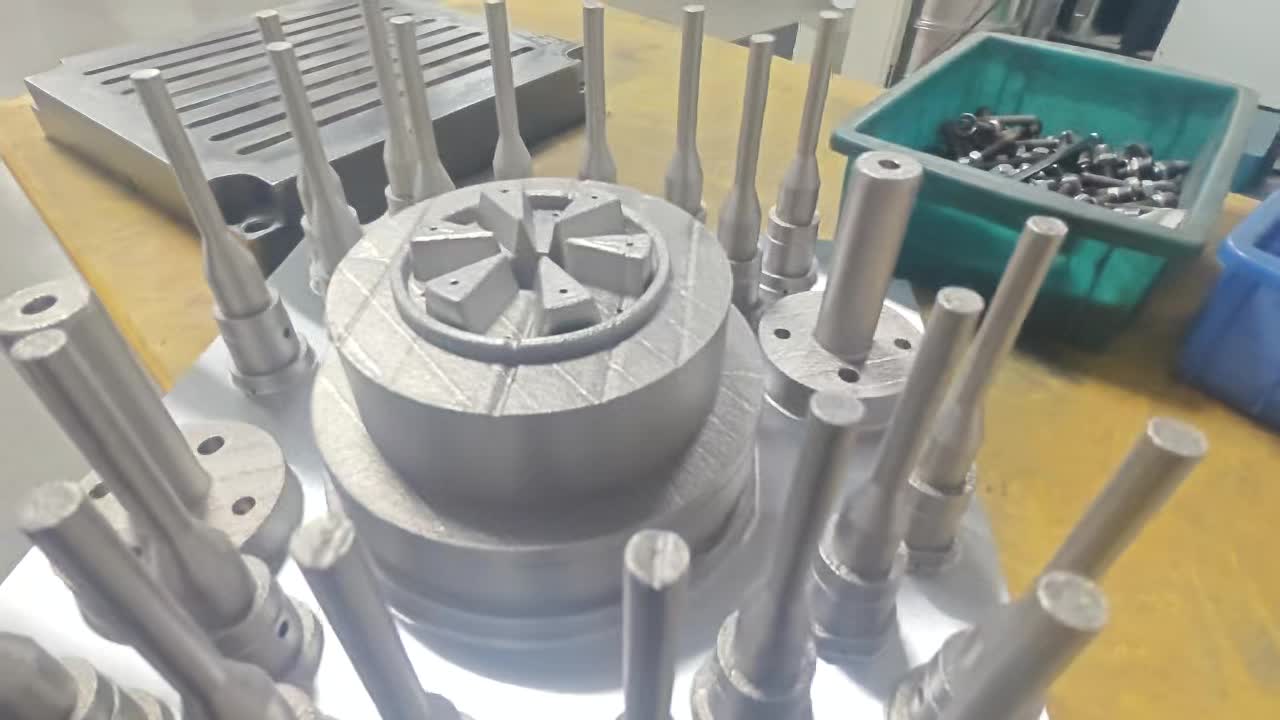
| Benefit Category | Headline Number | Primary Mechanism | Typical Annual Value (1 Mold, $75/hr) |
|---|---|---|---|
| 1. Cycle Time | 20–55% faster cooling phase | Channels follow part geometry → uniform, faster heat extraction | $42,000–$110,000 |
| 2. Quality | ΔT: ±20–45°C → ±2–5°C | Uniform cooling eliminates differential shrinkage and hot spots | $8,000–$35,000 (scrap + rework) |
| 3. Energy | 15–25% energy cost reduction per part | Fewer machine-hours & shorter chiller runtime per part produced | $6,000–$18,000 |
| 4. Mold Life | 20–35% longer service life | Reduced thermal fatigue from uniform ΔT; fewer hot-spot stress cycles | $4,000–$14,000 (amortized tooling cost) |
| 5. Sustainability / ESG | 12–28% CO₂ reduction per 10,000 parts | Shorter cycle = less machine energy; lower scrap = less resin waste | Scope 3 reporting credit; ISO 14001 alignment |
A 32-cavity PP closure mold running 200,000 parts per month captures $88,000/year in cycle time savings alone from a $2,800 conformal insert — that is an 8-day payback. Add quality, energy, and mold life savings and Year 1 total return exceeds $120,000.
2. Benefit 1 — Cycle Time Reduction: 20–55% Faster Cooling Phase
Cooling accounts for 60–75% of the total injection molding cycle for most thermoplastic parts. This is the largest single lever available to improve machine throughput without adding equipment. Conventional straight-drilled channels cannot reach deep cores, narrow ribs, or curved surfaces — the result is that large zones of the mold stay above ejection temperature until the entire mold equalises, artificially extending cycle time.
Conformal cooling channels, manufactured by SLM (Selective Laser Melting), follow the exact contour of the cavity or core at a controlled distance of 2–5 mm. Every surface cools simultaneously. The cooling phase shrinks dramatically, and the remaining cycle phases — fill, pack, and eject — are unchanged. This means the total cycle time reduction is directly proportional to the cooling fraction saved.
Cycle Time Improvement Data by Part Type
| Part Type | Material | Conventional Cooling (s) | Conformal Cooling (s) | Reduction |
|---|---|---|---|---|
| Thin-wall PP closure (32-cavity) | PP | 8.2 | 5.5 | 33% |
| Automotive A-pillar trim | PC/ABS | 42.0 | 22.5 | 46% |
| Deep-draw cosmetics bottle cap | PETG | 21.0 | 6.0 | 71% |
| Medical microfluidic housing | COC | 34.0 | 18.2 | 46% |
| Smartphone rear shell (0.8 mm wall) | PC | 18.5 | 11.0 | 41% |
| Automotive door handle insert | PA66-GF30 | 38.0 | 26.0 | 32% |
| 96-well deep-hole plate | PP | 45.0 | 26.0 | 42% |
| Packaging pallet foot (thick wall) | HDPE | 95.0 | 62.0 | 35% |
Translating Cycle Time Savings to Annualised Revenue
The formula is straightforward. Using a machine rate of $75/hr (typical for a 250-ton press in a US or European facility) and a 250-day operating year with one 8-hour shift:
- Available machine-hours per year: 250 days × 8 hrs = 2,000 hrs
- At $75/hr: $150,000 annual machine cost per press
- Cycle time reduction of 33% on the same machine = equivalent of 660 additional machine-hours of capacity freed per year
- Value of freed capacity: 660 × $75 = $49,500/year — either used for additional production or reduced overtime
For the 32-cavity PP closure mold running at 200,000 parts per month (2.4 M parts/year), a 33% cycle reduction from 8.2 s to 5.5 s adds approximately 850,000 additional parts of annual capacity on the same machine — at a marginal production cost far below the average selling price. At a conservative contribution of $0.10/part, that is $85,000 of additional annual revenue from a single $2,800 insert.
3. Benefit 2 — Quality Improvement: ΔT From ±20–45°C to ±2–5°C
The single root cause of most warpage, sink mark, and dimensional variation defects in injection molding is differential cooling — different regions of the part solidifying at different rates. Conventional cooling channels produce large temperature gradients across the mold surface. Thermocoupled mold monitoring in production environments consistently records hot-spot-to-cooled-zone differentials of ±20–45°C. Each degree of differential translates directly into differential shrinkage, which manifests as warpage or dimensional inconsistency in the ejected part.
Conformal cooling reduces this differential to ±2–5°C across the mold surface — a 10-fold improvement in temperature uniformity. The part solidifies simultaneously and uniformly, shrinks isotropically, and ejects with dramatically lower residual stress.
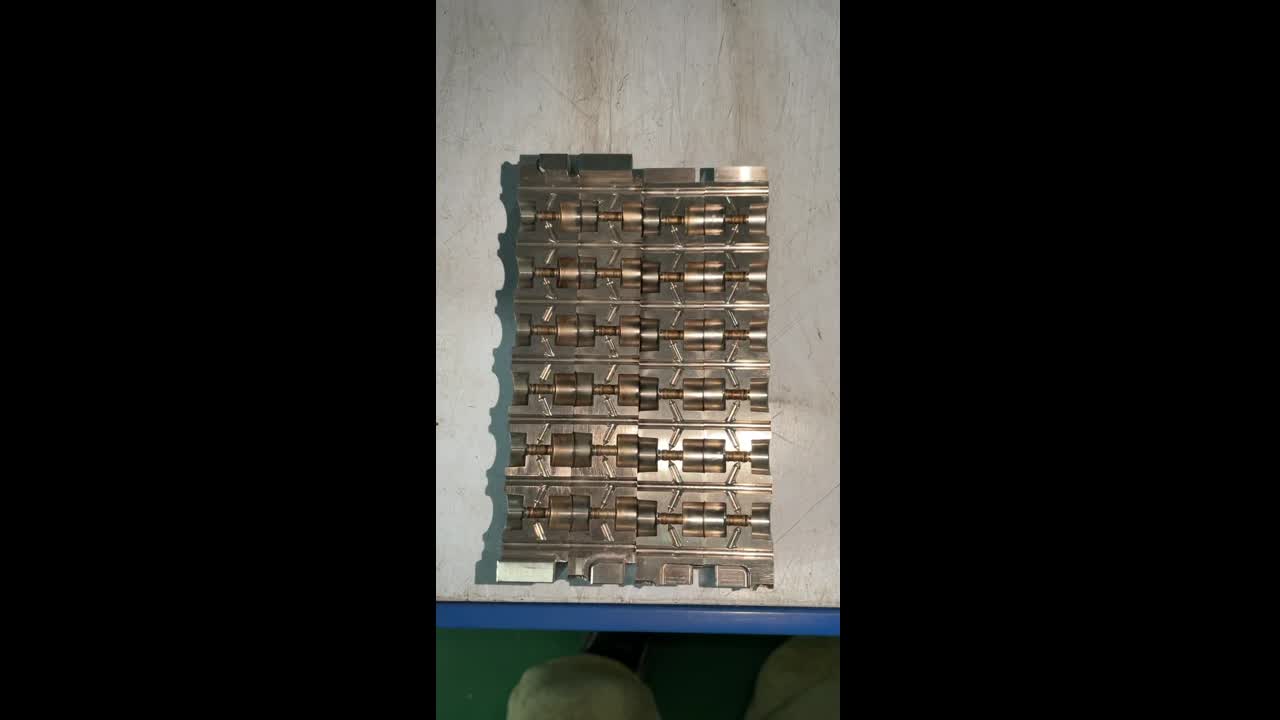
Quantified Quality Improvements
| Quality Metric | Conventional Cooling | Conformal Cooling | Improvement |
|---|---|---|---|
| Mold surface ΔT | ±20–45°C | ±2–5°C | 10× more uniform |
| Warpage (flat 200 mm part) | 0.8–2.4 mm | 0.1–0.4 mm | 75–85% reduction |
| Dimensional Cpk | 0.9–1.2 | 1.5–1.8 | +50–65% |
| Scrap rate (typical) | 3–8% | 0.5–1.5% | 75–83% reduction |
| Gate burn marks (transparent) | Common | Eliminated | 100% |
| Sink marks (thick walls) | Frequent | Rare | 80–90% reduction |
Rework and Scrap Cost Savings
For a production program running 500,000 parts per year at an average part value of $1.20:
- Conventional scrap rate of 5% = 25,000 rejected parts × $1.20 = $30,000/year in scrap material
- Conformal cooling scrap rate of 1% = 5,000 rejected parts × $1.20 = $6,000/year
- Annual scrap savings: $24,000
- Rework labour (at $35/hr, 2 min/part on reworkable defects) on 20% of scrapped parts: an additional $2,800–$5,800/year savings
For automotive OEM supply, the cost implications extend beyond direct scrap. A single dimensional non-conformance triggering a customer PPAP re-submission costs $8,000–$25,000 in engineering and production downtime. Conformal cooling's improvement in Cpk directly reduces the probability of such events.
A deep-cavity PETG bottle cap suffered burn marks at the gate under conventional cooling because the deep core ran 31°C hotter than the cavity side. For more results like this, see our conformal cooling case studies. Conformal helical channels around the core reduced the differential to 3°C. Gate burn marks: eliminated. Scrap rate: from 15% to 0.4%. Annual quality cost saving: $41,000 on this single SKU.
4. Benefit 3 — Energy Savings: 15–25% Per-Part Energy Cost Reduction
Energy savings from conformal cooling are less visible on the production floor than cycle time gains, but they are real and measurable. The mechanism operates on two levels.
Mechanism 1 — Fewer Machine-Hours Per Year
If a mold runs 38% faster (average from Benefit 1 data), the injection molding machine runs 38% fewer hours to produce the same annual quantity. A 250-ton press draws approximately 25–45 kW on average over the full cycle. At $0.12/kWh:
- Annual machine consumption at baseline: 2,000 hrs × 35 kW × $0.12 = $8,400/year
- With conformal cooling (38% less runtime for same output): 1,240 hrs × 35 kW × $0.12 = $5,208/year
- Energy saving: $3,192/year from machine runtime alone
Mechanism 2 — Reduced Chiller and Pump Load
The cooling circuit (chiller, pump, tower) accounts for 20–30% of total cell energy in a typical injection molding operation. Because each part requires less active cooling time, the chiller runs fewer minutes per part. Additionally, the more uniform temperature profile means the chiller is not compensating for hot spots by overcooling the rest of the mold — a common but costly practice with conventional tooling.
Across the total cell (press + chiller + auxiliaries), the typical measured reduction in energy cost per part is 15–25%. For a four-machine production cell operating 250 days/year at one shift, this translates to $18,000–$30,000/year in electricity savings at US industrial electricity rates.
5. Benefit 4 — Extended Mold Life: 20–35% Longer in Automotive Applications
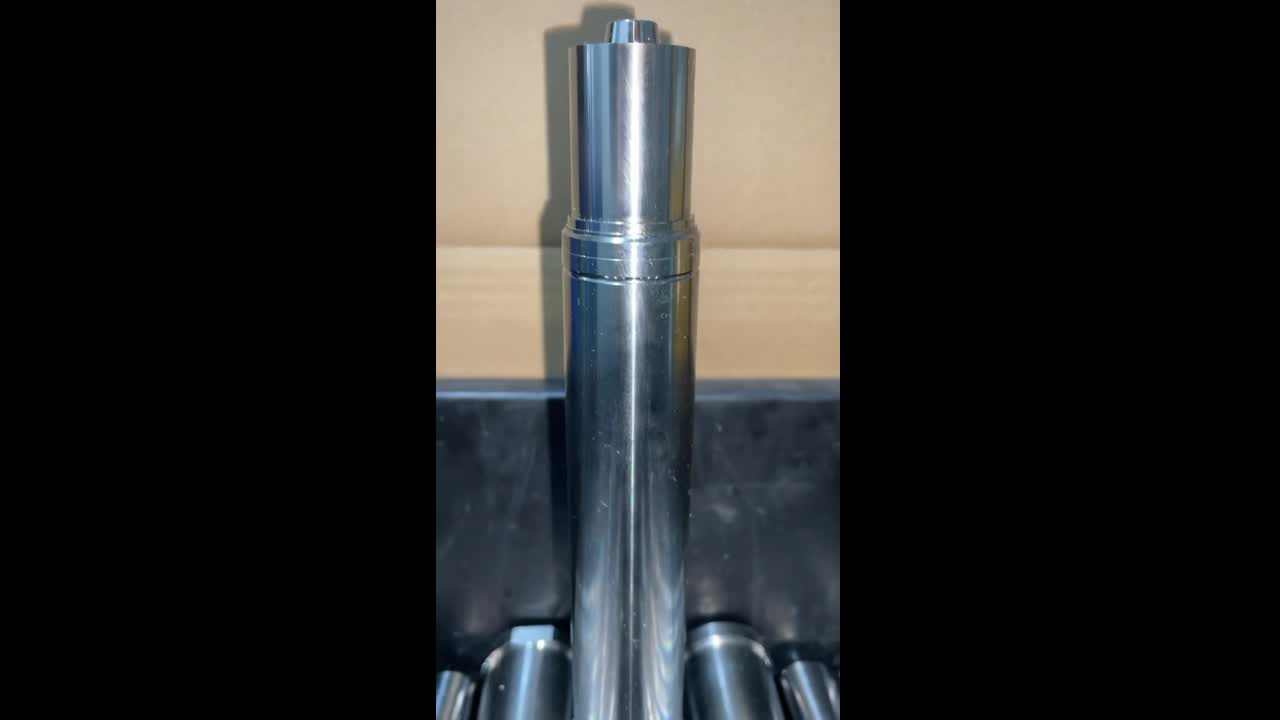
The mold life benefit of conformal cooling requires a counter-intuitive explanation. A faster cycle means more shots per calendar year — which should mean more thermal cycles and therefore faster wear. Yet production data from automotive tooling consistently shows longer service life with conformal cooling. The reason is thermal fatigue mechanics.
How Thermal Fatigue Destroys Conventional Molds
In every injection molding shot, the mold surface heats rapidly during fill and packs, then cools during the cooling phase. In a conventionally cooled mold with ±20–45°C surface differentials, the hot spots undergo dramatically larger temperature swings than the cooled zones. Steel fatigues under repeated thermal cycling proportional to the square of the temperature amplitude. A hot spot swinging ±30°C accumulates fatigue roughly 9× faster than a zone swinging ±10°C. This leads to micro-cracking, heat-checking, and premature surface failure — almost always at the hot spot locations that conventional channels cannot reach.
Conformal Cooling's Thermal Fatigue Advantage
With conformal cooling reducing the surface ΔT to ±2–5°C across the entire mold face, every zone of the cavity or core undergoes nearly identical thermal cycling. The amplitude of each thermal cycle is lower. The distribution of stress is uniform. Hot-spot cracking — the primary failure mode in high-cycle automotive tooling — is effectively eliminated. Proper mold maintenance further extends these gains.
| Application | Conventional Mold Life (shots) | With Conformal Cooling (shots) | Increase |
|---|---|---|---|
| Automotive exterior trim (PP/TPO) | 400,000 | 520,000–540,000 | +30–35% |
| Automotive interior hard trim (PC/ABS) | 350,000 | 440,000–460,000 | +26–31% |
| Packaging closure (PP, high-cavitation) | 1,500,000 | 1,800,000–1,950,000 | +20–30% |
| Medical housing (PC, precision) | 250,000 | 310,000–340,000 | +24–36% |
Amortised Tooling Cost Reduction
Consider a $120,000 automotive exterior trim mold with a conventional service life of 400,000 shots. Amortised tooling cost = $120,000 / 400,000 = $0.30 per shot.
With conformal cooling inserts (adding $3,500 to tooling cost, total $123,500) and a service life of 520,000 shots: amortised cost = $123,500 / 520,000 = $0.238 per shot — a 21% reduction in per-shot tooling cost even before factoring in the cycle time and quality savings.
6. Benefit 5 — Sustainability & ESG: CO₂, Resin Waste, and Scope 3 Reporting
Sustainability has moved from a marketing differentiator to a procurement requirement. If your production facility supplies automotive OEMs — Ford, GM, Stellantis, BMW, Toyota — you are likely already responding to annual Scope 3 supply chain emissions questionnaires. Conformal cooling creates measurable, documentable reductions across three ESG dimensions.
CO₂ Reduction from Shorter Cycles
The energy savings from Benefit 3 translate directly into CO₂ reduction. Using the US average grid emissions factor of 0.386 kg CO₂/kWh:
- 760 MWh annual electricity reduction (4-cell facility) = 293 tonnes CO₂/year avoided
- Per 10,000 parts produced: approximately 12–28 kg CO₂ reduction depending on part weight and cycle
- Over a 3-year production program: 870–900 tonnes CO₂ reduction per facility
Reduced Resin Waste
A scrap reduction from 5% to 1% on 500,000 parts/year, with an average part weight of 45 g, saves:
- 20,000 fewer rejected parts × 45 g = 900 kg less resin waste per year
- For glass-filled engineering materials (PA66-GF30, PC/ABS): these resins carry an embodied carbon of 6–9 kg CO₂/kg, so 900 kg waste reduction = 5,400–8,100 kg CO₂ equivalent avoided in Scope 3 reporting
ISO 14001 and OEM Sustainability Reporting Relevance
For ISO 14001-certified facilities, conformal cooling adoption provides documented evidence of:
- Reduction in significant environmental aspects (energy consumption, material waste)
- Continual improvement in environmental performance (a core ISO 14001 requirement)
- Measurable reduction in waste generation at source (not end-of-pipe treatment)
For automotive Tier 1 and Tier 2 suppliers, the ability to report a documented CO₂ reduction per part number — linked to a specific tooling change with auditable before/after production data — is increasingly valuable in annual MMOG/LE and OEM sustainability scorecards.
7. How the Benefits Compound: A Full 3-Year Factory Model
The five benefit categories are not independent — they amplify each other. A faster cycle (Benefit 1) means fewer machine-hours (Benefit 3) and more shots on the same mold (compounding Benefit 4 per calendar year). Fewer scrap parts (Benefit 2) reduce rework labour and material that would otherwise consume time on the same machine. The model below captures all five stacked.
Model Assumptions
- 8-cavity mold, PP material, ~12 g part weight
- 1 shift/day, 250 production days/year
- Baseline cycle: 22 seconds; conformal cooling cycle: 15 seconds (32% reduction)
- Machine rate: $75/hr
- Baseline scrap: 4.5%; conformal scrap: 1.0%
- Average part contribution margin: $0.12/part (after material)
- Conformal cooling insert cost: $3,200 (one-time, Year 1)
- Energy savings: 18% per part × $0.0045/part baseline energy cost
- Mold life extension credit: prorated $14,000 tooling cost × 28% = $3,920 / 3 years = $1,307/year
Year 3 cumulative net return: $212,671 against a one-time insert investment of $3,200. That is a 66× return on insert cost over 3 years. For a full methodology on calculating these figures, see our ROI calculation guide. Even if the model is conservative and real-world gains are only 40% of projected, Year 1 net value still exceeds $27,500 against a $3,200 insert — a fully defensible capital expenditure on any internal approval process.
8. Which Applications Capture the Most Benefit
Not every part benefits equally. The table below scores five major application categories across all five benefit dimensions (1–5 scale, 5 = highest benefit intensity). Use this to prioritise which molds to convert first.
| Application | Cycle Time | Quality | Energy | Mold Life | ESG | Total /25 |
|---|---|---|---|---|---|---|
| Automotive exterior (PP/TPO fascia, trim) | 5 | 5 | 4 | 5 | 5 | 24/25 |
| Packaging high-cavitation (closures, caps) | 5 | 3 | 5 | 4 | 4 | 21/25 |
| Medical precision (housings, cartridges) | 3 | 5 | 3 | 4 | 3 | 18/25 |
| Electronics thin-wall (connectors, shells) | 4 | 5 | 3 | 3 | 3 | 18/25 |
| Automotive interior (instrument panels, soft-touch trim) | 4 | 4 | 3 | 4 | 4 | 19/25 |
Priority recommendation: Convert automotive exterior and high-cavitation packaging molds first. These two categories deliver the highest combined benefit per dollar of insert investment. Medical and electronics conversions are justified on quality grounds alone even where volume is lower.
9. Common Objections and Data-Backed Answers
The insert premium is $600–$2,500 over a conventional insert (depending on size and complexity). For any mold running above 50,000 shots/year, this premium is recovered in cycle time savings within 30–90 days. At the $3,200 insert cost in the factory model above, Year 1 net return is $68,757. The premium is not a cost; it is a capital investment with a sub-30-day payback for high-volume programs. For lower-volume programs (<20,000 shots/year), we recommend a thermal simulation first to confirm the payback horizon before committing.
SLM-printed 18Ni300 maraging steel achieves 50–55 HRC after heat treatment — identical or superior to conventionally machined H13 and P20 used in most production tooling. Density is >99.8%. The cooling channels undergo pressure testing at 2× operating pressure before shipment. We have molds with conformal inserts running above 600,000 shots in automotive production environments with zero structural failures. The specific failure mode to worry about — porosity-induced cracking — is a process control issue that reputable SLM bureaus screen for with CT scanning and helium leak testing, both of which we perform as standard.
Standard lead time from approved STEP file to shipped insert is 7–14 working days for production, plus 3–5 days DHL Express to the US or Europe. Total: 2–3 weeks. Rush orders (<7 working days) are available for straightforward geometries. For new mold builds, conformal insert design and manufacturing can run in parallel with the mold base machining, adding zero net time to the overall schedule. The lead time objection applies to conventional inserts as well — gun-drilling and EDM complex cooling features also takes 10–15 days.
This is the most legitimate objection. Our response: we run a Moldex3D thermal simulation on your STEP file before quoting. The simulation predicts cooling time, temperature distribution, and warpage with and without conformal cooling. You see the projected improvement before committing. For high-value mold programs, we also offer a pilot insert approach — replacing one cavity in a multi-cavity mold with a conformal insert, running side-by-side with conventional cavities, and measuring the actual delta before converting the full tool. This removes all performance uncertainty at the cost of a single insert trial.
If your mold surface temperature differential is already below ±8°C and your cycle time is within 10% of theoretical minimum, conformal cooling may add marginal value and is not the right investment. Send us your Moldex3D report or your mold thermocouple logs — we will tell you honestly whether the data supports a conversion. If the answer is no, we will say so. What we consistently find, however, is that "good cooling" in conventional tooling typically means ±15–25°C, not ±8°C — the instrumentation to measure the actual differential is rarely in place, and the true performance gap is only visible after a simulation.
10. Frequently Asked Questions
What is the typical cycle time reduction from conformal cooling?
Conformal cooling reduces the cooling phase by 20–55% on average, which translates to a 15–40% reduction in total cycle time depending on part geometry. For a PP closure mold running at 200,000 ppm, even a 30% cycle reduction on an 8-cavity tool can yield $88,000+ per year in additional throughput at a $75/hr machine rate. High-cavitation packaging molds and deep-geometry automotive parts capture the largest gains.
How much does conformal cooling improve part quality?
The key quality metric is temperature uniformity across the mold surface. Conventional straight-drilled cooling typically achieves ΔT of ±20–45°C between hot spots and cooled zones. Conformal cooling reduces this to ±2–5°C. This near-uniform ΔT directly cuts warpage, reduces dimensional variation, and brings scrap rates from a typical 3–8% down to 0.5–1.5%. For precision medical and electronics applications, this is often the primary justification — not cycle time.
Does conformal cooling save energy?
Yes. Because each cycle is shorter, the injection molding machine runs fewer hours per year to produce the same output. The chiller and pump systems also operate for fewer total minutes per part. Across a typical production scenario, energy cost per part falls 15–25%. For a plant running four machines 250 days/year at $0.12/kWh, this can amount to $18,000–$30,000 per year in reduced electricity cost — without any other changes.
How does conformal cooling extend mold life?
This benefit is counterintuitive. A faster cycle means more shots per year, which could suggest more wear. But the key factor is thermal fatigue. With conventional cooling, hot spots create severe thermal gradients — the steel surface heats and cools unevenly every shot, causing micro-cracking over time. Conformal cooling's ±2–5°C uniformity dramatically reduces this gradient stress. Automotive applications consistently show 20–35% longer mold service life, reducing the amortised tooling cost per part.
What is the ROI payback period for conformal cooling inserts?
Payback depends on production volume and machine rate. For a high-cavitation packaging application — a 32-cavity PP closure mold running 200,000 parts per month — the cycle time savings alone pay back a $2,800 conformal insert in 8 days. For lower-volume automotive or medical molds, payback is typically 2–6 months when all five benefit categories are included. A full 3-year model shows 4–8× return on insert cost by Year 3 for most high-volume applications.