India's injection molding industry processes over 5 million tonnes of plastic annually — and cycle time is the single biggest lever on profitability. Yet most Indian mold shops still use conventional straight-drilled cooling, leaving 20–50% of potential output on the table.
This guide is written specifically for Indian injection molding engineers and mold shop owners who want to understand conformal cooling: what it costs in Indian market terms, which segments in India benefit most, and — critically — how to source quality inserts from China without the usual risks.
Why Conformal Cooling Matters Now for Indian Mold Shops
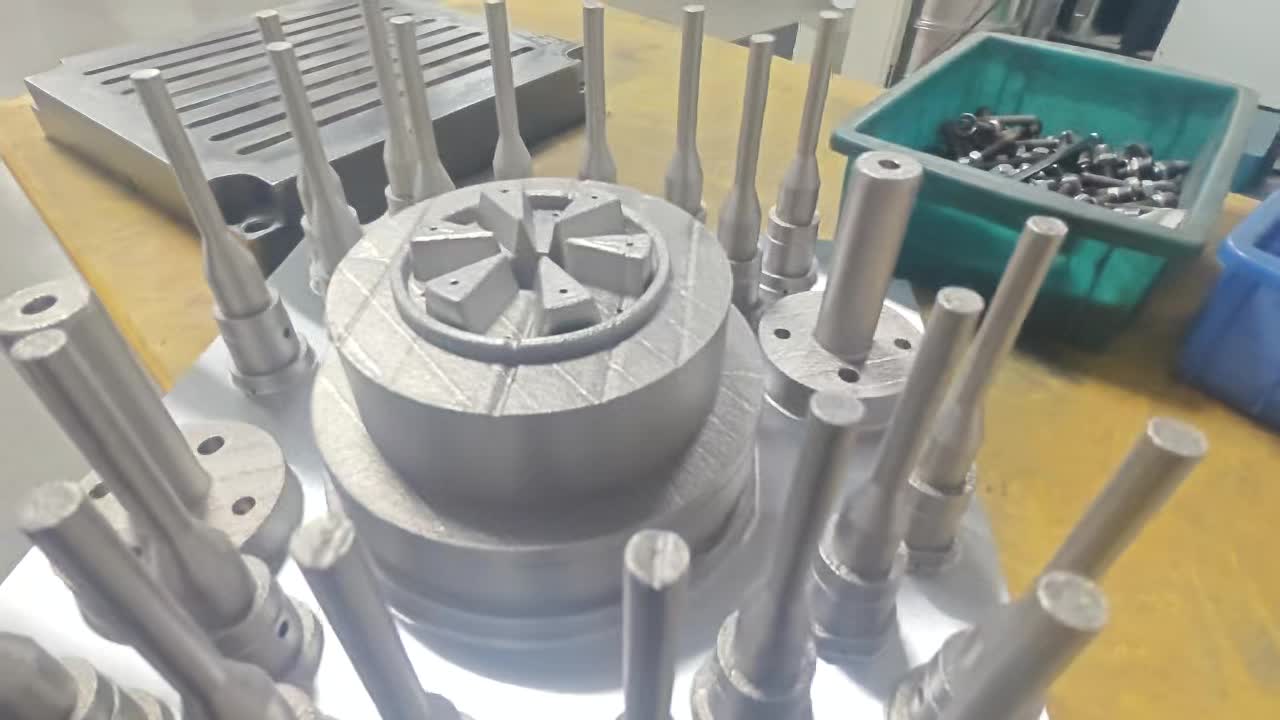
Three converging pressures make 2026 the right time for Indian mold makers to evaluate conformal cooling seriously:
Maruti Suzuki, Tata Motors, Mahindra, Hindustan Unilever, and ITC routinely demand 3–5% cost reductions annually from their mold suppliers. Conformal cooling — by cutting cycle time 20–45% — is one of the few levers that simultaneously reduces per-piece cost and improves part quality without changing the part design.
Cooling time directly determines how long your injection molding machine runs per cycle. A conventional 25-second cycle that becomes 16 seconds with conformal cooling uses 36% less machine energy per part — and at Indian industrial electricity rates, that adds up to lakhs of rupees annually on a single mold.
Thailand's automotive mold sector — which competes directly with Pune and Chennai clusters for export orders — has adopted conformal cooling widely since 2022. Indian mold shops that don't close this gap risk losing high-volume export business to more efficient regional competitors.
Which Indian Industries Benefit Most
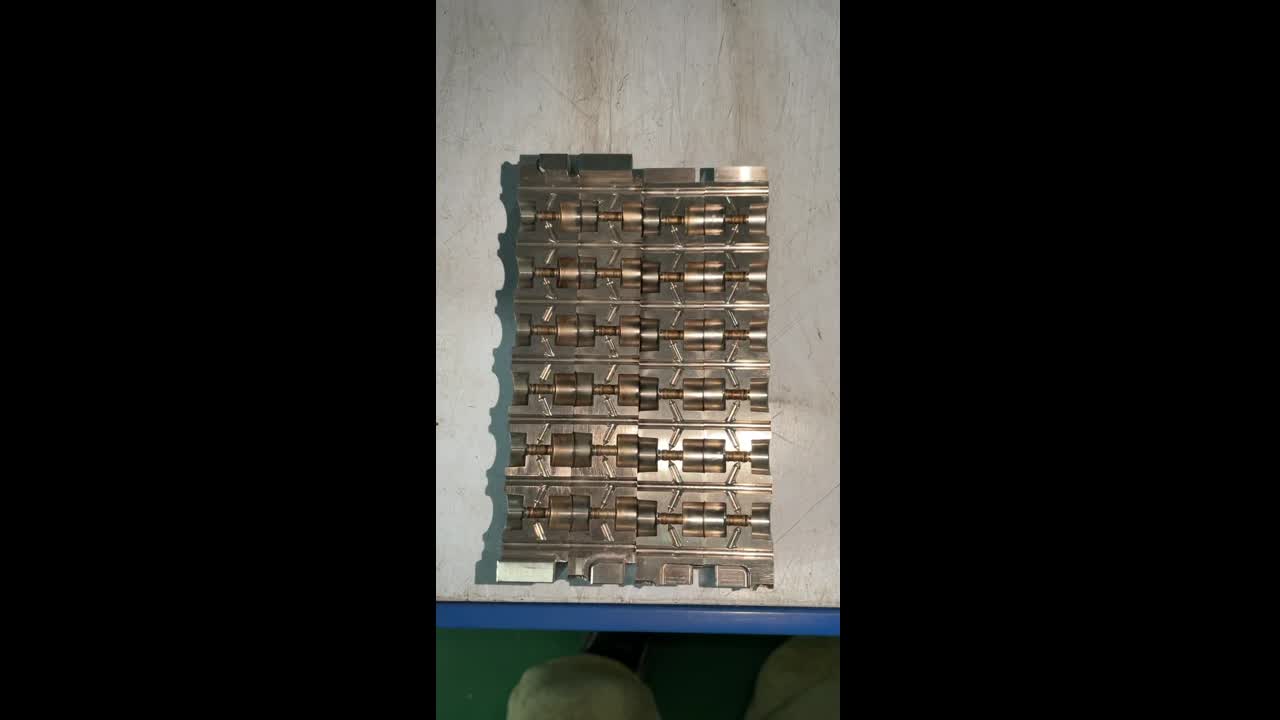
Not every mold needs conformal cooling. The economics work best when you combine high production volume with at least one quality or cycle-time problem that conventional cooling can't solve.
| Industry Segment | Key Hubs in India | Why Conformal Cooling Fits | Typical Cycle Reduction |
|---|---|---|---|
| Automotive components Bumpers, door panels, connectors, clips |
Pune, Chennai, Gurugram, Sanand | High volumes (>100k shots/month), OEM cost-down pressure, IATF 16949 documentation requirements | 25–45% |
| FMCG caps & closures Flip-top caps, CSD closures, pump dispensers |
Mumbai, Ahmedabad, Pune, Hyderabad | Thin walls, very high cavitation (16–96 cavities), warpage problems on PP caps | 20–40% |
| Pharma & medical packaging Blister trays, vials, syringes, inhaler components |
Ahmedabad, Hyderabad, Mumbai | Clarity requirements for transparent parts, zero gate blush, FDA/CE documentation needs | 15–35% |
| Consumer electronics Phone cases, charger housings, earbuds |
Noida, Bengaluru, Chennai | Tight dimensional tolerances, sink marks on Class-A surfaces, warpage on thin ribs | 20–35% |
| Agricultural equipment parts Irrigation fittings, drip emitters |
Rajkot, Ahmedabad, Pune | High production volumes, PP/HDPE materials with slow natural cooling | 15–30% |
| Single-use cutlery & containers PS/PP disposables |
Delhi NCR, Mumbai, Surat | Ultra-thin walls, very short target cycles, 32–64+ cavity molds | 20–40% |
Rule of thumb: If your mold runs more than 30,000 shots per month and cooling time is more than 40% of your total cycle, conformal cooling will pay back within 12 months at Indian production economics.
What It Costs: INR Pricing Breakdown
The single biggest misconception among Indian mold shops is that conformal cooling inserts are prohibitively expensive. In practice, prices from Chinese LPBF suppliers have fallen sharply since 2022 as metal 3D printing capacity scaled up.
| Insert Type | Size Range | Ex-Works Price (CNY) | Approx. INR (ex-works) |
|---|---|---|---|
| Small cavity insert | 50×50×80 mm | ¥3,000–¥8,000 | ₹35,000–₹95,000 |
| Medium cavity insert | 100×100×120 mm | ¥8,000–¥20,000 | ₹95,000–₹2,35,000 |
| Large cavity insert | 150×150×200 mm | ¥20,000–¥50,000 | ₹2,35,000–₹5,90,000 |
| Core pin with conformal channel | Ø20–Ø60 mm | ¥2,500–¥12,000 | ₹29,000–₹1,40,000 |
Exchange rate used: 1 CNY ≈ ₹11.8. Prices are ex-factory Ningbo/Shenzhen and exclude freight, duties, and GST.
Landed Cost in India
Once you add shipping and Indian import costs, the landed price is approximately 25–35% higher than ex-works:
| Cost Component | Typical Amount | Notes |
|---|---|---|
| Ex-works price | Base | Negotiated with supplier |
| Air freight (China → India) | ₹1,200–₹2,500/kg | 5–7 days; typical insert 2–15 kg |
| Sea freight + handling | ₹400–₹800/kg | 18–25 days; better for large orders |
| Basic Customs Duty | 7.5% | HS code 8480 (mold components) |
| IGST (import GST) | 18% | Claimable as input tax credit |
| CHA / clearing charges | ₹3,000–₹8,000 per shipment | Customs handling agent fee |
Good news on GST: The 18% IGST you pay on import is fully claimable as Input Tax Credit (ITC) if your business is GST-registered and you use the inserts for manufacturing. This significantly improves the effective cost.
ROI Calculation: Indian Production Economics
Indian mold shops often underestimate ROI because they only count machine time savings. The full payback calculation includes energy, labor, and quality cost savings.
Before (conventional cooling):
- Cycle time: 22 seconds
- Output: 3,927 shots/hour × 8 cavities = 31,418 caps/hour
- Machine rate: ₹2,800/hour (800T press in Pune area, 2-shift)
- Per-cap machine cost: ₹0.089
- Warpage rejection rate: 1.8%
After (conformal cooling insert, China-sourced):
- Cycle time: 14 seconds (−36%)
- Output: 6,171 shots/hour × 8 cavities = 49,371 caps/hour
- Per-cap machine cost: ₹0.057 (−36%)
- Warpage rejection rate: 0.3%
Insert cost (landed): ₹1,40,000 for 8 conformal inserts
Monthly savings (20-day month, 16-hour operation):
- Machine time saving: ₹8,960/day × 20 = ₹1,79,200/month
- Rejection saving: ₹24,000/month (at ₹0.15/cap material cost)
- Energy saving (≈ ₹12,000/month)
- Total: ~₹2,15,000/month savings
Payback period: < 1 month. Annual saving: ₹25+ lakhs on one mold.
The numbers shift at lower volumes. For molds running under 15,000 shots/month, payback stretches to 12–24 months — still positive, but less compelling. The ROI threshold depends on your machine rate, shift pattern, and part material.
Sourcing from China: The Complete Process
The vast majority of conformal cooling inserts used in Asia come from Chinese LPBF (Laser Powder Bed Fusion) suppliers, concentrated in Ningbo, Shenzhen, and Dongguan. Here is what the sourcing process looks like end-to-end:
Send the supplier: (1) 3D CAD file of the insert cavity (STEP format), (2) your existing mold base drawing showing the insert pocket, (3) the cooling circuit you want (or let the supplier design it — better suppliers will do Moldflow simulation), (4) your steel preference (typically 18Ni300 maraging steel or 420 stainless).
Without a STEP file, no reputable supplier will quote accurately. Avoid any supplier who quotes from a 2D drawing alone for conformal cooling.
A conformal cooling insert quote should include: (a) proposed channel routing diagram, (b) expected cooling time improvement, (c) material certificate for powder used, (d) HRC hardness after heat treatment, (e) dimensional inspection report on delivery. If any of these are missing from the quote, the supplier is cutting corners.
For orders above ₹5 lakhs, always request one insert to validate before ordering the full set. Reputable Chinese suppliers will agree to this. Test the sample insert for: (a) dimensional accuracy vs your CAD, (b) pressure test the cooling channel to 150 bar for 30 minutes, (c) hardness check at 3 points.
Standard terms with established suppliers: 50% advance, 50% before shipment. Wire transfer (TT) is standard. Avoid suppliers demanding 100% advance from first-time buyers — it's a red flag. After 2–3 successful orders, you can negotiate net-30 or net-45 terms.
For urgent orders: air freight (DHL/FedEx/TNT) from Ningbo to Mumbai takes 3–5 days. For planned orders: sea freight (LCL) takes 18–22 days and costs 60–70% less per kg. Most Indian importers use a CHA (Customs House Agent) for clearance — budget ₹5,000–₹10,000 per shipment for clearing fees.
Import Duties & GST: What Indian Buyers Need to Know
Conformal cooling inserts import under HS Code 8480.71 (injection mold components) or 8480.79 depending on classification. The applicable duties:
| Duty / Tax | Rate | Recoverable? |
|---|---|---|
| Basic Customs Duty (BCD) | 7.5% | No |
| Social Welfare Surcharge (SWS) | 10% of BCD = 0.75% | No |
| IGST (Integrated GST) | 18% | Yes — claim as ITC |
| Effective total duty load | ~27% on CIF value | IGST portion recoverable |
Practical implication: If you're a GST-registered manufacturer (GSTIN), your effective import cost after ITC recovery is approximately BCD + SWS ≈ 8.25% on top of the CIF value — not the full 27%. This dramatically improves the economics vs what most people assume.
Some freight forwarders mis-classify mold inserts as "machinery parts" (HS 8466) which can attract different duties. Always specify HS 8480 clearly in your purchase order and ask your CHA to confirm before filing the bill of entry.
Supplier Evaluation Checklist for Indian Buyers
Use this checklist when evaluating Chinese conformal cooling suppliers:
| Criteria | What to Ask / Check | Minimum Acceptable |
|---|---|---|
| LPBF Equipment | Which machines do they operate? | EOS M290 / BLT / Farsoon — tier-1 machines only |
| Powder Certification | Request powder batch certificate | 18Ni300 or 420SS with composition report |
| Heat Treatment | Do they do in-house or outsource? | HRC 50–54 for maraging steel; certificate required |
| Dimensional Inspection | CMM report on delivery? | Yes — all critical dimensions within ±0.05 mm |
| Pressure Testing | Do they pressure-test channels? | 100 bar minimum, 15 minutes, zero leakage |
| Cooling Simulation | Moldflow or Moldex3D simulation included? | For molds >₹2 lakh value, yes |
| Lead Time | CAD to dispatch | 10–18 days standard; <10 days is suspicious |
| References | Indian or Asian customers they've supplied | At least 2 verifiable references |
| Payment Terms | First-order terms | 50/50 TT; 100% advance = red flag |
FAQ for Indian Buyers
As of 2026, very few Indian companies manufacture conformal cooling inserts using LPBF metal 3D printing. IIT Bombay, IIT Madras, and some defence PSUs have LPBF equipment, but commercial mold insert production is limited. Some Pune-area tool rooms have invested in LPBF machines, but capacity is small and lead times are long. Most cost-effective option remains sourcing from China.
Alibaba lists many conformal cooling suppliers, but quality varies enormously. Safe practice: always request a sample first, verify LPBF machine type (ask for a photo of the machine with your order number), and demand a material certificate. Never wire 100% payment upfront to an Alibaba supplier with fewer than 3 years of verified trading history. Trade Assurance orders on Alibaba provide some protection for the deposit.
There is no minimum order — you can order a single insert. However, per-unit setup cost means ordering at least 2–4 inserts per cavity set is economically sensible. If you have an 8-cavity mold, order all 8 together to save on design and shipping cost.
Yes — the insert is machined to your exact pocket dimensions after LPBF printing. The supplier needs your mold pocket drawing (or the STEP of the insert pocket) and will machine the insert to fit. Standard tolerances are h6/H7 for press fits. Always specify your mold base steel and parting line conditions so the supplier can account for thermal expansion.
A well-made 18Ni300 maraging steel insert with HRC 52 hardness typically lasts 500,000–1,000,000 shots in standard injection molding conditions. With abrasive or glass-filled materials, expect 200,000–500,000 shots. Lifespan is similar to or better than conventional P20 inserts because the LPBF-printed material has fine, uniform grain structure.
Yes. Some larger Indian tool rooms design the conformal channel layout themselves (using Moldflow or Moldex3D) and send only the STEP file for printing. This works well if your engineers have simulation experience. Most smaller shops prefer to let the Chinese supplier handle both design and printing — the cost is similar and the supplier takes responsibility for cooling performance.
Generally no — at under 10,000 shots/month, payback period typically exceeds 24 months. Exceptions: (1) very expensive material (PEEK, ULTEM) where reduced cycle time lowers material waste significantly, (2) quality problems (warpage, sink marks) that are costing more than the insert would cost to fix, or (3) medical/pharma parts where cycle time consistency is a validation requirement.