1. Quick Summary — Top Pros and Cons at a Glance
Additive manufacturing (AM) — commonly called 3D printing — builds parts layer by layer from a digital file. It excels at complex geometry, rapid prototyping, and low-volume production. It struggles with high-volume economics, surface finish, and build speed. Whether it is the right choice depends on your part geometry, production volume, and performance requirements.
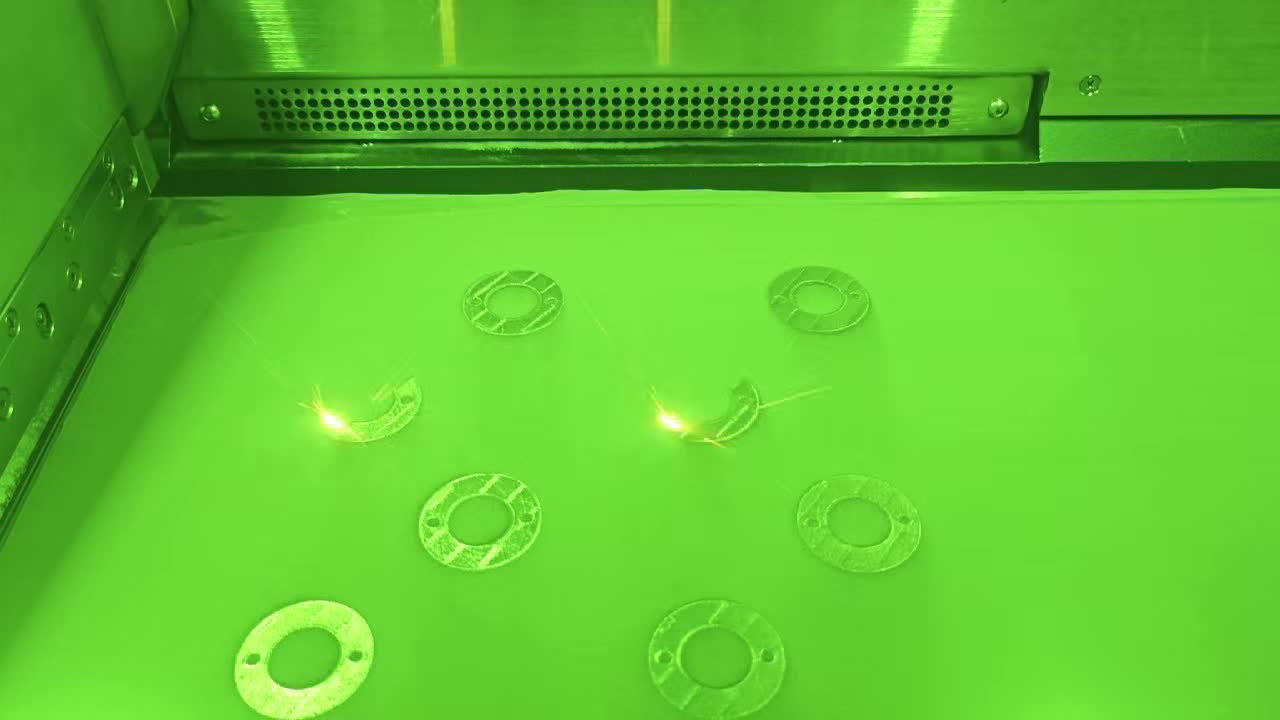
Advantages
- Design freedom — complex geometry including internal channels
- No tooling required for prototypes
- Rapid iteration — days, not weeks
- Material efficiency — up to 95% utilization
- Part consolidation — fewer assemblies
- Mass customization at no extra cost
- On-demand, decentralized production
- Lightweighting through lattice structures
Disadvantages
- Slow for high-volume production
- Higher per-part cost at scale
- Fewer material options than conventional
- Surface finish requires post-processing
- Build size limitations
- Quality consistency challenges
The rest of this article unpacks each point with real data, so you can make an informed engineering decision rather than relying on marketing claims.
2. The 8 Advantages of Additive Manufacturing
These are the genuine, well-documented benefits of additive manufacturing that hold up under engineering scrutiny. Each one represents a capability that is difficult or impossible to replicate with conventional subtractive or formative processes.
This is the single biggest advantage of additive manufacturing and the reason it exists. Because AM builds parts layer by layer, internal channels, organic shapes, undercuts, and topology-optimized structures that are physically impossible to machine or cast can be produced directly from a CAD file. The classic example in tooling is conformal cooling channels — curved internal passages that follow the contour of a mold cavity. These channels are geometrically impossible to create with conventional drilling, but trivial to 3D print. The result is 20 to 40 percent faster cooling and dramatically better part quality.
In traditional manufacturing, producing even a single metal prototype often requires custom fixtures, jigs, or molds — tooling that can cost thousands of dollars and take weeks to produce. Additive manufacturing eliminates this entirely. Upload a STEP file, and you have a functional metal part in days. This makes AM the default choice for engineering prototypes, first-article verification, and design validation. There is no minimum order quantity and no tooling amortization to worry about.
Because there is no tooling to modify, design changes between iterations cost virtually nothing. Change the CAD file, reprint, and test — the cycle can happen in days rather than the weeks or months required to modify machined tooling. Engineering teams that adopt AM for prototyping routinely report completing five to ten design iterations in the time a single conventional prototype would take. This speed advantage compounds: faster iteration leads to better final designs, fewer field failures, and shorter time to market.
CNC machining is a subtractive process — you start with a block of material and cut away everything that is not the final part. For complex aerospace brackets, the buy-to-fly ratio can be 10:1, 20:1, or even 30:1, meaning 90 to 97 percent of the raw material becomes chips. Additive manufacturing flips this model. Material is deposited only where needed, with typical utilization rates of 90 to 95 percent. Unfused powder in metal AM is sieved and recycled. For expensive alloys like titanium (roughly $100 to $300 per kilogram for powder), this material savings alone can justify the switch.
Traditional assemblies often consist of many individual parts bolted, welded, or bonded together — not because the design requires it, but because each piece must be individually manufacturable. AM removes this constraint. A fuel nozzle that was formerly 20 brazed components can become one printed part. GE Aviation's famous LEAP fuel nozzle reduced a 20-part assembly to a single component that is 25 percent lighter and five times more durable. Part consolidation reduces assembly labor, eliminates potential leak paths and failure points at joints, simplifies supply chains, and reduces inventory.
In conventional manufacturing, customization means new tooling, new fixtures, and new setups — all adding cost. In additive manufacturing, every part in a build can be different with zero additional cost. The machine does not care whether it is printing 50 identical brackets or 50 unique ones — the build time and cost are the same. This makes AM ideal for patient-specific medical implants, custom dental restorations, personalized consumer products, and any application where one-of-a-kind geometry delivers value.
AM enables a digital inventory model: instead of warehousing thousands of spare parts, you store the digital files and print parts when and where they are needed. This is particularly valuable for legacy parts and spares where original tooling no longer exists, remote locations where shipping is slow or expensive (offshore platforms, military deployments, space stations), and industries with long product life cycles (rail, defense, energy). Several major defense and aerospace organizations now maintain digital spare-parts libraries that can be printed at forward operating bases in hours.
AM uniquely enables lattice structures and topology-optimized geometries that maintain structural performance while dramatically reducing weight. A solid bracket redesigned with internal lattice structures can lose 40 to 60 percent of its mass while retaining 90 percent or more of its load-bearing capacity. In aerospace, where every kilogram of weight reduction saves approximately $3,000 to $5,000 in fuel costs over an aircraft's lifetime, this is transformative. In automotive, lighter components improve fuel efficiency and electric vehicle range.
3. The 6 Disadvantages of Additive Manufacturing
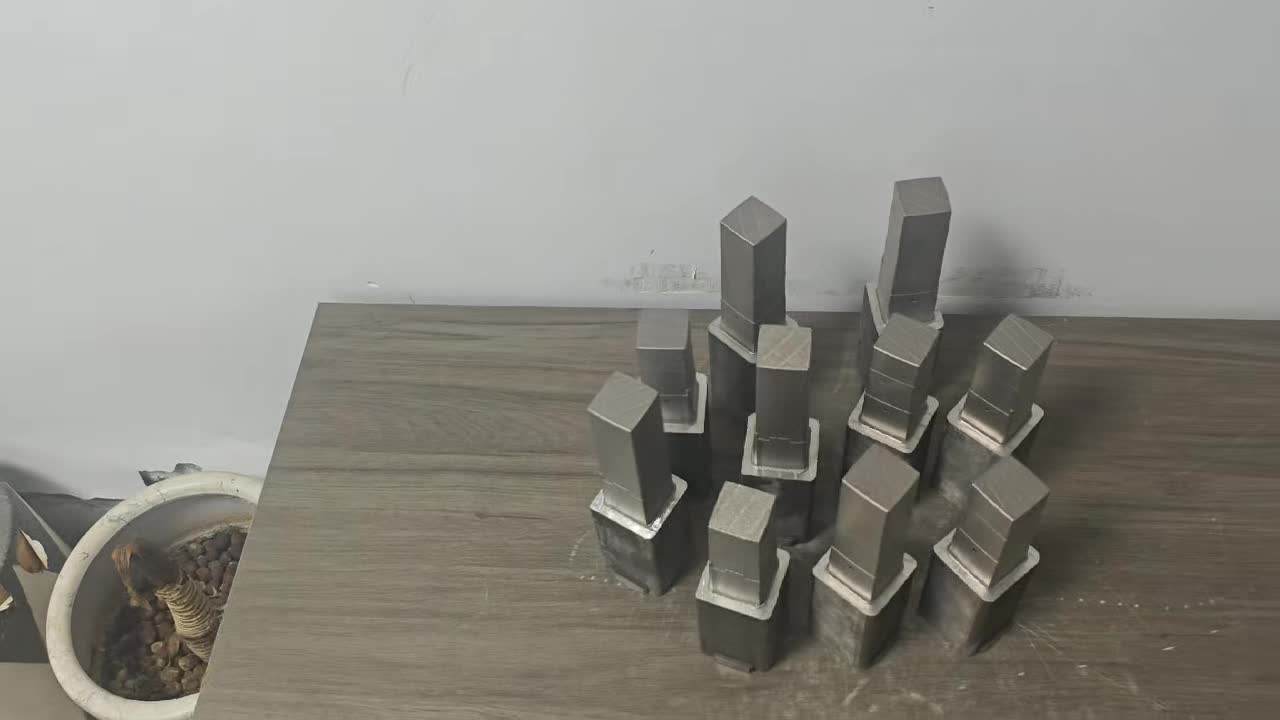
No manufacturing process is universally superior. Here are the real limitations of additive manufacturing that engineers need to factor into every build-vs-buy decision. Ignoring these leads to wasted money and missed deadlines.
This is the most fundamental limitation. Metal laser powder bed fusion (LPBF) systems typically deposit 50 to 200 cubic centimeters of material per hour. A mold insert that takes 8 hours to print takes 30 seconds to injection mold (once the mold exists). For production volumes above a few hundred identical parts, conventional processes like CNC machining, casting, or injection molding will almost always be faster. Newer technologies like binder jetting are closing this gap, but for now, AM is not a mass-production process for most part types.
Additive manufacturing has a relatively flat cost curve — the 1,000th part costs about the same as the first. Conventional processes have high upfront tooling costs but very low incremental per-part costs. The crossover point varies by part and process, but as a rough guide: AM is typically cost-competitive below 100 to 500 units for metal parts. Above that, the economics almost always favor CNC machining, casting, or molding. For a detailed cost breakdown, see our metal 3D printing cost guide.
While over 50 metal alloys are available for AM (including stainless steel, tool steel, titanium, aluminum, Inconel, and cobalt chrome), this is still a fraction of the thousands of alloys available for CNC machining or casting. Specific grades required by certain industries may not yet have validated AM parameters. Material qualification for aerospace and medical applications adds time and cost. That said, the range of printable metals expands every year, and the most commonly specified engineering alloys are well covered.
As-printed metal surfaces from LPBF have a surface roughness of Ra 5 to 15 micrometers — adequate for many applications but rough compared to the Ra 0.8 to 1.6 micrometers achievable with CNC machining. Functional surfaces (sealing faces, bearing journals, mating interfaces) almost always require post-print machining, grinding, or polishing. This adds time, cost, and complexity. It also means that even "3D printed" metal parts usually still need CNC machine time. The total cost must include post-processing — not just the print itself.
Most metal AM machines have build volumes in the range of 250 × 250 × 300 mm to 400 × 400 × 400 mm. Larger-format machines exist (up to roughly 800 × 400 × 500 mm for some systems), but they are significantly more expensive and less common. Parts larger than the build envelope must be printed in sections and joined — which partially negates the part-consolidation advantage. For very large components, Directed Energy Deposition (DED) or Wire Arc Additive Manufacturing (WAAM) can build meter-scale parts, but with rougher finish and lower resolution.
Achieving repeatable, consistent quality across builds, machines, and operators remains one of the biggest practical challenges in metal AM. Variables like powder condition, gas flow, laser calibration, and build orientation all affect part density, microstructure, and mechanical properties. Two seemingly identical parts printed on different machines (or even in different positions on the same build plate) can exhibit measurable differences in tensile strength or porosity. The industry has made significant progress with in-situ monitoring, standardized parameters, and quality management systems, but it is not yet at the "push button, get identical part" reliability of a well-controlled CNC operation.
4. Additive vs. Traditional Manufacturing — Comparison Table
The following table provides a side-by-side comparison of additive manufacturing against the two most common conventional alternatives: CNC machining and injection molding. Use it as a quick reference when evaluating which process fits your project.
| Factor | Additive Manufacturing | CNC Machining | Injection Molding |
|---|---|---|---|
| Geometric complexity | Excellent — internal channels, lattices, organic shapes | Limited by tool access | Limited by draft angles, undercuts |
| Tooling cost | None | Fixtures only ($100–$1,000) | High ($5,000–$100,000+) |
| Per-part cost (1–10 units) | Low to moderate | Moderate | Very high (tooling amortization) |
| Per-part cost (10,000+ units) | High — no volume discount | Moderate | Very low ($0.10–$5 per part) |
| Lead time (first part) | 1–5 days | 1–5 days | 4–12 weeks (tooling) |
| Surface finish (as-produced) | Ra 5–15 µm | Ra 0.8–3.2 µm | Ra 0.1–1.6 µm |
| Dimensional accuracy | ±0.05–0.1 mm | ±0.01–0.025 mm | ±0.025–0.05 mm |
| Material selection | 50+ alloys | Thousands of alloys | Thousands of polymers |
| Material waste | 5–10% | 50–95% (subtractive) | 1–5% (runners recyclable) |
| Design changes | Free — update CAD file only | New program + possible new fixtures | Expensive — modify or replace mold |
The best manufacturing strategy often combines multiple processes. Print a near-net-shape part via AM, then CNC machine critical surfaces for tight tolerances. Or use AM to create conformal-cooled mold inserts that make injection molding faster and higher quality. Think of AM as an addition to your toolkit — not a replacement.
5. When Additive Manufacturing Makes Sense — A Decision Framework
Rather than asking "should we use additive manufacturing?", ask these five questions about your specific project. If you answer "yes" to two or more, AM likely delivers a net advantage.
If the geometry is impossible or prohibitively expensive to produce subtractively, AM is likely the only viable option. Examples include conformal cooling channels in mold tooling, internal fluid passages, and topology-optimized brackets with organic load paths.
At low volumes, AM's zero-tooling advantage keeps per-part costs competitive. Above 500 units (depending on part size and material), conventional processes typically win on cost. The exact crossover depends on geometry complexity — for very complex parts, AM can remain cost-effective at higher volumes.
If your project timeline demands functional metal parts in days rather than weeks, AM is the fastest path. This is especially true for prototype validation, bridge production while tooling is being made, and urgent spare parts for equipment downtime situations.
If your current design involves multiple parts bolted, welded, or brazed together, AM may let you print them as a single piece. This eliminates assembly labor, reduces failure points, and often improves performance. The more parts you consolidate, the stronger the business case for AM.
For expensive materials like titanium, Inconel, and cobalt chrome, the material efficiency of AM (5 to 10 percent waste vs. 50 to 95 percent for CNC) can offset the higher per-hour machine cost. The more expensive the material, the more AM's near-net-shape advantage matters.
6. Real-World Example: Conformal Cooling Inserts
To see the advantages and disadvantages of additive manufacturing play out in a real application, consider conformal cooling inserts for injection molding — one of the most commercially successful uses of metal AM in tooling.
The Problem Conventional Manufacturing Cannot Solve
Injection molds need internal cooling channels to extract heat from the molten plastic and solidify the part. Conventionally, these channels are straight-line holes drilled through the mold steel, because drilling is limited to straight paths. But mold cavities are rarely flat or straight — they have curves, ribs, bosses, and complex 3D surfaces. Straight-drilled channels cannot follow these contours, resulting in uneven cooling, hot spots, longer cycle times, and defects like warpage and sink marks.
This is a problem that no amount of conventional machining skill can solve. The geometry is the limitation, not the operator.
The AM Solution: Conformal Cooling
Conformal cooling uses metal 3D printing (LPBF in tool steel, typically MS1 maraging steel or H13) to create cooling channels that follow the exact contour of the mold cavity surface — maintaining a uniform distance from the part surface everywhere. The result is dramatically more uniform heat extraction.
The documented benefits of conformal cooling include:
- 20 to 40 percent cycle time reduction — faster cooling means more parts per hour
- Elimination of hot spots — uniform cooling eliminates warpage and sink marks
- Higher part quality — less residual stress, better dimensional accuracy
- Longer mold life — lower thermal gradients reduce fatigue cracking
This is a textbook case where additive manufacturing solves a problem that conventional manufacturing physically cannot. The mold insert is one component, produced in low volume (typically 1 to 4 inserts per mold), with complex internal geometry, in expensive tool steel — it checks every box in the decision framework above.
For a deep technical overview of how AM and conformal cooling intersect, see our guide on conformal cooling and 3D printing. If you are evaluating whether conformal cooling can improve your specific mold, our metal 3D printing service team can run a thermal simulation from your CAD file — no commitment required.
Conformal cooling inserts are one of the clearest examples of additive manufacturing delivering value that conventional manufacturing simply cannot match. The insert itself is made by AM — but it then enables the mass production of millions of injection-molded parts at lower cost and higher quality.
7. FAQ — Additive Manufacturing Pros and Cons
The main pros are design freedom (complex internal geometries), no tooling for prototypes, rapid iteration, high material efficiency, part consolidation, mass customization, on-demand production, and lightweighting. The main cons are slow throughput for high volumes, higher per-part cost at scale, limited material options compared to conventional processes, surface finish that requires post-processing, build size limitations, and quality consistency challenges. The right choice depends on part geometry, volume, and performance requirements.
AM beats CNC machining on geometric complexity (internal channels, lattices, organic shapes), part consolidation, and low-volume economics. CNC machining wins on surface finish (Ra 0.8 vs. Ra 5–15 µm), dimensional accuracy, material selection (thousands of alloys vs. dozens), and per-part cost above roughly 100 to 500 units. Many production workflows combine both — printing a near-net shape and CNC machining critical surfaces.
The biggest benefit is conformal cooling — 3D-printed cooling channels that follow the exact contour of the mold cavity, reducing cycle times by 20 to 40 percent and eliminating warpage. Other benefits include faster mold insert delivery (days instead of weeks), easy design iteration on inserts, and consolidation of complex core geometries into single printed components.
The key limitations are: build speed (50 to 200 cm³/hour for metal LPBF), build size (most machines max out at 400 × 400 × 400 mm), surface finish (Ra 5 to 15 µm requiring post-processing), material cost (metal powder costs 5 to 20 times more per kilogram than bar stock), and quality assurance (achieving consistent density and mechanical properties across builds requires strict process control).
It depends on the part and volume. AM is cheaper when the part has complex internal geometry that requires multiple machining setups or cannot be machined at all, when you need 1 to 100 parts, or when part consolidation eliminates assembly. Traditional manufacturing is cheaper for simple geometries, volumes above a few hundred units, and applications requiring extreme surface finish on all surfaces.
For mass production, AM's per-part cost does not decrease with volume (no tooling to amortize), build speed is slow compared to injection molding or die casting, quality consistency requires careful monitoring, and post-processing adds time and labor to every part. However, AM is increasingly used to make the tooling — such as conformal-cooled mold inserts — that then makes mass production faster and higher quality.
Related Pages
- Can You 3D Print Metal? How It Works and What It Costs
- How Much Does Metal 3D Printing Cost? (2026 Price Guide)
- Conformal Cooling and 3D Printing — Complete Technical Guide
- Benefits of Conformal Cooling — Data, Case Studies, and ROI
- What Is Conformal Cooling? A Plain-English Explanation
- Metal 3D Printing Service — Full Specifications, Materials & Lead Times