1. Why Simulate Conformal Cooling at All?
Conformal cooling gives you enormous design freedom compared to drilled channels. That freedom is also a liability: a badly designed conformal channel can perform worse than conventional cooling. Common failure modes include:
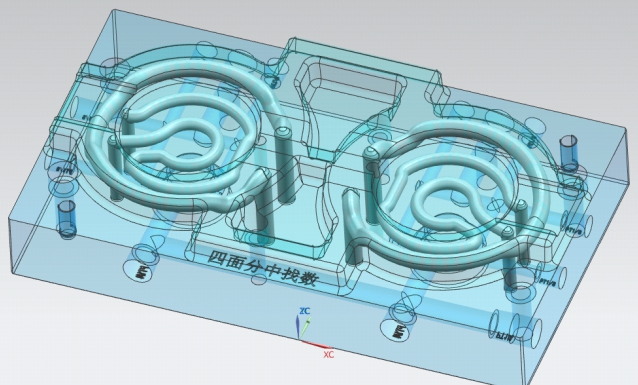
- Channel starvation — flow takes the path of least resistance; some branches receive nearly zero flow
- Hot spots at inlet/outlet transitions — short circuits in the flow path leave corners uncooled
- Insufficient Reynolds number — turbulent flow (Re > 10,000) is required for efficient heat transfer; laminar flow in oversized channels dramatically reduces cooling effectiveness
- Structural failure — channels too close to the mold surface cause stress cracking under cyclic thermal load
That said, simulation software has a wide spectrum — from free basic analysis to $50,000/year enterprise licenses. The right tool depends on your project complexity, team capability, and budget. It also depends on how tightly you need to integrate simulation into your conformal cooling mold design workflow.
2. The Software Landscape in 2026
There are four categories of software used in conformal cooling design:
Injection Molding Simulators
Full cycle analysis: fill, pack, cooling, and warpage prediction. Best for complete conformal cooling ROI quantification.
Tools: Moldflow, Moldex3D, Sigmasoft
CFD / Thermal Analysis
Detailed fluid dynamics and heat transfer in channels. Cannot predict injection molding warpage.
Tools: ANSYS Fluent, ANSYS CFX, SolidWorks Flow Simulation
Generative / Topology Design
AI/topology-based channel path generation. Outputs optimized channel geometry for LPBF printing.
Tools: nTop, Autodesk Fusion 360 Generative, Siemens NX Topology
CAD with Cooling Module
Mold design CAD tools with integrated basic cooling analysis. Limited accuracy but no separate software needed.
Tools: SolidWorks Plastics, CATIA Mold Tooling, NX Mold Wizard
3. Autodesk Moldflow
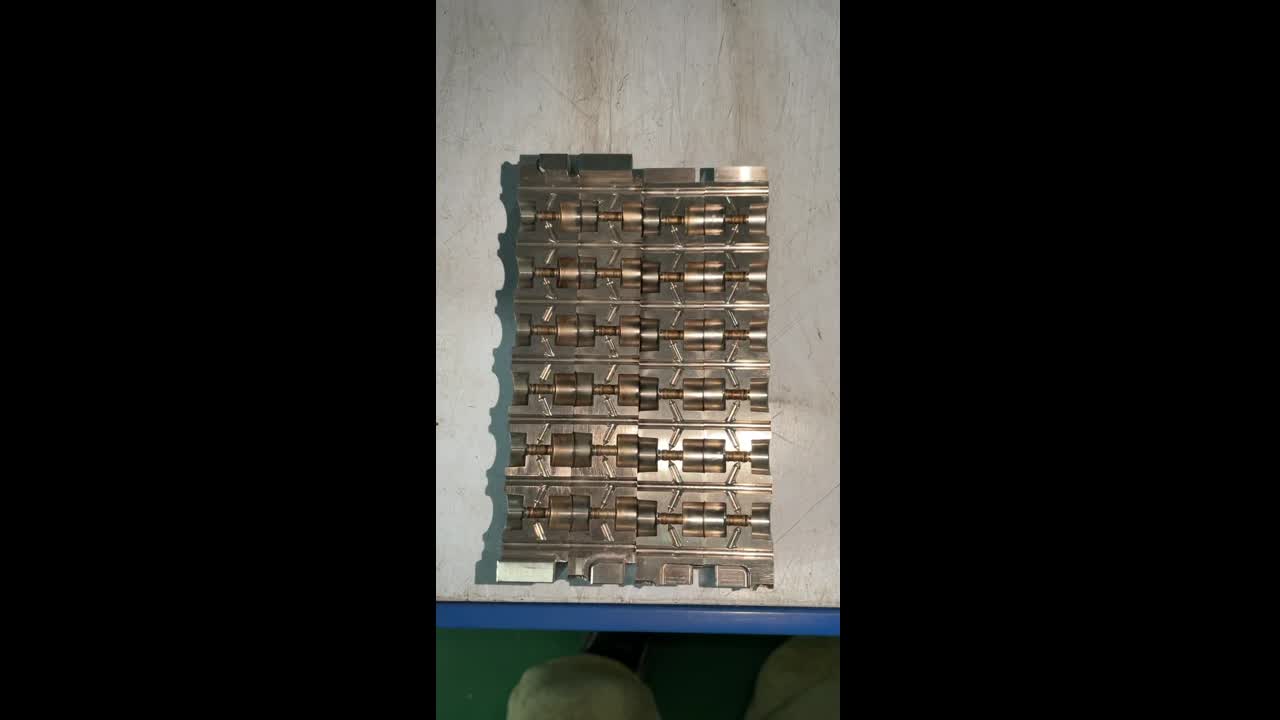
Moldflow is the global market leader in injection molding simulation, used by the majority of automotive Tier 1 suppliers and a large portion of consumer goods mold shops worldwide.
Conformal Cooling Capabilities
- 3D conformal cooling mesh — Moldflow can mesh arbitrary 3D channel paths (not just straight lines)
- Cool (FEM) analysis — full 3D finite element thermal analysis of the mold body and channels
- Cooling circuit wizard — guided tool for defining circuit layout, flow rates, and inlet temperatures
- Cycle time optimization — parametric study to find optimal channel diameter, pitch, and distance from surface
- Warpage prediction — downstream warpage analysis showing effect of non-uniform cooling on part distortion
- 3D printing export — cooling circuit geometry can be exported for LPBF manufacturing
Moldflow Versions Relevant to Conformal Cooling
| Version | Conformal Cooling Support | Annual Cost (approx) |
|---|---|---|
| Moldflow Adviser | Basic cooling circuit (straight channels only). Not suitable for conformal cooling. | ~$4,000–6,000/yr |
| Moldflow Insight Standard | 3D conformal cooling mesh, Cool FEM. Good for most conformal projects. | ~$12,000–18,000/yr |
| Moldflow Insight Ultimate | Full thermal/structural coupling, advanced warpage. Required for demanding medical/aerospace work. | ~$25,000–40,000/yr |
Moldflow Strengths and Weaknesses for Conformal Cooling
Strengths:
- Most widely used — results understood by OEM customers
- Integrates with Autodesk Inventor and Fusion 360 CAD
- Extensive material library (7,000+ resins)
- Strong warpage prediction for validating conformal cooling benefit
- Regular updates with conformal cooling workflow improvements
Weaknesses:
- Expensive — the Insight version needed for conformal cooling is $12K+/year
- Steep learning curve for Cool FEM setup
- Simulation runtime can be 2–8 hours for complex 3D cooling analysis
- Not ideal for detailed channel hydraulics (use ANSYS for that)
4. Moldex3D
Moldex3D (CoreTech System) is based in Taiwan and is the dominant simulation platform in Asia-Pacific, particularly in Taiwan, Japan, South Korea, and China's automotive supply chain. It has strong conformal cooling capabilities and is increasingly used by European and North American companies.
Conformal Cooling Capabilities
- Conformal cooling wizard — dedicated workflow for defining spiral/zigzag/custom conformal channels
- Advanced BEM (Boundary Element Method) — faster than full FEM for cycle-average cooling analysis
- eDesign module — rapid cooling layout evaluation (minutes vs. hours for full FEM)
- 3D printing integration — supports LPBF design export with Materialise and other 3D print preparation tools
- Fiber orientation module — important for glass-filled resins where conformal cooling affects fiber alignment and warpage
Moldex3D vs. Moldflow for Conformal Cooling
| Feature | Moldflow Insight | Moldex3D R&D |
|---|---|---|
| 3D conformal cooling mesh | Yes | Yes |
| Rapid cooling evaluation | Moderate | Fast (eDesign) |
| Warpage prediction accuracy | High | High |
| Fiber orientation (GF resins) | Good | Excellent |
| Learning curve | Moderate | Moderate |
| Global user base | Very large | Large (strong in Asia) |
| Annual license cost (approx) | $12K–25K | $10K–22K |
| Free trial available | Yes (30-day) | Yes (30-day) |
For most engineering purposes, Moldflow and Moldex3D are equivalent in conformal cooling simulation accuracy. The choice is usually driven by which platform your OEM customer requires for supplier qualification, and regional support availability.
5. ANSYS Fluent / ANSYS Icepak
ANSYS is not an injection molding simulator — it is a general-purpose CFD and FEA platform. But it has a specific role in conformal cooling design: detailed analysis of coolant flow and heat transfer within the channels.
When to Use ANSYS for Conformal Cooling
- Channel pressure drop calculation — Moldflow gives approximate pressure drop; ANSYS Fluent gives exact values for complex channel geometries, important for pump sizing and multi-circuit balancing
- Reynolds number verification — confirm turbulent flow (Re > 10,000) at target flow rates across all circuit branches
- Hot spot investigation — detailed temperature mapping at problem areas identified in Moldflow analysis
- TPMS channel geometry validation — for gyroid/Schwartz diamond lattice cooling structures, ANSYS gives more accurate flow modelling than Moldflow's simplified channel approach
- Structural integrity — ANSYS Mechanical can check fatigue life of thin-walled channels under cyclic thermal and pressure loading
ANSYS Cost
ANSYS pricing is complex and negotiated. As a rough guide: ANSYS Fluent academic licenses are available at low cost or free; commercial licenses range from $25,000–$100,000+/year depending on module set. For most mold shops, dedicated injection molding simulators (Moldflow/Moldex3D) offer far better ROI than ANSYS for conformal cooling work.
6. nTop (nTopology) — Generative Channel Design
nTop is a different category of tool. Rather than simulating cooling performance, nTop is used to generate complex conformal channel geometries — particularly TPMS lattice structures (gyroid, Schwartz Diamond, Schwartz Primitive) — that would be impossible to design manually in traditional CAD.
What nTop Does for Conformal Cooling
- Conformal surface offsetting — generate channel paths that follow the mold cavity surface at a constant specified distance
- TPMS lattice generation — create gyroid or other TPMS structures within a defined cooling volume, then export to LPBF manufacturing
- Topology optimization — minimize thermal resistance subject to geometric constraints (wall thickness, build orientation)
- Direct LPBF export — outputs files in STEP or mesh format suitable for LPBF build preparation (Materialise Magics, 3D Systems 3DXpert)
nTop + Moldflow/Moldex3D Workflow
The professional workflow for complex conformal cooling in 2026:
- nTop → generate candidate conformal channel geometry (multiple layout options)
- Moldflow or Moldex3D → simulate each candidate, predict cycle time, temperature uniformity, and warpage
- Select best design → iterate if needed
- ANSYS Fluent (optional) → validate channel hydraulics for the selected design
- LPBF manufacturing → print the final design
nTop annual license: approximately $15,000–$25,000/year for commercial use. A free academic license is available. For most mold shops doing standard conformal cooling (non-TPMS), nTop is not required — channel geometry can be designed directly in SolidWorks or CATIA following design rules.
7. Full Software Comparison Table
| Software | Best For | Full Cycle Sim | CFD Channel Detail | Warpage | Cost / Year | Learning Curve |
|---|---|---|---|---|---|---|
| Moldflow Insight | Complete conformal cooling project, OEM documentation | Yes | Basic | Excellent | $12K–25K | Moderate |
| Moldex3D R&D | Asia-Pacific projects, fiber-filled resins | Yes | Basic | Excellent | $10K–22K | Moderate |
| Sigmasoft | Complex multi-material, reactive molding | Yes | Good | Very Good | $20K–40K | High |
| ANSYS Fluent | Detailed channel hydraulics, pressure drop, TPMS flow | No | Excellent | No | $25K–100K | High |
| SolidWorks Flow Sim | Quick channel heat transfer check, SolidWorks users | No | Good | No | ~$5K (add-on) | Low |
| nTop | TPMS channel generation, generative design | No | No | No | $15K–25K | High |
| Fusion 360 Plastics | Basic mold analysis, small shops without Moldflow budget | Limited | No | Basic | Included (Fusion 360) | Low |
8. When You Can Skip Simulation (Design Rules Approach)
Not every conformal cooling project requires expensive simulation software. For certain geometries, experience-based design rules produce reliable results:
Safe to Use Design Rules Only (No Simulation Required)
- Simple planar parts (flat plates, shallow dishes) with uniform wall thickness
- Circular or elliptical inserts where channels can follow the surface at constant offset
- Non-critical applications where ±5°C temperature variation across the mold surface is acceptable
- Retrofit projects where you're replacing like-for-like conventional channels with conformal channels at the same pitch and diameter
- When an experienced conformal cooling manufacturer (like us) handles the channel design as part of the manufacturing service
Simulation Is Essential For:
- Complex 3D geometry (deep cores, undercuts, varying wall thickness)
- Glass-fiber filled or other anisotropic materials (warpage is sensitive to cooling uniformity)
- Multi-cavity molds where cavity-to-cavity temperature balance matters
- Medical device molds with tight dimensional tolerances (<±0.05mm)
- High-value molds where redesign cost after a failed trial would exceed simulation cost
- Any project requiring documented engineering evidence for OEM customer approval
Channel diameter D = 8–12mm · Wall to channel surface = 1.5–2×D · Pitch P = 2–3×D · Minimum bend radius = 1.5×D · Flow rate targeting Re > 10,000
9. Recommended Workflow by Project Type
| Project Type | Recommended Workflow | Typical Sim Cost |
|---|---|---|
| Simple geometry, low-value mold (<$5K insert) | Design rules only. No simulation. Use standard spiral or zigzag channels. | $0 |
| Moderate complexity, standard automotive | Moldflow or Moldex3D by in-house team or bureau simulation service | $500–2,000 (bureau) |
| Complex geometry or tight tolerance | Moldflow Insight (full 3D) + optional ANSYS channel validation | $2,000–5,000 (bureau) |
| TPMS / advanced channel geometry | nTop generation → Moldflow validation → ANSYS channel hydraulics | $5,000–15,000 (bureau) |
| Medical device (MDR documentation required) | Moldflow Insight Ultimate + ANSYS structural fatigue + full DQ/PQ package | $8,000–20,000 |
Bureau simulation — if your shop doesn't own Moldflow, simulation bureaus (engineering service companies offering analysis-as-a-service) can run conformal cooling analysis for $500–3,000 per project. This is often the best option for shops that do 1–5 conformal cooling projects per year.
10. What We Do at MouldNova
When you order conformal cooling inserts from us, simulation is included in the design process. Here's exactly what happens:
- You send your insert geometry (STEP file) and production requirements (resin type, target cycle time, annual volume)
- Our engineers design the channel path based on validated design rules and experience from 200+ conformal cooling projects
- For complex geometries: we run Moldex3D thermal analysis to verify temperature uniformity before manufacturing
- DFM report — you receive channel layout drawings, expected cycle time saving, and a pressure-drop estimate for coolant circuit design
- You approve the design or request modifications before we manufacture
You do not need to own Moldflow or any simulation software to work with us. Our channel design service is included in the insert price.
Ready to Design Your Conformal Cooling Insert?
Send us your mold insert geometry (STEP/IGES) and production requirements. We'll return a channel layout design and firm quote within 24 hours — no simulation software required on your end.
View Conformal Cooling Service → WhatsApp for Quick Quote