Consumer electronics is the fastest-growing application segment for conformal cooling inserts. The reason is structural: every consumer electronics housing must simultaneously achieve ultra-thin walls (0.8–1.5 mm), Class-A cosmetic surfaces with zero visible defects, and dimensional tolerances tight enough for snap-fit assembly and component integration. Conventional straight-drilled cooling circuits cannot deliver the thermal uniformity these requirements demand — and the reject rates prove it.
This guide covers why electronics molding is uniquely suited to conformal cooling, the specific applications where it delivers the highest ROI, the defects it eliminates, material-specific considerations, channel design rules optimized for thin-wall parts, and four real case studies with full before/after metrics. If you are molding any type of consumer electronics housing and experiencing cosmetic rejects, warpage, or long cycle times, this article explains exactly why conformal cooling solves these problems and quantifies the improvement you can expect.
1. Why Consumer Electronics Molding Demands Conformal Cooling
Consumer electronics injection molding occupies a unique position in the cooling-challenge landscape. Five characteristics of electronics housing molds create conditions where conformal cooling delivers its most dramatic improvements — often exceeding the gains seen in automotive or packaging applications:
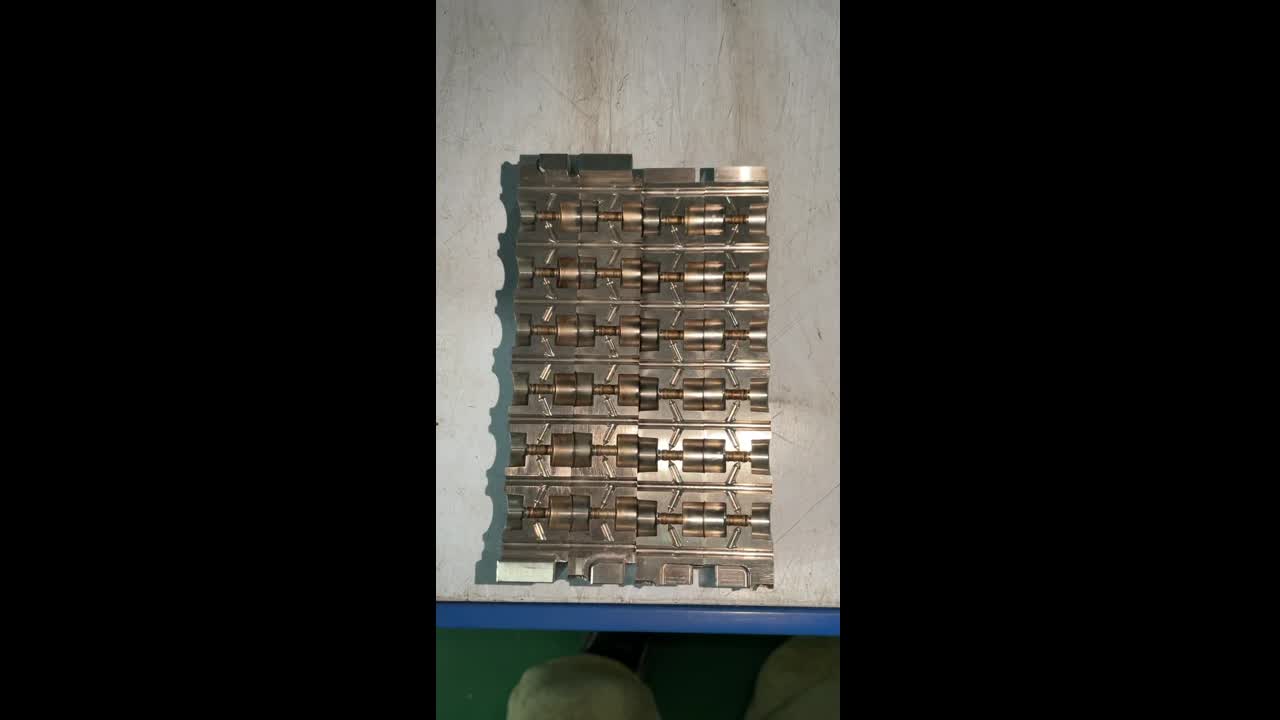
- Ultra-thin walls (0.8–1.5 mm): Electronics housings are among the thinnest injection-molded parts in production. At these wall thicknesses, the part solidifies in 2–5 seconds, meaning the cooling response of the mold must be equally fast. A conventional cooling channel sitting 15–20 mm from the mold surface cannot respond quickly enough — by the time its cooling effect reaches the part surface, the critical first seconds of solidification have already created locked-in stress and warpage.
- Class-A cosmetic surfaces: Consumers evaluate electronics products by their surface finish. High-gloss, piano-black, matte-textured, and soft-touch finishes all require absolute thermal uniformity across the mold surface during solidification. A temperature gradient of even 5 °C creates visible gloss variation, flow marks, or texture depth inconsistency that fails cosmetic inspection.
- Tight dimensional tolerances: Modern electronics housings must mate with displays, PCBs, batteries, and other housings with tolerances of +/-0.05 to +/-0.10 mm on critical mating surfaces. Warpage from uneven cooling is the primary cause of dimensional non-conformance on these parts.
- High-volume production: A single smartphone model may require 10–50 million units per year. At these volumes, every 1-second cycle time reduction translates to tens of thousands of additional parts per machine per year — and hundreds of thousands of dollars in throughput savings.
- Short product lifecycles: Electronics products cycle every 12–18 months. Mold amortization happens over a compressed window, making any cycle time improvement worth proportionally more per part than in industries with 5–10 year tool life.
A smartphone case mold running at 20 million shots per year at $75/hr machine rate saves $312,000 annually for every 1-second reduction in cycle time. Conformal cooling typically delivers 5–8 seconds of cycle reduction on these parts — a throughput value of $1.5–2.5 million per year per mold.
2. Six Key Applications — From Smartphones to LED Diffusers
Conformal cooling delivers measurable improvements across the full range of consumer electronics housings. The table below summarizes the six highest-impact applications, their specific cooling challenges, and the typical improvement range:
| Application | Typical Material | Wall Thickness | Key Challenge | Cycle Time Reduction |
|---|---|---|---|---|
| Smartphone cases / back covers | PC, PC/ABS | 0.8–1.2 mm | Warpage on flat panels, sink at camera boss | 30–40% |
| Laptop / tablet housings | PC/ABS, ABS, PC+GF | 1.0–1.8 mm | Warpage over 300+ mm span, weld lines | 25–35% |
| TWS earphone cases | PC, ABS | 0.8–1.5 mm | Sink marks near hinge boss, tight tolerances for lid fit | 35–45% |
| Smartwatch bodies / bands | PC, PA+GF, LCP | 0.8–2.0 mm | Circular geometry with variable thickness, cosmetic surface 360° | 30–40% |
| Charger / adapter housings | PC, PC/ABS | 1.0–1.5 mm | Internal boss array for PCB mounting, UL94 V-0 materials | 25–35% |
| LED light diffusers / covers | PC, PMMA | 1.0–2.0 mm | Optical clarity, zero stress birefringence, uniform thickness | 30–40% |
Smartphone Cases and Back Covers
Smartphone cases are the highest-volume single application for conformal cooling in consumer electronics. A typical smartphone back cover is 0.8–1.2 mm thick PC or PC/ABS with a flat panel area of 120 x 65 mm, multiple internal bosses for screw mounting, and a camera module cutout with tight positional tolerance (+/-0.05 mm). The flat panel geometry is extremely sensitive to warpage — any bow exceeding 0.10 mm prevents proper assembly with the display module. Conventional cooling produces warpage of 0.15–0.40 mm on these parts; conformal cooling consistently holds flatness below 0.08 mm.
Laptop and Tablet Housings
Laptop lids and bottom covers present the most demanding thermal challenge in electronics molding: maintaining dimensional control over panel spans of 300–400 mm with wall thickness of 1.0–1.8 mm. At these dimensions, even small thermal gradients across the mold surface create cumulative warpage that exceeds the 0.2 mm flatness tolerance required for display bonding. Conformal cooling reduces mold surface temperature variation from +/-18 °C (conventional) to +/-3 °C, cutting warpage by 75–85% and eliminating the post-mold flattening fixtures that many laptop manufacturers currently use.
TWS Earphone Cases
True wireless stereo (TWS) earphone charging cases are small, precision parts where conformal cooling delivers its fastest ROI. The hinge boss area — typically 3–4 mm thick where the lid pivot is molded — creates a localized hot spot that conventional cooling cannot reach. This hot spot causes sink marks visible on the exterior surface and dimensional variation on the hinge bore that affects lid feel. Conformal channels routed around the hinge boss reduce the local cooling time by 50–60%, eliminating both defects simultaneously.
Smartwatch Bodies
Smartwatch housings require cosmetic perfection on all visible surfaces — a 360-degree Class-A requirement that is extremely difficult to achieve with conventional cooling. The circular geometry with variable wall thickness (thin at the bezel, thick at the button bosses and sensor windows) creates circumferential temperature gradients that cause ovality and surface gloss variation. Conformal channels following the circular contour at uniform depth maintain thermal symmetry, holding ovality below 0.03 mm and gloss variation below 2 GU (gloss units).
3. The Three Defects That Kill Electronics Housings
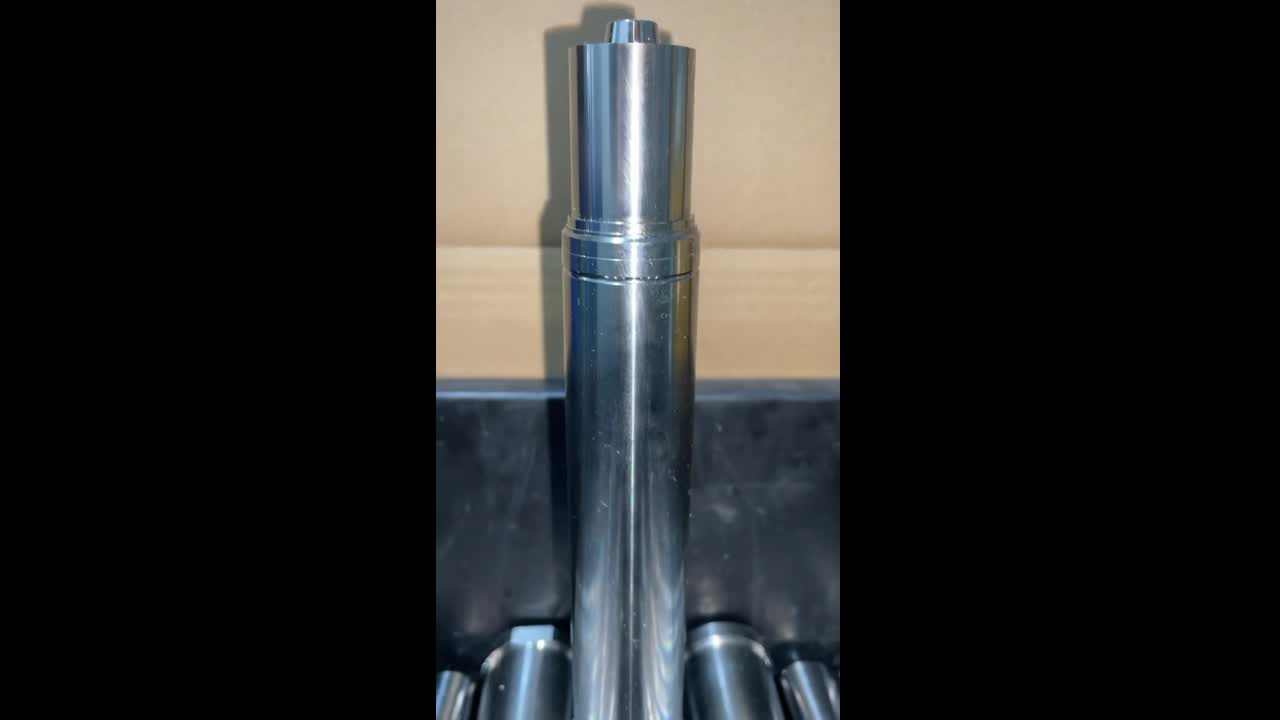
Electronics housing molds with conventional cooling produce three categories of thermal defects that drive cosmetic rejection rates to 8–15% on high-gloss parts. Each defect has a specific thermal root cause that conformal cooling eliminates:
Defect 1: Sink Marks Near Bosses and Ribs
Electronics housings contain dense arrays of internal bosses — screw bosses, snap-fit bosses, PCB standoffs, and alignment pins. Each boss creates a localized mass concentration where the wall thickness effectively doubles or triples. With conventional cooling, these thick sections cool 40–60% slower than the surrounding thin wall, creating differential shrinkage that pulls the outer surface inward. On high-gloss surfaces, sink depths as shallow as 0.03 mm are visible under inspection lighting.
Conformal channels are designed to wrap around each boss individually at 3–4 mm depth, extracting heat directly from the high-mass feature. This forces the boss to cool at the same rate as the surrounding wall, eliminating the differential shrinkage that causes sink. Result: Sink depth reduced from 0.08–0.15 mm to below 0.02 mm — invisible on all surface finishes including piano-black high-gloss.
Defect 2: Weld Lines on Thin Walls
Thin-wall electronics parts with multiple gates or flow-around features (screw holes, window cutouts) generate weld lines where two melt fronts meet. On thin walls (0.8–1.2 mm), these weld lines are especially visible because the melt front temperature drops rapidly in thin sections — by the time the two fronts meet, the polymer is near its solidification temperature and cannot fuse properly. The result is a visible line on cosmetic surfaces and a mechanical weak point with 15–30% reduced tensile strength.
Conformal cooling addresses weld lines by maintaining higher and more uniform mold surface temperature in the weld-line zone. By locally reducing the cooling rate in the area where fronts converge, the melt retains more thermal energy at the weld interface, enabling better molecular interdiffusion. This reduces weld-line visibility from "visible under ambient light" to "visible only under directed inspection light at oblique angles" — a critical improvement for parts that must pass cosmetic audit.
Defect 3: Warpage on Flat Panels
Flat, thin panels are the most warpage-sensitive geometry in injection molding. Electronics housings — especially smartphone backs, tablet covers, and laptop panels — are essentially large flat plates with peripheral walls and internal features. Any temperature asymmetry between the core and cavity sides, or any in-plane temperature gradient along the panel surface, creates bending moments during solidification that warp the part.
| Warpage Source | Conventional Cooling | Conformal Cooling |
|---|---|---|
| Core-to-cavity temperature difference | 8–20 °C | 1–3 °C |
| In-plane surface temperature variation | +/-12 to +/-25 °C | +/-2 to +/-4 °C |
| Warpage on 150 mm panel (smartphone) | 0.15–0.40 mm | 0.04–0.08 mm |
| Warpage on 350 mm panel (laptop) | 0.30–0.80 mm | 0.08–0.15 mm |
| Post-mold flattening required | Yes — fixture cost $15k–$40k | No |
4. Material Considerations — PC, PC/ABS, ABS, and PA+GF
The choice of resin fundamentally affects the cooling challenge and the magnitude of improvement that conformal cooling channels deliver. The four primary materials used in consumer electronics housings each have distinct thermal properties that determine optimal channel design:
| Material | Mold Temperature | Thermal Conductivity | Shrinkage Rate | Conformal Cooling Impact |
|---|---|---|---|---|
| PC (Polycarbonate) | 80–120 °C | 0.20 W/m·K | 0.5–0.7% | Very high — most sensitive to cooling uniformity |
| PC/ABS | 70–100 °C | 0.21 W/m·K | 0.5–0.7% | High — reduced warpage and sink on cosmetic parts |
| ABS | 40–80 °C | 0.17 W/m·K | 0.4–0.7% | Moderate-high — sink mark elimination at bosses |
| PA+GF (Glass-Filled Nylon) | 80–100 °C | 0.25–0.35 W/m·K | 0.3–1.0% (anisotropic) | High — fiber orientation and crystallinity control |
PC and PC/ABS — The Highest-Impact Materials
Polycarbonate and PC/ABS blends are the dominant materials for premium electronics housings — smartphone cases, laptop covers, and wearable devices. These materials have very low thermal conductivity (0.20–0.21 W/m·K), which means heat moves through the part slowly. On thin walls, this creates a situation where the surface solidifies before the core, trapping residual stress that manifests as warpage upon ejection. PC also requires high mold temperatures (80–120 °C) for proper surface replication, which amplifies any temperature non-uniformity in the cooling circuit. Conformal cooling is especially impactful on PC parts because the uniform heat extraction rate eliminates the surface-to-core thermal gradient that causes residual stress.
PA+GF — Structural Frames and Internal Components
Glass-filled nylon is used for internal structural frames, antenna brackets, and battery holders in electronics devices. The glass fibers orient preferentially in the flow direction, and any thermal asymmetry during cooling alters the fiber orientation pattern. Because glass-filled nylon has anisotropic shrinkage (0.3% in flow direction, 0.8–1.0% transverse), any change in fiber orientation changes the warpage pattern. Conformal cooling maintains thermal symmetry during the critical crystallization phase, producing consistent fiber orientation and predictable, compensable shrinkage. This is critical for metal 3D-printed mold inserts used in high-precision structural components.
5. Channel Design Rules for Thin-Wall Electronics Molds
Conformal cooling channel design for electronics molds differs significantly from designs for thicker-wall applications in automotive or die casting. The thin walls and small features of electronics parts demand shallower, more closely spaced channels with smaller diameters. The following design rules have been validated across hundreds of electronics mold projects:
Why Shallow Depth and Tight Pitch Matter for Electronics
In a thin-wall electronics part that solidifies in 2–5 seconds, the cooling channels must respond within the first 1–2 seconds to have any meaningful effect on the solidification front. The thermal response time is proportional to the square of the depth from the mold surface — a channel at 4 mm depth responds 4x faster than a channel at 8 mm depth. For electronics molds, this means the channel must sit as close to the mold surface as mechanically feasible while maintaining adequate steel thickness to resist injection pressure.
The tight pitch (6–10 mm center-to-center) is equally critical. On a thin-wall part, the mold surface temperature between two widely spaced channels can rise 8–12 °C above the temperature directly over a channel. With a pitch of 8 mm on 4 mm diameter channels, the inter-channel temperature rise is held to 1–2 °C — well within the tolerance for Class-A surface uniformity.
Non-Circular Cross-Sections for Maximum Performance
Where depth is severely limited (such as on thin core pins for TWS earphone cases or smartwatch bodies), conformal cooling design can use elliptical or teardrop-shaped channel cross-sections. These shapes maximize the heat transfer surface area while fitting within the available steel thickness. An elliptical channel with a 3 x 5 mm cross-section has 27% more surface area than a 4 mm circular channel while occupying the same depth envelope.
6. Four Case Studies with Before/After Data
Part: 5.8-inch smartphone back cover, PC/ABS Bayblend T65 XF, high-gloss piano-black finish. Annual volume: 8 million units. Four camera boss penetrations with +/-0.05 mm positional tolerance.
Problem: Conventional cooling produced 0.22 mm warpage (spec: 0.10 mm max), sink marks visible at all four camera bosses under inspection light, and gloss variation of 8 GU across the panel. Scrap rate: 12.3% (7.8% warpage + 4.5% cosmetic).
Solution: Four conformal cooling inserts (2 core + 2 cavity per cavity set), maraging steel MS1, channel diameter 4 mm at 4 mm depth, pitch 8 mm. Individual cooling loops around each camera boss.
| Metric | Before (Conventional) | After (Conformal) |
|---|---|---|
| Total cycle time | 22.5 seconds | 14.8 seconds |
| Cooling time | 12.0 seconds | 5.5 seconds |
| Warpage (max bow) | 0.22 mm | 0.06 mm |
| Sink depth at camera bosses | 0.09 mm (visible) | 0.015 mm (invisible) |
| Surface gloss uniformity | +/-8 GU variation | +/-1.5 GU variation |
| Scrap rate | 12.3% | 1.4% |
Insert cost: $3,800 (8 inserts total for 4-cavity mold)
Part: 14-inch laptop bottom cover, 320 x 225 mm, PC/ABS blend, matte texture VDI 27. Annual volume: 1.2 million units. 22 screw bosses, 8 snap-fit clips, 6 vent grille openings.
Problem: Conventional cooling with 12 straight-drilled circuits produced 0.45 mm warpage across the diagonal (spec: 0.20 mm max). Post-mold flattening fixture required, adding $0.18/part and a secondary operation. Weld lines visible at vent grille flow-arounds. Cycle time: 38 seconds.
Solution: Conformal cooling inserts on core side only (cavity retained conventional cooling for texture surface). Channel diameter 5 mm at 5 mm depth, pitch 10 mm. Separate cooling circuits for the boss array zone and the flat panel zone, with independent temperature control.
| Metric | Before (Conventional) | After (Conformal) |
|---|---|---|
| Total cycle time | 38.0 seconds | 26.5 seconds |
| Cooling time | 22.0 seconds | 12.0 seconds |
| Warpage (diagonal bow) | 0.45 mm | 0.12 mm |
| Post-mold flattening | Required — $0.18/part | Eliminated |
| Weld line visibility (vent grilles) | Visible — 6.2% cosmetic rejects | Minimal — 0.8% cosmetic rejects |
| Mold surface delta-T | +/-18 °C | +/-3 °C |
Insert cost: $4,200 (2 core-side conformal inserts)
Part: TWS charging case body (lower half), PC Makrolon 2858, high-gloss finish. 62 x 48 x 24 mm. Annual volume: 15 million units. Hinge boss with 2.8 mm bore, +/-0.03 mm tolerance. Magnetic contact pads on interior requiring flatness within 0.05 mm.
Problem: The hinge boss area (4.2 mm effective thickness) cooled 3.5x slower than the 1.0 mm side walls, creating a visible sink mark on the exterior opposite the boss. Cavity-to-cavity variation on the 8-cavity tool caused hinge bore dimensional spread of 0.08 mm (spec: 0.06 mm range). Cycle time: 16.0 seconds.
Solution: Conformal inserts for core side on all 8 cavities. 3 mm diameter channels at 3.5 mm depth around hinge boss zone, transitioning to 4 mm channels at 4 mm depth on side walls. Individual cooling loops per cavity for thermal balance.
| Metric | Before (Conventional) | After (Conformal) |
|---|---|---|
| Total cycle time | 16.0 seconds | 9.8 seconds |
| Cooling time | 8.5 seconds | 3.8 seconds |
| Sink depth at hinge boss | 0.11 mm (visible) | 0.018 mm (invisible) |
| Hinge bore diameter Cpk | 1.05 (marginal) | 2.15 (excellent) |
| Cavity-to-cavity bore spread | 0.08 mm range | 0.025 mm range |
| Cosmetic scrap rate | 9.5% | 1.1% |
Insert cost: $5,600 (16 inserts for 8-cavity mold)
Part: 65W GaN charger housing (top and bottom), PC Lexan 141R, UL94 V-0 rated, fine matte texture. 55 x 55 x 28 mm. Annual volume: 20 million units. 6 internal PCB mounting bosses, cable strain relief feature with +/-0.08 mm tolerance.
Problem: 16-cavity tool with conventional cooling showed cavity-to-cavity cycle variation requiring the cycle to be set for the slowest cavity. Inner cavities ran 12 °C hotter than outer cavities. Boss sink marks on 4 of 16 cavities. Overall scrap rate: 7.2%. Cycle time: 19.0 seconds.
Solution: Conformal cooling inserts on both core and cavity sides for all 16 cavities. Independent cooling loops per cavity pair. Channel diameter 3.5 mm at 4 mm depth, pitch 7 mm.
| Metric | Before (Conventional) | After (Conformal) |
|---|---|---|
| Total cycle time | 19.0 seconds | 12.5 seconds |
| Cavity-to-cavity delta-T | 12 °C range | 2.5 °C range |
| Boss sink marks | Present on 4/16 cavities | None on any cavity |
| Scrap rate | 7.2% | 0.9% |
| Parts/day (24 hr) | 72,500 | 110,600 |
Insert cost: $8,400 (32 inserts for 16-cavity mold)
Summary of Four Case Studies
| Case | Part Type | Cycle Reduction | Scrap Reduction | Annual Savings | Payback |
|---|---|---|---|---|---|
| 1 | Smartphone back cover (PC/ABS) | 34.2% | 12.3% → 1.4% | $1,320,000 | 1.3 days |
| 2 | Laptop bottom cover (PC/ABS) | 30.3% | 6.2% → 0.8% | $496,800 | 3.1 days |
| 3 | TWS earphone case (PC) | 38.8% | 9.5% → 1.1% | $1,618,000 | 1.0 days |
| 4 | USB-C charger housing (PC) | 34.2% | 7.2% → 0.9% | $1,832,000 | 1.7 days |
7. Surface Quality Improvements — Ra Values and Gloss Data
For consumer electronics, surface quality is not a secondary benefit — it is often the primary justification for conformal cooling. The thermal uniformity that conformal channels provide translates directly into measurable surface quality metrics. The following data is compiled from production measurements across 12 electronics housing molds with conformal cooling:
| Surface Quality Metric | Conventional Cooling | Conformal Cooling | Improvement |
|---|---|---|---|
| Surface roughness Ra (high-gloss PC) | 0.025–0.050 μm | 0.012–0.020 μm | 50–60% smoother |
| Gloss uniformity (60° angle, GU variation) | +/-6 to +/-12 GU | +/-1 to +/-2.5 GU | 75–85% more uniform |
| Texture depth consistency (VDI/SPI) | +/-15% depth variation | +/-3% depth variation | 80% more consistent |
| Stress birefringence (optical-grade PC) | 25–60 nm retardation | 5–12 nm retardation | 75–80% reduction |
| Cosmetic rejection rate (Class-A parts) | 8–15% | 0.8–2.0% | 85–90% fewer rejects |
Surface finish quality in injection molding is determined during the first 0.5–1.0 seconds of mold filling, when the polymer melt contacts the mold surface and replicates its texture. If the mold surface temperature varies across the part, different areas replicate the surface texture at different fidelity levels — hot zones produce higher gloss and deeper texture, cold zones produce lower gloss and shallower texture. Conformal cooling holds the entire mold surface within a 2–4 °C temperature band, ensuring that every square millimeter of the part replicates the mold surface with identical fidelity. The result is visually uniform gloss and texture from gate to last-fill, across every cavity.
For LED light diffusers and optical covers molded from PC or PMMA, stress birefringence is a critical quality metric. Internal stress from uneven cooling creates localized refractive index variation visible as color fringes under polarized light. These stress patterns also reduce light transmission uniformity. Conformal cooling reduces residual stress by 75–80%, producing optical-grade parts with birefringence below 12 nm — meeting the requirements for premium LED lighting applications without the need for post-mold annealing. Learn more about how conformal cooling reduces cycle time while simultaneously improving quality metrics.
8. FAQ — Conformal Cooling for Electronics Molding
Consumer electronics housings combine ultra-thin walls (0.8–1.5 mm), Class-A cosmetic surface requirements, and tight dimensional tolerances (+/-0.05 mm on mating surfaces). Conventional cooling creates 15–25 degrees C of temperature variation across the mold surface, producing sink marks, weld lines, gloss variation, and warpage that drive cosmetic rejection rates to 8–15 percent on high-gloss parts. Conformal cooling reduces mold surface temperature variation to within 2–4 degrees C, eliminating these defects at their thermal root cause and reducing scrap rates to below 2 percent.
Smartphone case molds molded from PC or PC/ABS with 0.8–1.2 mm wall thickness typically achieve 30–40 percent cycle time reduction with conformal cooling. A typical cycle drops from 18–22 seconds to 12–14 seconds. The primary driver is elimination of the extended cooling hold time required by conventional cooling to prevent warpage on flat, thin panels. At high volumes (8–20 million shots per year), this translates to $400,000 to $2,500,000 in annual throughput savings per mold.
Yes. Conformal cooling channels routed around individual bosses at 3–4 mm depth extract heat directly from the high-mass feature, forcing it to cool at the same rate as the surrounding thin wall. This reduces sink depth from 0.08–0.15 mm (visible on high-gloss surfaces) to below 0.02 mm (invisible under standard inspection conditions). The improvement is especially pronounced on PC and PC/ABS parts with piano-black or high-gloss finishes where even 0.03 mm of sink is a cosmetic reject.
Electronics parts require shallower channel depth (3–5 mm vs. 8–15 mm for automotive), smaller channel diameters (3–5 mm vs. 6–10 mm), and tighter pitch spacing (6–10 mm center-to-center vs. 15–25 mm). The shallower depth and tighter pitch are necessary because thin-wall parts solidify in 2–5 seconds, requiring faster thermal response from the cooling system. Channel cross-sections are often elliptical or teardrop-shaped to maximize heat transfer area within the limited depth available.
For a high-volume electronics mold running 15–20 million shots per year (such as a TWS earphone case or charger housing), conformal cooling insert costs of $5,000–$8,000 typically pay back within 1–3 days of production. Annual savings range from $500,000 to over $2,000,000 per mold when combining throughput gains (30–40 percent cycle time reduction) with quality savings (scrap reduction from 7–12 percent to below 2 percent) and elimination of secondary operations (post-mold flattening, sorting, rework). The ROI calculation methodology is detailed in our conformal cooling ROI guide.
Related Pages
- Conformal Cooling Benefits — Five Benefit Categories with a 3-Year Factory Model
- Conformal Cooling ROI: Payback Period, Annual Savings & 5-Year NPV Calculator
- Conformal Cooling vs Conventional Cooling — Side-by-Side with 13 Real Projects
- Conformal Cooling for Automotive — Interior Trim, Connectors & Under-Hood Parts
- Conformal Cooling Design — Channel Layout, Simulation & Optimization
- Conformal Cooling Inserts — Service Details & Specifications
- Metal 3D Printing Service — SLM / DMLS for Mold Inserts
- Case Studies — Full Production Data from Real Programs