Conformal Cooling Tooling: A Buyer's Guide to Specifications, Cost and Lead Times
- Exact definition of "conformal cooling tooling" and which components qualify
- Six tooling types compared by size, price, lead time, and when to use each
- 10-item RFQ checklist — what to send to every supplier before asking for a quote
- Material selection guide: 420SS vs. 18Ni300 vs. H13 vs. CuCrZr
- How conformal cooling tooling is priced — the three cost drivers
- Lead time breakdown by phase: design, print, post-process, QC, shipping
- Five supplier red flags and a 5-point quotation scorecard
- 3-year total cost of ownership comparison vs. conventional tooling
Table of Contents
- What "Conformal Cooling Tooling" Means
- Types of Conformal Cooling Tooling
- What to Specify in Your RFQ (10-Item Checklist)
- Material Selection Guide
- How Conformal Cooling Tooling Is Priced
- Lead Time Breakdown
- Red Flags When Evaluating Suppliers
- How to Evaluate a Quotation (5-Point Scorecard)
- Total Cost of Ownership Comparison
- FAQ
1. What "Conformal Cooling Tooling" Means
In tooling procurement, the phrase "conformal cooling" is applied to the channels — not the mold as a whole. Conformal cooling tooling means any mold tooling component that has internally printed cooling channels manufactured by LPBF (Laser Powder Bed Fusion) metal 3D printing, where those channels follow the contour of the mold cavity surface at a constant offset distance (typically 8–15mm).
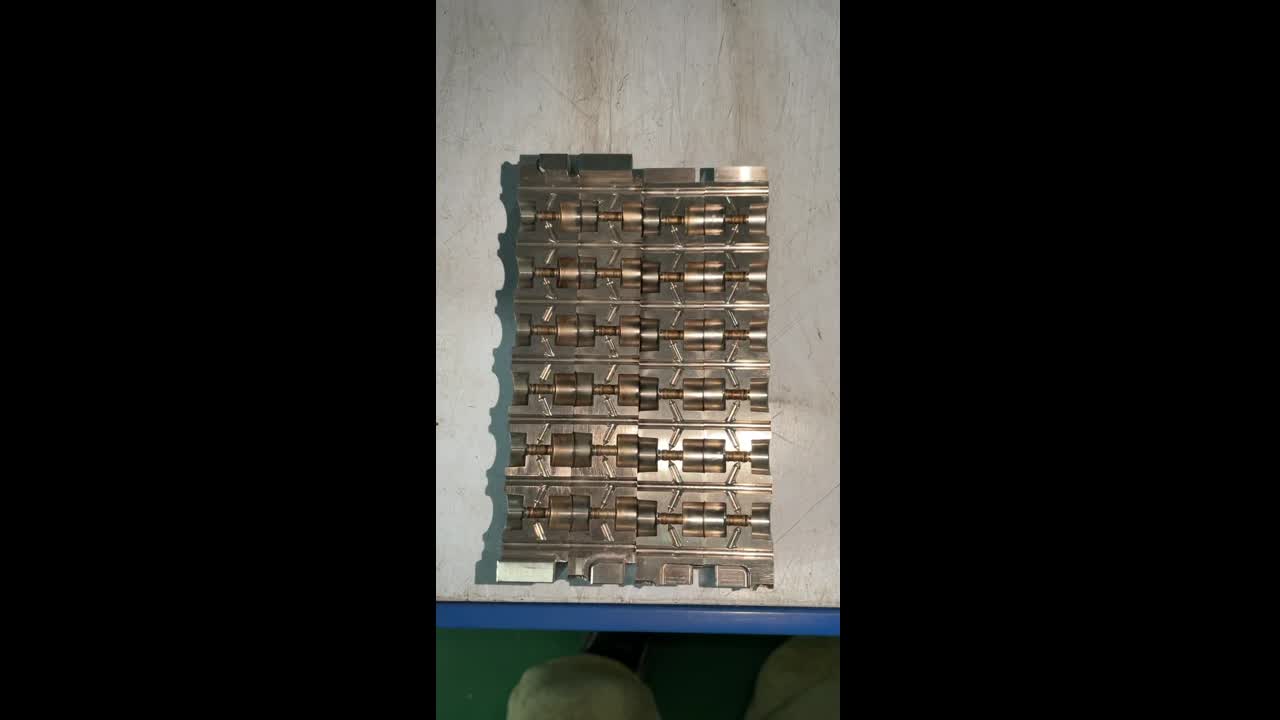
Critically, the term covers a wide range of individual components. You do not need to replace an entire mold to purchase conformal cooling tooling:
- Insert — a removable block that forms part of the cavity or core surface; the most common conformal cooling tooling purchase
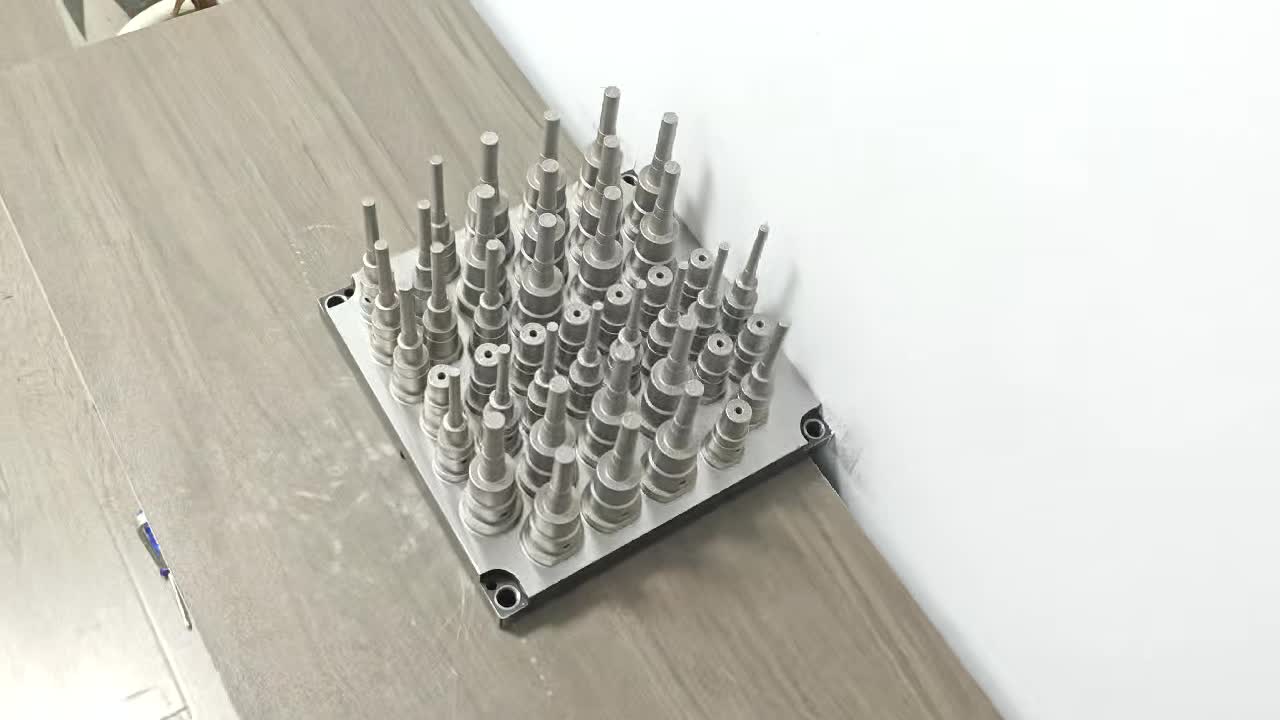
- Core pin — a cylindrical component forming an internal feature; conformal channels spiral around the core axis instead of the impractical alternative of a bubbler
- Cavity block — the full cavity-side forming component of a mold, printed entirely in AM with integrated conformal channels
- Sprue bushing — the gate entry component; a conformal sprue bushing eliminates gate blush and reduces sprue cooling time by 40–60%
- Slide — the moving side-action component; slides are often the last cooling bottleneck in a well-designed mold
- Full mold core/cavity set — all forming components printed with integrated conformal channels; highest investment, maximum thermal performance
What conformal cooling tooling is not: it is not a "bubbler and baffle" upgrade, not a better-positioned conventional drill pattern, and not a label that can be applied to EDM-machined channels in a mold base. The defining manufacturing process is additive — LPBF printing creates channel geometries that no subtractive process can replicate.
2. Types of Conformal Cooling Tooling
The table below compares the six principal conformal cooling tooling types against the metrics that matter most in a sourcing decision:
| Tooling Type | Typical Size Range | Price Range (USD, China) | Lead Time | When to Use |
|---|---|---|---|---|
| Insert (simple) | ≤100×100×80mm | $800–2,500 | 7–10 days | Single hot spot, retrofit into existing mold; deep boss or rib zone |
| Insert (complex) | 100–200mm cube | $2,500–8,000 | 8–12 days | Multi-zone channel routing; high-pressure or thin-wall part; 18Ni300 material upgrade |
| Core pin | Ø6–80mm × up to 200mm L | $600–3,500 | 7–10 days | Deep cylindrical feature; replaces inefficient bubbler; eliminates sink marks on bosses |
| Cavity block | Up to 350×350×200mm | $4,000–15,000 | 10–16 days | New mold build where entire cavity side benefits from full-surface conformal cooling |
| Sprue bushing | Ø30–80mm × 60–180mm L | $800–2,200 | 7–10 days | Gate burn or blush problem; sprue cooling limiting overall cycle time |
| Slide | Varies widely | $1,500–6,000 | 8–12 days | Side-action cooling bottleneck; undercut features with poor conventional cooling access |
| Full mold (core + cavity) | Custom to mold spec | $15,000–80,000 | 35–55 days | Maximum thermal performance; new mold project on highly complex or uniform-geometry parts |
3. What to Specify in Your RFQ (10-Item Checklist)
The quality of a conformal cooling tooling quote is directly proportional to the completeness of the RFQ you send. Vague enquiries produce vague quotes with wide price ranges and unworkable timelines. Send this 10-item checklist with every RFQ:
-
1Part geometry file STEP or IGES preferred. STEP (AP214 or AP242) is the universal standard — it carries solid geometry the supplier can import directly into simulation software. If you can only share 2D drawings due to NDA constraints, include all critical dimensions, draft angles, and wall thickness map.
-
2Mold base standard and interface dimensions State the mold base supplier (DME, HASCO, LKM, etc.) and standard (e.g., "HASCO K-plate, 346×296mm"). Include the insert pocket dimensions (length × width × depth) and positional tolerances. This is non-negotiable for a retrofit insert — the tooling must drop into your existing pocket without modification.
-
3Coolant port size and thread standard Specify the inlet/outlet port diameter and thread: BSP (British Standard Pipe), NPT (National Pipe Thread), or metric. Include port position preference if you have one. Most Chinese suppliers default to G3/8" BSP — flag if you need NPT for US-market mold bases.
-
4Working pressure State your mold cooling system's operating pressure in bar or PSI. This determines the wall thickness required between channels and the cavity surface (the pressure-to-wall-thickness safety factor). Standard range is 6–10 bar for water cooling. Every MouldNova insert is hydrostatic-tested at 1.5× your stated working pressure before shipping.
-
5Coolant type Water (standard) or thermal oil (used in some high-temperature applications). Coolant type affects material selection — oil cooling at elevated temperatures rules out some material options and changes seal design. Also specify any corrosion-inhibitor additives you use, which affects stainless steel grade selection.
-
6Surface finish requirement State the cavity face finish requirement in SPI classification (A1 mirror through D3 matte) or Ra value in µm. Surface finish drives post-processing time and cost more than almost any other single factor. A mirror-polish SPI A1 finish on a complex surface can add 3–5 days and $300–800 to an insert cost versus a standard EDM or machined finish.
-
7Material preference or performance requirement If you have a specific material requirement, state it. If not, describe your application constraints: injection pressure, material being moulded (PP, ABS, PA66-GF30, etc.), required hardness, and whether corrosion resistance is needed. The supplier can then recommend the optimal material — 420SS, 18Ni300, H13, or CuCrZr.
-
8Quantity required and repeat order forecast State how many pieces you need now and whether this is a one-time purchase or will repeat. Higher quantities may qualify for pricing breaks. More importantly, multi-cavity molds require matched inserts — confirm the number of identical inserts needed and whether they must be from the same print batch (important for dimensional consistency).
-
9Inspection and certification requirements Specify what inspection documentation you need: CMM dimensional report, hardness certificate, channel pressure test certificate, material mill certificate, Ra surface roughness measurement. MouldNova includes CMM report + pressure test certificate as standard on every order; specify any additional requirements in your RFQ so they are priced in from the start.
-
10NDA requirement If sharing proprietary part geometry, confirm whether you need an NDA signed before file transfer. Most professional conformal cooling tooling suppliers will sign an NDA on request. Include this requirement in your first email — it signals you are a serious buyer and avoids delays once you are ready to share files.
4. Material Selection Guide
Material selection for conformal cooling tooling is a balance between thermal conductivity, mechanical strength, corrosion resistance, and cost. The four LPBF-printable materials used in production tooling each have a distinct sweet spot:
| Material | Hardness (after HT) | Thermal Conductivity | Cost Index | Best For |
|---|---|---|---|---|
| 420 Stainless Steel | HRC 50–52 | ~25 W/m·K | 1.0× (baseline) | Standard injection molding; good corrosion resistance; balanced cost and performance; most common choice for PP, ABS, PE parts |
| 18Ni300 Maraging Steel | HRC 52–54 | ~20 W/m·K | 1.3× | High-strength applications; thin walls or aggressive part geometry under high injection pressure; PA66-GF, POM, high-performance engineering plastics |
| H13 Tool Steel | HRC 44–48 | ~28 W/m·K | 1.1× | Die casting tooling; elevated operating temperature (>200°C); aluminium and zinc die casting; also suitable for high-volume injection molding above 1M shots |
| CuCrZr (Copper Alloy) | HRC 28–32 | ~320 W/m·K | 1.7–1.9× | Maximum heat removal; gate zone inserts; thick wall sections; optical-grade parts; medical devices where cycle time is critical and hardness requirements are lower |
Material decision logic
Default to 420SS unless you have a specific reason to upgrade. It offers good corrosion resistance (water cooling safe), is the most widely manufactured conformal material, and is the most cost-effective for most production scenarios.
Upgrade to 18Ni300 when: injection pressure exceeds 1,400 bar, wall thickness at any point on the insert is below 3mm, or the moulded material has high glass fill content generating elevated shear forces.
Select H13 for die casting tooling or when the mold operates above 180°C on a regular basis. H13 has better red hardness (hot hardness) than 420SS or 18Ni300.
Select CuCrZr when the thermal bottleneck is severe and no steel can provide sufficient heat flux. Typical use cases: gate inserts on thick-walled parts, core pins on very deep features (aspect ratio >5:1), optical or medical parts where minimal cycle time variation matters more than insert longevity.
5. How Conformal Cooling Tooling Is Priced
Three factors drive the price of a conformal cooling tooling order, in order of influence:
Cost Driver 1: Geometry Complexity
Channel routing complexity is the primary cost driver. A simple cylindrical core pin with a helical spiral channel is straightforward to design and print. A cavity insert with five independent parallel circuits, each following compound-curve surface geometry and routing around 12 ejector pin locations, requires significantly more engineering time and careful print orientation to achieve adequate surface quality on all channel walls. Geometry complexity drives both the design hours billed and the print time (more support structure = more post-processing).
Cost Driver 2: Material
LPBF powder costs vary significantly by alloy. At current market pricing from China-based suppliers:
- 420SS powder: ~$40–60/kg
- H13 tool steel powder: ~$55–80/kg
- 18Ni300 maraging steel powder: ~$80–120/kg
- CuCrZr copper alloy powder: ~$180–280/kg
A 1.5kg insert therefore has a material cost of $60–90 in 420SS versus $270–420 in CuCrZr — before any processing. Material choice visibly impacts final price, particularly for larger components.
Cost Driver 3: Post-Processing
LPBF printing produces a near-net-shape component that requires significant post-processing before it is a finished tooling insert. Post-processing typically includes: stress relief anneal, wire EDM or CNC to remove the build plate, rough CNC machining of all mating faces, vacuum heat treatment to final hardness, finish CNC on precision faces, manual polishing of the cavity surface, and final inspection. On a typical $2,500 insert, post-processing represents 45–55% of total cost. This is the most commonly under-quoted stage by less experienced suppliers — always confirm that heat treatment and final hardness testing are included.
Price ranges by tooling tier
Tier 1 — Simple insert or core pin
Tier 2 — Complex insert or cavity block
Tier 3 — Full conformal mold
Get a quote with a committed lead time in writing
Send your STEP file and working pressure. We'll return Moldflow simulation results, full cost breakdown by line item, and a committed ship date — within 24 hours. Ships DDP to US, Europe, India, and worldwide.
6. Lead Time Breakdown
MouldNova's typical 7–12 day lead time for conformal cooling inserts (design approval to DDP delivery) breaks down as follows:
What determines where in the 7–12 day range your order falls:
- Channel complexity — a simple helical core pin prints and post-processes faster than a multi-zone cavity insert with compound-curve routing and ejector pin avoidance
- Material — 18Ni300 and CuCrZr require more print preparation and parameter management than 420SS; CuCrZr also requires different post-processing to prevent oxidation
- Surface finish specification — a mirror-polish SPI A1 finish adds 1–2 days over a standard EDM/machined finish
- Print batch size — multiple inserts printed together in one build may save 1–2 days overall compared to sequential single-insert builds
| Tooling Type | Typical Lead Time | Primary Bottleneck |
|---|---|---|
| Simple insert / core pin / sprue bushing | 7–9 working days | Heat treatment scheduling |
| Complex insert / cavity block | 9–14 working days | CNC machining + polishing |
| Retrofit insert into existing mold (standard) | 7–12 working days | Post-processing + CMM inspection |
| Full conformal mold (new build) | 35–55 working days | Mold base machining (parallel path) |
7. Red Flags When Evaluating Suppliers
Five behaviours in supplier conversations that indicate serious competence or quality gaps:
No hydrostatic pressure test certificate offered
Every conformal cooling insert must be pressure-tested at 1.5× working pressure before shipping. A blocked channel or micro-crack that leaks under production conditions causes catastrophic mold damage. If a supplier doesn't mention pressure testing or treats it as an "optional extra," they have either not encountered this failure mode or have decided to ignore it. Require a dated, signed pressure test certificate — zero-drop at 1.5× working pressure for 10 minutes — as a standard delivery document.
No Moldflow simulation capability
A supplier who cannot show you Moldflow simulation results for your specific part — before manufacturing — is asking you to buy on faith. Any claimed cycle time reduction ("we'll give you 35% improvement") that isn't backed by simulation data for your geometry is marketing copy, not engineering. Simulation is the minimum credibility threshold. MouldNova provides this free before any order commitment.
No ISO 9001 certification
ISO 9001 does not guarantee quality, but its absence in a precision tooling supplier means there is no formal quality management system governing incoming material inspection, process control, or outgoing inspection. For mold tooling that must fit to ±0.02mm tolerances and operate at hundreds of bar of injection pressure, process discipline matters. Request the certificate number and confirm expiry date — expired certificates are a common shortcut.
Cannot provide Ra measurement on sealing faces
The parting line and mating faces of a conformal cooling insert are critical sealing surfaces. If a supplier cannot provide a measured Ra value for these surfaces and a specified tolerance, it means they are not inspecting them — and there is no guarantee the insert will seal correctly at pressure when fitted into your mold base. Ask: "What is the Ra specification on the mating flange, and can you show the measurement in the inspection report?" A non-answer is a red flag.
Vague or evasive about channel geometry verification
You cannot directly inspect internal LPBF-printed channels by visual inspection or conventional CMM. Professional suppliers verify channel geometry through: (a) process validation — confirming the print file matches the design CAD, (b) pressure testing at 1.5× working pressure confirming channel integrity and absence of blockage, and (c) for complex geometries, X-ray CT scanning or borescope inspection. A supplier who says "we can see it's fine" or "we trust our process" without offering a formal verification method is leaving you exposed to in-service failure.
8. How to Evaluate a Quotation (5-Point Scorecard)
When comparing quotations from multiple conformal cooling tooling suppliers, use this 5-point scorecard. Score each supplier 0–2 on each point (0 = absent, 1 = partial, 2 = complete). Maximum score: 10.
Lead time accuracy and commitment
Does the quote state a specific committed ship date, or use vague language ("approximately 2 weeks")?
Technical response quality
Does the quote address your specific geometry, material, and performance requirements — or is it a generic template response?
Simulation included or offered
Is Moldflow simulation (or equivalent thermal FEA) included in the quotation, or offered as a step before manufacturing?
References or case study data available
Can the supplier provide real project data — cycle time reduction achieved, client industry, tooling type — for a comparable application?
Terms and conditions clarity
Are payment terms, warranty, liability on dimensional non-conformance, and shipping terms (EXW, FOB, DDP) clearly stated?
9. Total Cost of Ownership Comparison
The upfront cost of conformal cooling tooling is higher than conventional tooling. The business case depends on total cost of ownership (TCO) over the production life of the tool. The following comparison is structured around three production volume scenarios, over a 3-year horizon:
| Item | Conventional Tooling | Conformal Cooling Tooling | Notes |
|---|---|---|---|
| Upfront tooling cost | $18,000 | $24,500 | $6,500 conformal premium (36%) |
| Cycle time (seconds) | 38 s | 24 s | 37% reduction (Moldflow-verified) |
| Annual production (shots) | 150,000 | 150,000 | Same demand |
| Machine hours required / year | 1,583 hrs | 1,000 hrs | 583 hrs saved annually |
| Machine rate (USD/hr) | $75/hr | $75/hr | Same machine |
| Annual machine cost saving | — | $43,725/yr | vs. conventional baseline |
| Rejects / rework (annual cost) | $4,200 | $1,100 | Warpage defects reduced |
| Year 1 net saving | Baseline | $40,925 | After recovering conformal premium |
| 3-Year TCO (tooling + machine + rejects) | $155,400 | $96,575 | Conformal saves $58,825 over 3 years |
| Payback period on premium | — | ~7 weeks | At 150k shots/year, $75/hr machine rate |
Additional TCO factors not captured in the table above, but consistently observed in production:
- Fewer trial rounds (T-trials): Conformal cooling molds designed with pre-validated Moldflow simulation typically pass T1 or T2. Conventional molds often require T3–T4 due to hot spot-driven warpage discovered only in production. Each additional trial round costs $2,000–8,000 in machine time, material, and engineering.
- Extended tool life: More uniform thermal cycling means less thermally-induced fatigue crack formation at stress concentration points. Consistent data from our customers shows conformal tooling reaching 500k–1M shots with no cracking versus conventional tools at the same shot count often showing early-stage fatigue cracks at deep ribs or bosses.
- Energy cost reduction: Shorter cycle time at the same output = fewer machine operating hours = lower energy consumption. At 150k shots/year and 583 fewer hours running, this represents a measurable reduction in electricity costs that compounds annually.
Ready to specify your conformal cooling tooling?
Send us your STEP file and RFQ details. MouldNova provides free Moldflow simulation before you commit, a committed ship date on every order, hydrostatic pressure test certificate and CMM report as standard, and DDP shipping worldwide in 7–12 days from design approval.
Frequently Asked Questions
What is conformal cooling tooling?
How much does conformal cooling tooling cost?
What is the typical lead time for conformal cooling tooling?
What material should I specify for conformal cooling tooling?
What should I include in an RFQ for conformal cooling tooling?
Related Articles & Pages
- Conformal Cooling Mold: Complete Buyer's Guide — Types, Pricing, Supplier Evaluation
- Conformal Cooling Inserts: Engineering Guide & Supplier Comparison
- Conformal Cooling Design: Decision Framework & Application Guide
- Conformal Cooling 3D Printing: SLM Process, Materials & Cost Breakdown
- Conformal Cooling Sprue Bushing: Engineering Guide
- MouldNova Conformal Cooling Insert Service — Get a Quote
- Case Studies — Real Project Data